
To help us provide you with free impartial advice, we may earn a commission if you buy through links on our site. Learn more
- Accurate blood pressure readings on your wrist
- Six-day battery life
- Good level of HR and GPS accuracy
- Can’t swim with it
- NFC payment system is clunky
If you haven’t come across Huawei’s D-series of smartwatches before, I don’t blame you. They’re not exactly mainstream, and the previous models have felt a bit experimental. With the Huawei Watch D3, however, the technology seems to have fully matured. It’s a wrist-based blood-pressure monitor that also works as a full-blooded smartwatch, with very few compromises.
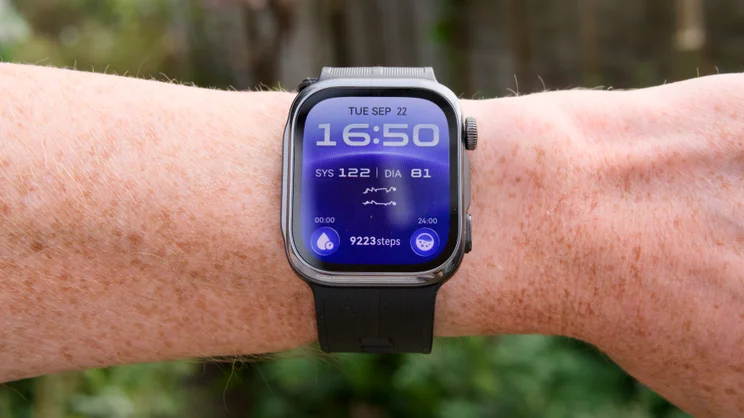
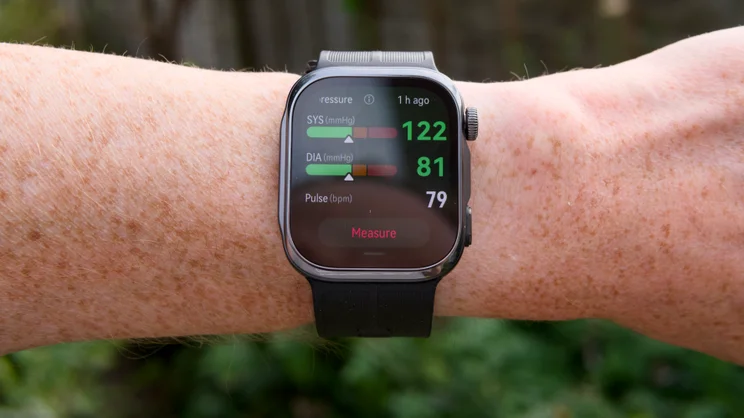
But wait, I hear you cry. Are there no other smartwatches that claim they can monitor your blood pressure, too? Most notably the Apple Watch? Well yes, but no, not really. While the Apple Watch can give you an idea of how your blood pressure is trending by analysing heartbeat patterns over time, the Watch D3 takes honest-to-goodness systolic and diastolic pressure readings, and it’s medically certified to do so.
How do the blood pressure readings on the Huawei Watch D3 work?
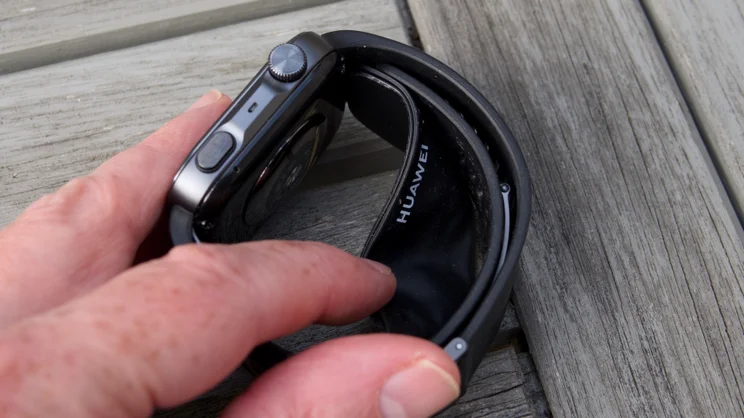
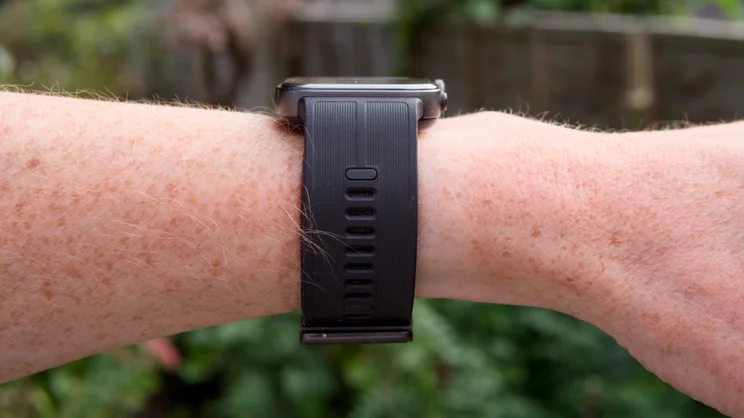
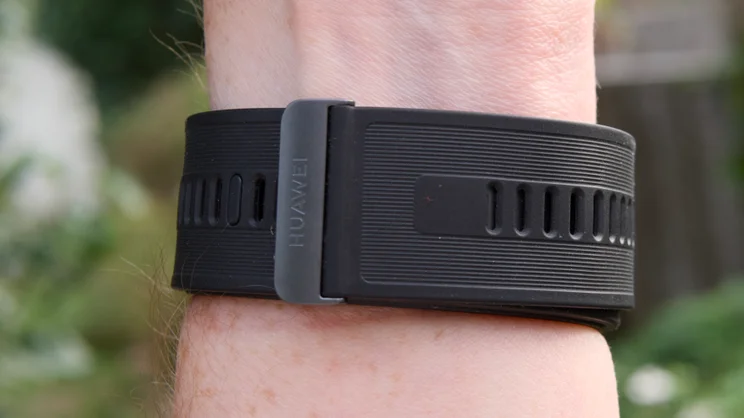
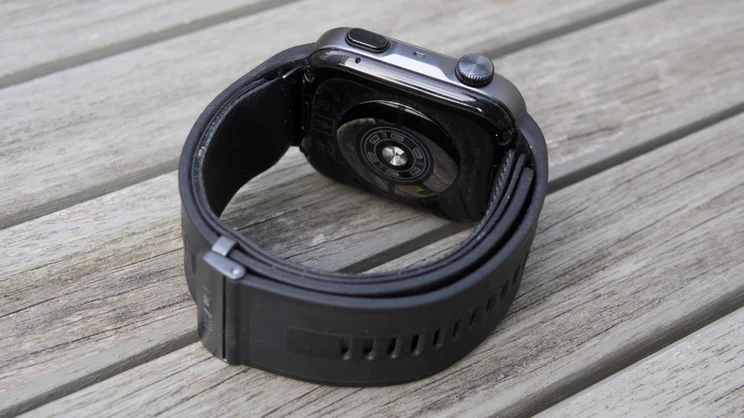
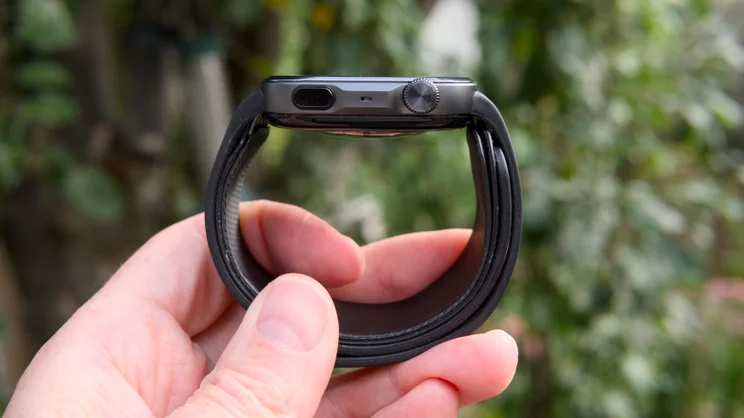
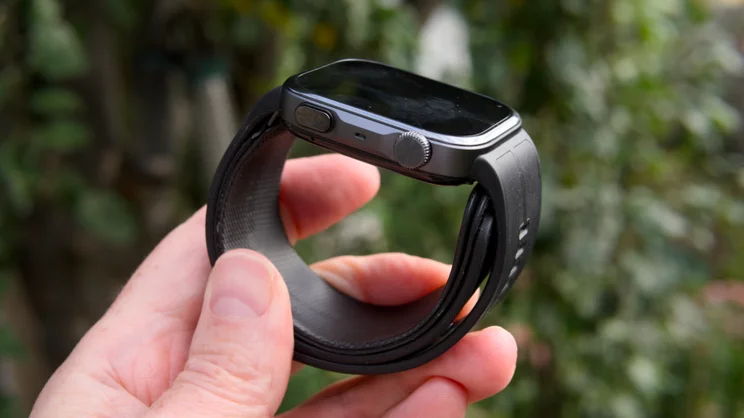
It works like a proper blood pressure machine (or sphygmomanometer). When you open the D3’s blood pressure app and tap Measure, a microscopic pump inside the watch sucks air in through holes on the side and slowly inflates a small bag that runs around the inside circumference of the watch band.
It does this until a pressure sensor in the watch registers that blood has stopped flowing through your radial artery. It then releases it slowly until the pressure drops to the point where blood starts flowing again, providing systolic and diastolic mmHg (mm of mercury) readings as it does so. It’s an ingenious system, not as bulky as you might think, and it’s so quiet you can barely hear it running even if you hold it up to your ear.
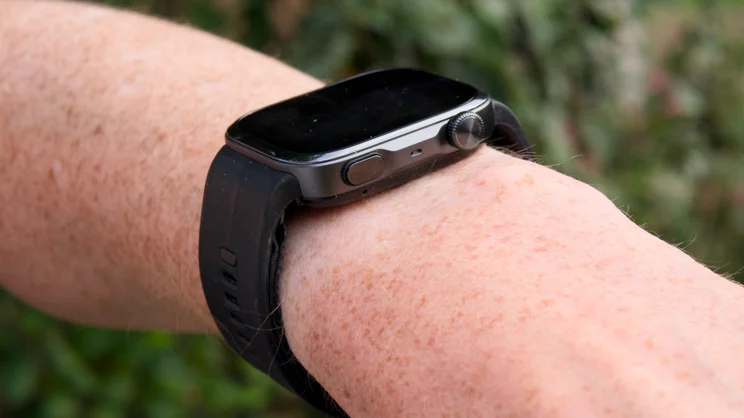
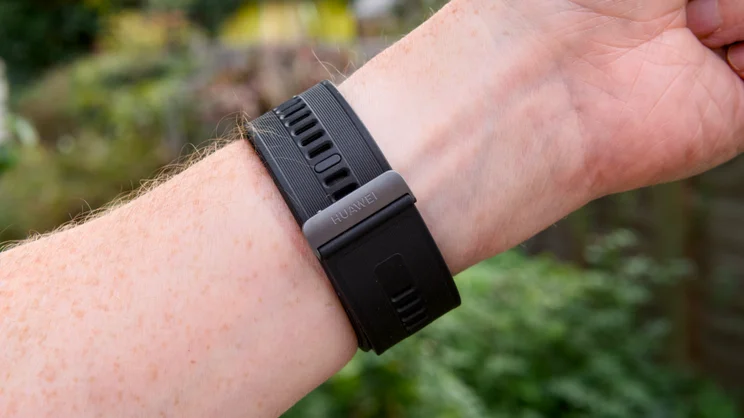
I’ve been wearing the Huawei Watch D3 for about three weeks now, and while it is a touch bulkier than the average smartwatch, I’ve found wearing it comfortable all day, during workouts and while sleeping.
It’s quite light. I weighed it at 75.2g with the strap, and the watch body itself is reasonably slim at 11.3mm. In fact, the extra 2mm the bag adds inside the watch’s strap is soft and adds padding.
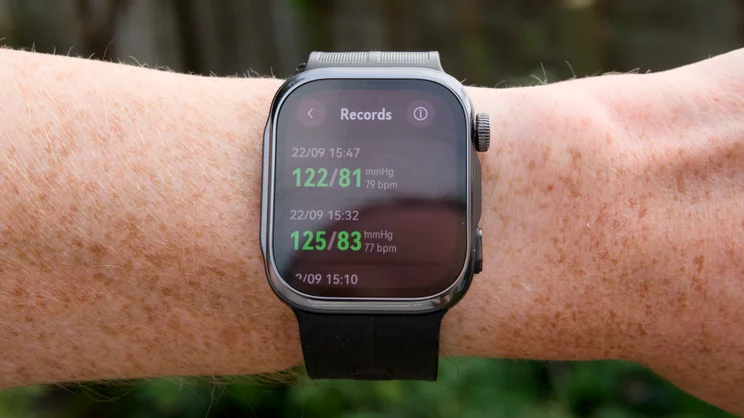
The D3 lets you measure your blood pressure in several ways. You can simply sit down, hold your wrist level with your heart, and take a spot reading. This takes around 40 seconds, and you can schedule reminders to measure averages and changes throughout the day.
You can also use the watch to measure “ambulatory blood pressure”, which sounds involved, but all this means is the watch prompts you to record your blood pressure every half an hour for 24 hours, even while you sleep, which it does up to seven times. This isn’t new to this model. The D2 also had it, but it’s a far more accurate measure of your blood pressure than taking one-off measurements.
What is new to the D3, however, is its pre- and post-exercise blood pressure measurement tool. Why is this useful? Because an exaggerated response to exercise is apparently one of the best ways to uncover hypertension risk.
Here, you take a reading and activate a workout by pressing a button on the screen. Then, once you’ve finished your run or walk, you’re prompted to take another measurement as a comparison. If the watch detects that your blood pressure is slightly higher than before, it will offer tips and advice on how to approach future exercise. For example, it might advise you to shorten your next workout to keep your heart rate below a certain level to avoid putting too much pressure on your heart.
The watch also detects dramatic temperature and altitude changes, and will remind you to measure your blood pressure when it does. Meanwhile, Huawei’s Health Community feature lets you share your readings with relatives and other medical stakeholders.
What do you get for the money?
It’s all pretty clever stuff, but the Watch D3 is not stratospherically expensive or a one-trick pony. At £399, it’s no pricier than an Apple Watch and, aside from its fancy blood pressure-reading technology, its specifications look just like any other smartwatch.
Its 1.92in OLED display can pump out an impressive 3,000 nits in bright conditions, and the watch tracks more than 80 workout activities, including golf. Its sensors compete with those on the most advanced smart wearables, too.
On the cardio front, it can measure your average heart rate throughout the day, HRV, ECG and SpO2, and supports Huawei’s new Readiness feature and Morning Briefing. It has built-in dual-frequency GPS, NFC for payments, skin-temperature monitoring, and tracks all the usual smartwatch metrics, from steps to calories and stress levels.
The Health Glance app wraps up most of this into one handy report, gathering data from nine sensors across a 30-second test for a quick spot check of your vitals.
The only major drawback I see is that, thanks to the micro pump and inflatable cuff, the Watch D3 isn’t water-resistant. Huawei says you shouldn’t wear the Watch D3 while showering or swimming, and that it must be dry and clean before taking readings.
How did I test the Huawei Watch D3?
As it’s a one-of-a-kind wearable, I focused most of my testing on the blood pressure features. Over three weeks, I tested spot readings, scheduled readings, the ABPM feature, and the pre- and post-exercise feature. I compared the watch’s readings with those from an AND UA767S-W digital blood pressure monitor to check accuracy.
I also monitored battery life throughout the testing period. I used my usual method to assess workout distance and heart rate accuracy by comparing with known control sensors. For distance, I compared results with a Stryd 3rd gen pod running pod and a Coros Apex 2 Pro. For heart rate data, I used my Polar H10 chest belt.
How did the Huawei Watch D3 perform?
From casual inspection, the blood pressure measurements seem to be roughly in the same ballpark as the armband reader I used for comparison. We’re not looking for identical readings, as they were taken in different ways at different times, and blood pressure can change quickly in response to various stimuli and minor shifts in body position.
Here’s a table of readings I took during the day while writing this review. I took the watch readings immediately before using the digital blood pressure monitor to avoid the more aggressive blood pressure cuff from affecting the D3’s accuracy.
| Time | Watch D3 reading (mmHg), Systolic/Diastolic | AND UA757S-W digital blood pressure monitor |
|---|---|---|
| 10:18 | 116/73 | 114/83 |
| 11:21 | 117/79 | 120/79 |
| 13:57 | 123/80 | 120/74 |
| 14:03 | 124/78 | 116/75 |
| 14:21 | 115/81 | 108/75 |
| 14:51 | 119/81 | 119/75 |
As you can see, all the readings are roughly in step with each other, with nothing wildly off-beam: on average, the difference is 2.8 in systolic mmHg and 1.8 in diastolic mmHg.
The real power of the Huawei method, however, is how quickly and easily you can take measurements, and that the results are recorded and added to your records automatically. I’ve taken blood pressure readings while sat on the Tube, in a restaurant and on the sofa watching TV, and you’d barely know I was doing anything unusual.
As for heart rate and GPS accuracy, that was impressive, too. For GPS, the average distance difference reported compared to my controls was below 1% across all my workouts. That’s well within the margin of error.
Average heart rate measurement was good, too. Not as good as the Apple Watch Series 11, perhaps, but still very good at an average difference of 1.83% from what my Polar H10 recorded.
Pleasingly, I found Huawei’s battery life claims were spot on. During the first two weeks I wore the watch, the battery lasted around six days; that’s with the always-on display enabled, between two and four hours of outdoor workouts tracked, and checking my blood pressure multiple times per day. This week, the battery has only lasted three days, but I’ve been running blood pressure tests much more frequently, which drains the battery faster.
Even so, that’s significantly better than the Apple Watch’s 24 hours, the Pixel Watch’s 30 hours and the Galaxy Watch 9’s estimated 1.5 to 2 days of general use.
Is there anything negative to be aware of?
As usual with Huawei smartwatches, the D3 lacks some advanced features, even though it’s pairable with both iOS and Android smartphones.
There isn’t native turn-by-turn map integration, and you can only use a built-in voice assistant if you pair the watch with a Harmony-based Huawei phone. You don’t get the same wide selection of third-party apps to install, either.
NFC payments are now supported in the UK via the Curve payment platform, but they don’t work very well. I’ve tried this feature on multiple Huawei watches and, frankly, it’s clunky. I’ve had some success with paying in supermarkets with it, but it fails just as often as it works.
And although notifications come through on the watch, you can’t do much other than read them. You can’t reply, as you can on other, more deeply integrated smartwatch platforms.
There’s also nothing like the advanced audio intelligence features coming to the Apple Watch Series 12 and Ultra 4.
Should you buy the Huawei Watch D3?
Still, these issues affect all Huawei smartwatches, and I don’t think they’re a massive impediment to their effectiveness. And the Huawei Watch D3 offers something no other mainstream smartwatch can right now: medically certified blood pressure readings, right on your wrist.
That makes it a unicorn, a one-off among wearables, and therefore, also uniquely appealing. Anyone who needs to check their blood pressure more than once in a while should give it a look, and that’s more people than you might think.
If you have hypertension (that’s an estimated 32% of adults living in England, according to the ONS), you’re pregnant and have previously suffered from preeclampsia, or you’re starting a new medication that can affect blood pressure, you will probably have been advised to check your blood pressure regularly.
Of course, you don’t need a Watch D3 to take regular blood pressure readings. The monitor I used for comparison in this review is only £44 on Amazon, and the NHS supplies monitors for free to those with a clinical need. In some areas you can even borrow one from your local library. All you need is a library card.
But the Huawei Watch D3 is much more convenient and lighter than a bulky digital sphygmomanometer; it’s on your wrist, always ready, and does a lot more than just measure your blood pressure. If you’re considering buying a smartwatch or upgrading what you have and need to check your blood pressure frequently, the Huawei Watch D3 is well worth considering.


