
To help us provide you with free impartial advice, we may earn a commission if you buy through links on our site. Learn more
- Feature-packed
- Decent run tracker and in-app stats
- No additional monthly payments required
- More expensive than most
- Can miss auto-logging of sessions
- Slightly chunkier and larger than some
The Garmin Cirqa is Garmin’s first general-purpose screen-free fitness tracker. Last year, it released the sleep-first, also screenless Index, but this wearable has a broader remit.
The Cirqa can count your steps, track your sleep, assess your general body condition and — if you want it to — track your runs and bike rides almost as comprehensively as a fitness watch. The difference is, you don’t have to do anything to the Cirqa. No menus, no visual interface. And unlike a Whoop Band, you don’t need an ongoing subscription.
I’m not sure the optional £10/mth Connect+ subscription would add much here compared to, for example, a Garmin Forerunner 970 either. The Garmin Cirqa is an ideal purchase for those who like the idea of screen-free trackers, but worry it won’t do enough — this one does more than most.
How much does it cost?
The Garmin Cirqa will set you back £180, which is relatively pricey for a screen-free tracker. Similarly styled, subscription-free rivals include the Fitbit Air (£85), Amazfit Helio (£100) and Polar Loop (£150). Meanwhile, you can pick up a Whoop One 5.0 with a 12-month membership for £169.
What do you get for the money?
- 10-day battery life
- 5ATM water resistance
- 27 x 47 x 9 mm (module only)
- Bluetooth and ANT+
- Connected GPS
21.2g with strap (14.8g without) - Vibration motor
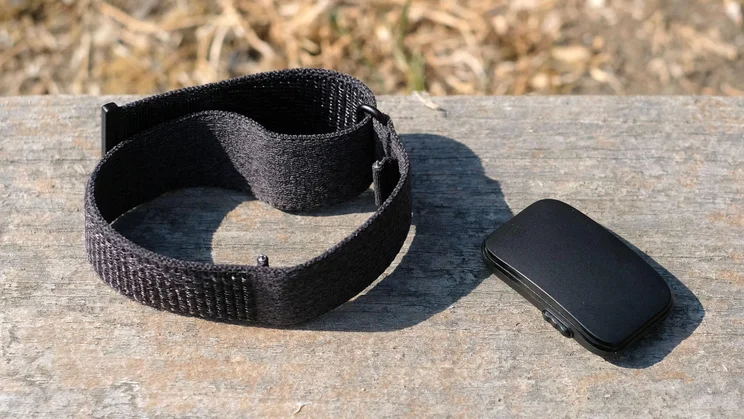
Wearables like the Garmin Cirqa often claim to be part of a bold new category of tracker. But in reality, they are much like regular old fitness trackers with the screen taken out. They have a brain housing that houses a bunch of sensors. This slots into a strap. The pitch: less is more.
Less tech means lower weight for 24/7 wear comfort and a deeply trendy low-distraction experience from day to day. These wearables are also meant to look less nerdy than the conventional kind.
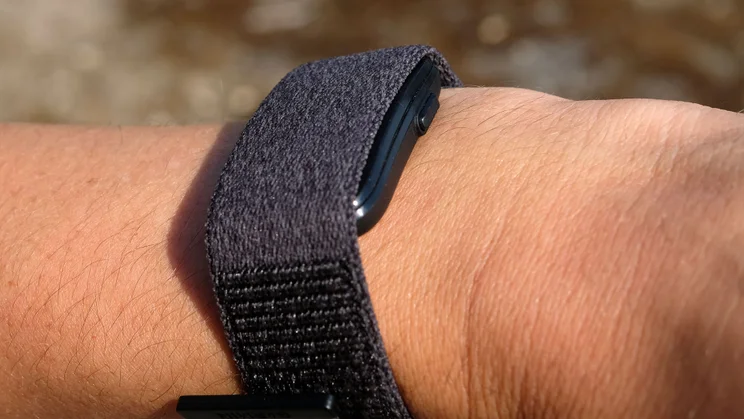
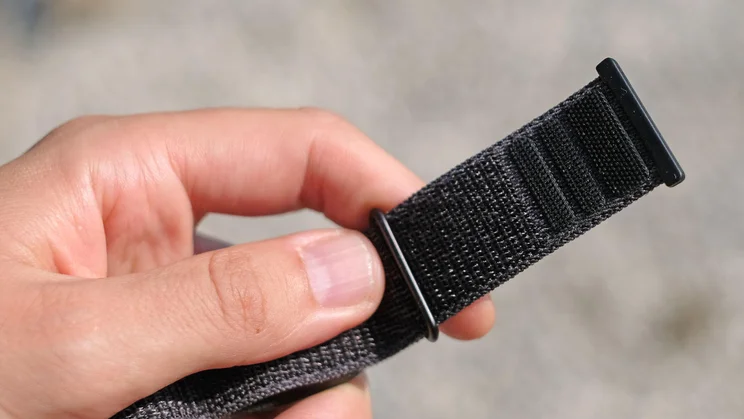
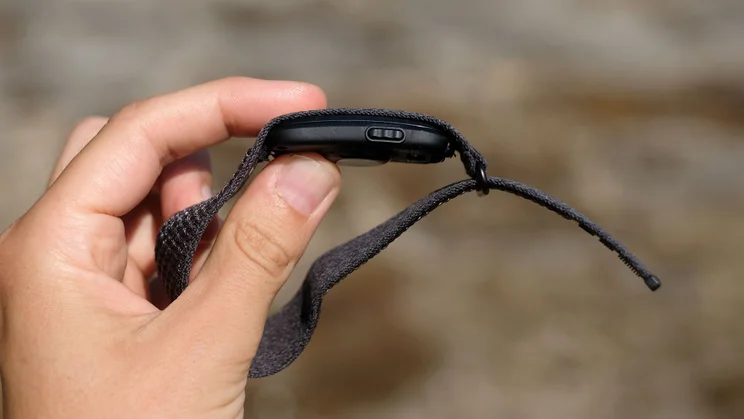
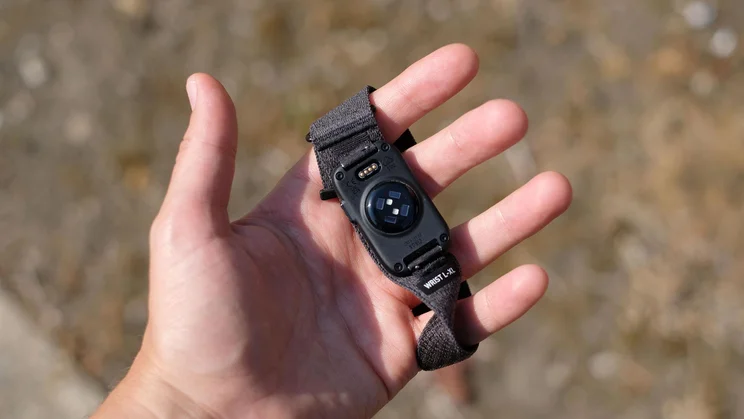
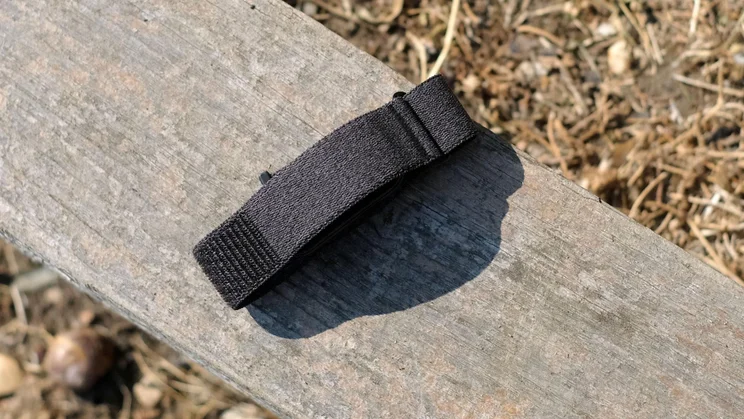
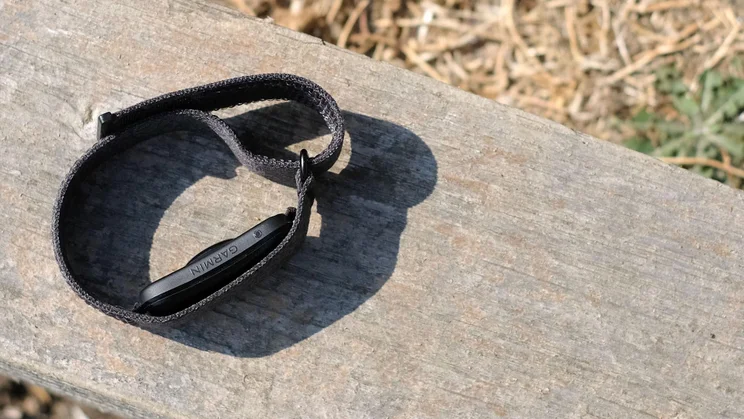
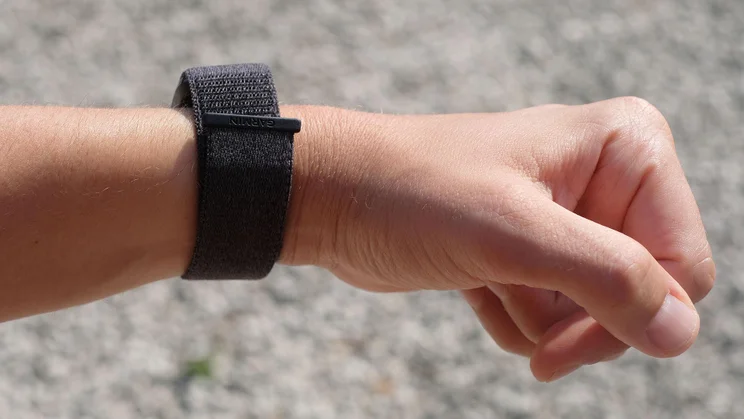
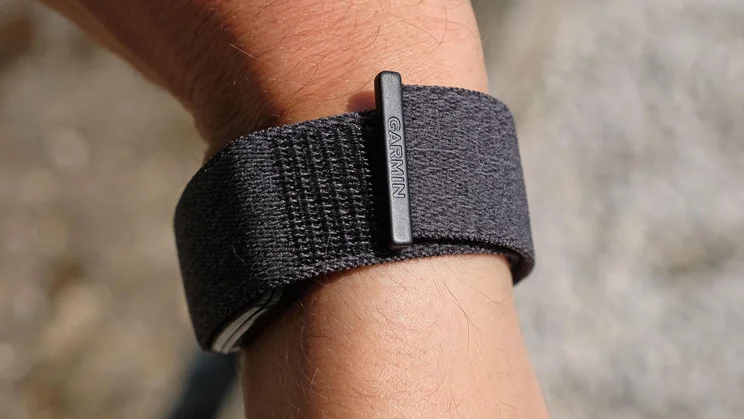
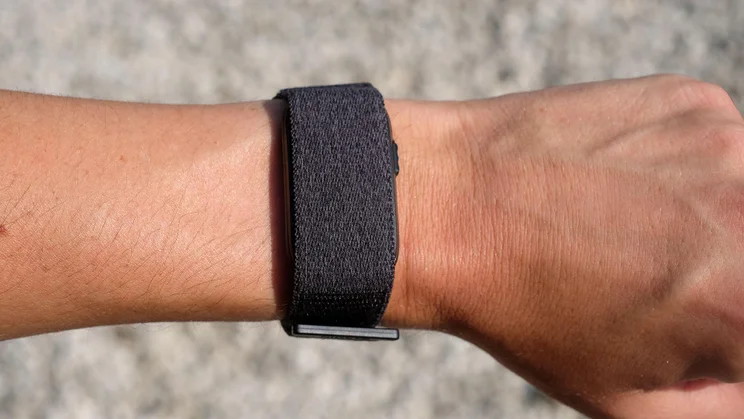
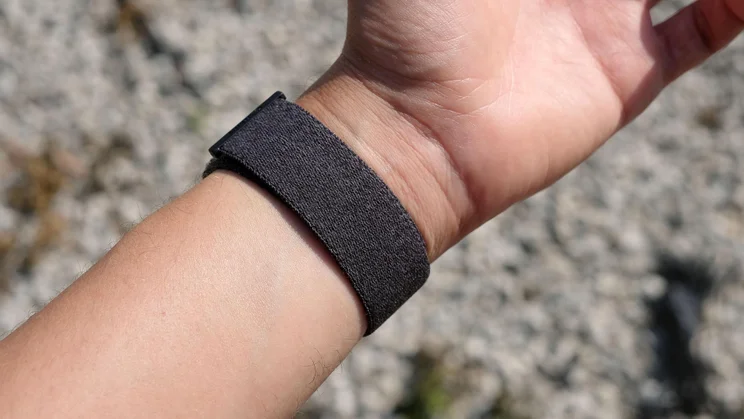
The Garmin Cirqa isn’t the most impressive-looking wearable around, but is clearly separated from other Garmins. A fabric strap wraps around your wrist and covers almost the entire module, leaving only slivers visible at the side.
Not as light, unobtrusive or as comfy as its rivals
It’s very similar to the Amazfit Helio Strap in this sense. Like all these wearables, the Garmin Cirqa is very light, weighing 21g including the L/XL strap. I would have thought this was a super unobtrusive wearable, had I not also spent several weeks living with the Fitbit Air beforehand. The Cirqa is as comfy and light as its Polar, Whoop and Amazfit rivals, but the Air really is on another level.
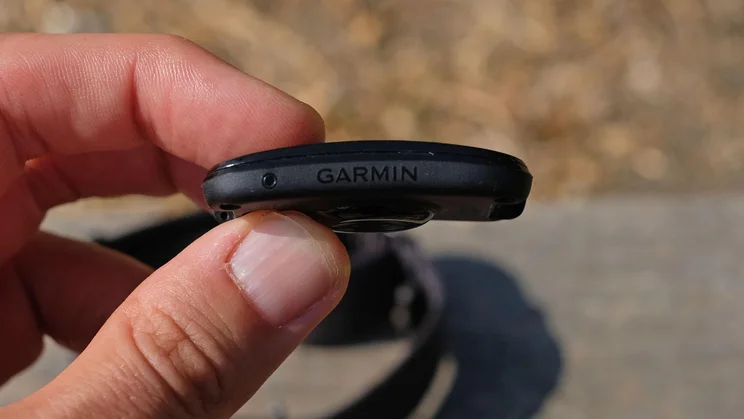
I haven’t quite forgotten the Cirqa was on the wrist in the way I did with the Fitbit Air. It also rises further off the wrist than most of its rivals, at 9mm thick without the strap. The Garmin Cirqa does have one thing all those others lack, though: a button. Some may say this goes against the point of a low-distraction tracker, but it makes sense in context.
This button manually starts and stops a pre-selected activity. By default, it starts a general form of exercise you can tag later, but any workout style can be selected.
My recommendation? Forget running and walking; let the app handle that automatically. Use the manual button for sessions the app might miss, like a gym weights workout. haven’t had these auto-recognised by the Cirqa, which may well be an indictment of how hard I try at the gym.
A wearable you can largely ignore with decent battery life
I was also worried I’d constantly press the side button accidentally, and end up with a thousand three-second entries on Strava. This hasn’t happened. I think I’ve done it one or twice. And that means it doesn’t betray the “wearable you can largely ignore” selling point. Neither does the battery life.
Garmin claims the Cirqa will last up to 10 days between charges. That’s roughly accurate, and very similar to the other models in this class. After seven days, the Garmin Cirqa was down to 26% charge, suggesting you lose slightly more than 10 per cent battery each day.
How I tested the Garmin Cirqa
How do you test a wearable designed to be ignored? For the first week I did just that. I went about my usual daily and exercise routine, but admittedly did not rely 100 per cent on the tracker, with a Forerunner 970 on the other wrist — most of the time at least.
This was a solid way to get a feel for living with the Cirqa 24/7, and for its battery life. But as even Garmin has admitted, there’s not all that much point wearing one of these alongside a Garmin watch.
For the second week I used the Garmin Cirqa as my primary tracker. All my runs. All my gym sessions — it recorded them and pushed them to Strava. For the most part, I didn’t rely on the side button to see what would and wouldn’t be logged automatically. I also wore the Cirqa for a week straight with the Polar Loop and Amazfit Helio strap on the other wrist.
As such, I got a feel for how Garmin handles data compared to its peers, the Whoop-a-likes. And a sense of how accurate it is — and it was largely good news on that front.
How well do its features work?
The Garmin Cirqa is probably the most useful and capable among the current wave of screenless, low-distraction wearables for runners, and really any kind of athlete.
Complete records for running
One true standout is how complete-feeling its exercise records are, particularly for activities like running. Unusual for this class, the Cirqa supports Connected GPS, where the tracker can use GPS data from a connected phone. This means recorded activities have maps attached and highly accurate distance statistics. The Polar Loop, for example, won’t even try to estimate the distances you’ve run or walked. And while the Fitbit Air — perhaps admirably — has a stab, during testing I found its figures were way off the mark. That also meant pace figures were wrong.
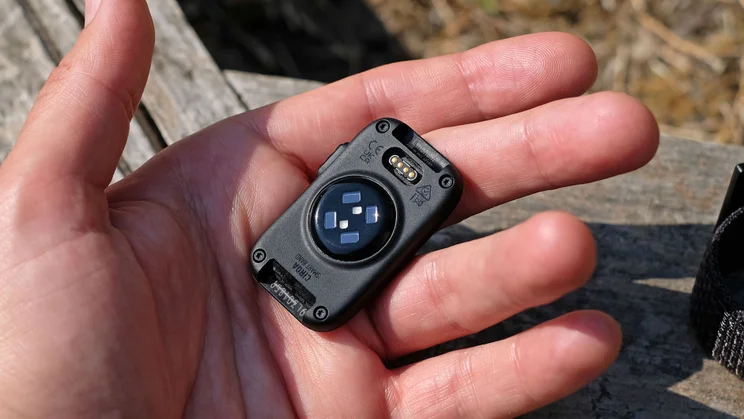
Distance, pace and therefore exertion and calorie consumption information are class-leading in the Garmin Cirqa. Heart rate accuracy is very good too, easily surpassing the Fitbit Air. I expected no less when the Cirqa has the same grade of heart rate sensor hardware as plenty of current and previous Garmin watches, including the Forerunner 170 and Forerunner 265.
It just misses out on the extra LEDs seen in high-end Garmin watches, which light up during tracked exercise. But the Cirqa benefits from low weight, which reduces how much it moves around.
Like many Garmins, the Cirqa’s heart rate data can be sent to other devices wirelessly, over Bluetooth or, unusually, ANT+, which some gym machines support. Or you could use it as your heart rate tracker for home-bound use with virtual cycling platform Zwift.
A Connect+ subscription feels unnecessary
Garmin never pushes you to buy a Connect+ subscription with the Cirqa. You’ll just see an easily dismissible app pop-up suggesting Connect+ for nutrition tracking. I imagine this form of tracking would complement the Cirqa nicely, and greater sleep insights are behind the paywall, too, but I never felt these things were mandatory to the experience. Should the Garmin Cirqa definitely feel like a “complete” wearable without subscription when it costs £199? Of course it should.
I wore the Cirqa alongside the Amazfit Helio Strap and Polar Loop — its closest no-subscription-needed rivals — for a few days to see how the data pans out. One clear difference is that the Garmin is the least forgiving of broken and patchy sleep. Manage a solid night, and all three will register similar sleep scores and sleep durations. But on a dodgy night? The Garmin Cirqa records shorter sleep times, if not always dramatically lower sleep scores.
Garmin has a rep for being a bit mean, a bit brutal at times. That’s no different here, although it means you feel fantastic when the Connect app says you had a 90+ sleep score.
What are its weaknesses?
Two key potential issues for the Garmin Cirqa relate to how it doesn’t really maximise what should in theory be some of the key benefits of a somewhat lower-tech wearable.
It doesn’t seem that low-cost, especially with solid rivals at half the price. And it is among the bulkier screen-free trackers, despite being designed to look discreet. It’s low-key and, above all else, not a watch.
While I haven’t accidentally set off manual exercise tracking with the Cirqa often, I can’t count the times I’ve reflexively raised my wrist to check the time. It’s not there.
Garmin couldn’t make the Cirqa much narrower without designing a new heart rate sensor array, which could well end up with worse accuracy. But it’s hard to ignore that the Fitbit Air is so much more petite, while the Polar Loop hugs the wrist more elegantly.
There are a couple of launch issues too. After sailing through the first week and change without any obvious issues, the Garmin Cirqua miscategorised a couple of recorded activities. The underlying steps and heart rate data were there, but they hadn’t been packaged up into an activity.
I think this was a blip or a bug rather than an algorithm failure, as these were runs, which come with extremely obvious heart rate and accelerometer data spikes. Still frustrating, mind. And it may have something to do with auto-sensed activities needing to attempt to connect to your phone to harvest location data.
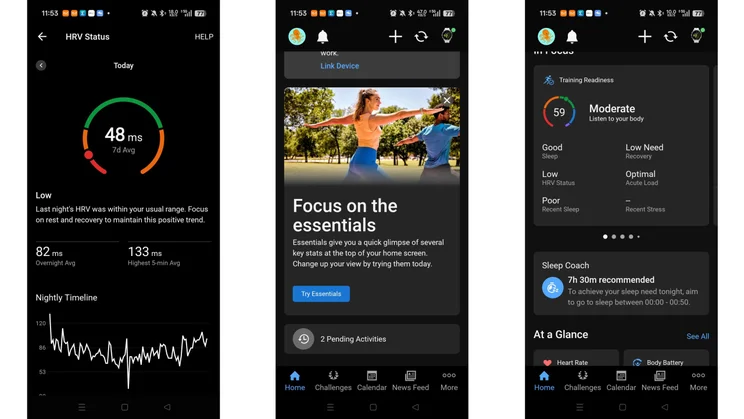
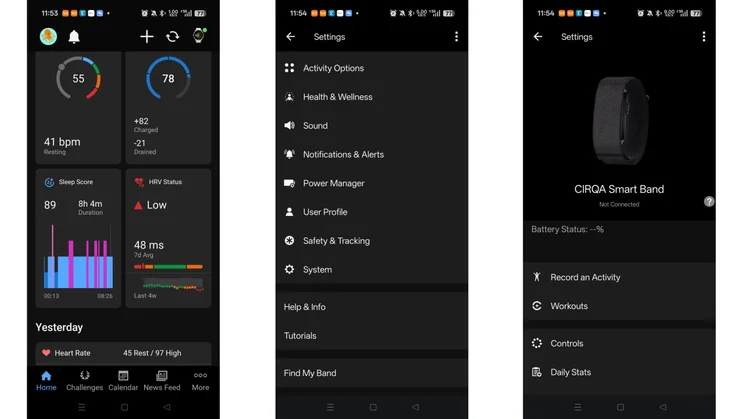
Some of you may find the Garmin Connect app a touch austere, largely because it has been designed for the athlete crowd. The aim is to get you the stats you want, quickly and clearly, rather than to dress it up in friendly, rounded-off gloss.
Should you buy the Garmin Cirqa?
The Garmin Cirqa is one of the more expensive screen-free wearable alternatives to Whoop with the promise of subscription-free use.
It’s legit. You do not need a Garmin Connect+ subscription to get a decent picture of your current health and fitness. Typical for Garmin, the Cirqa is also significantly more feature-packed than its current rivals. The main benefit is it functions as a genuinely solid run and hike tracker, as long as you travel with your phone.
And big issues? Relatively high price aside, I do find the Fitbit Air disappears on your wrist far more effectively — it’s not a patch on the Garmin for heart rate accuracy though.


