
To help us provide you with free impartial advice, we may earn a commission if you buy through links on our site. Learn more
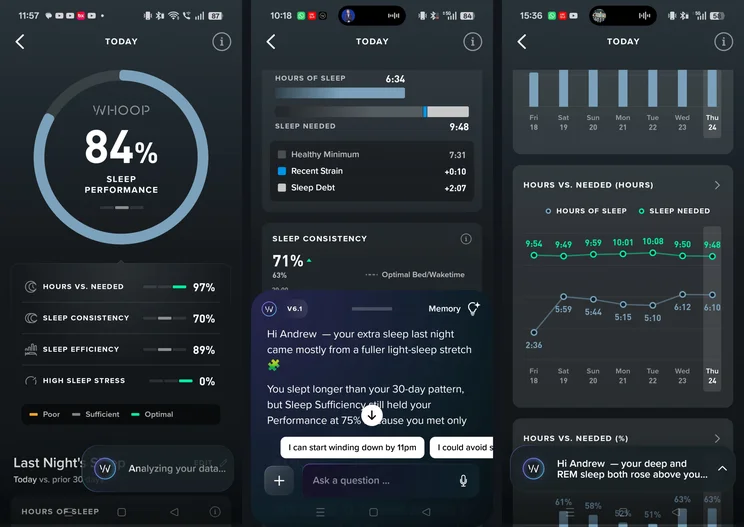
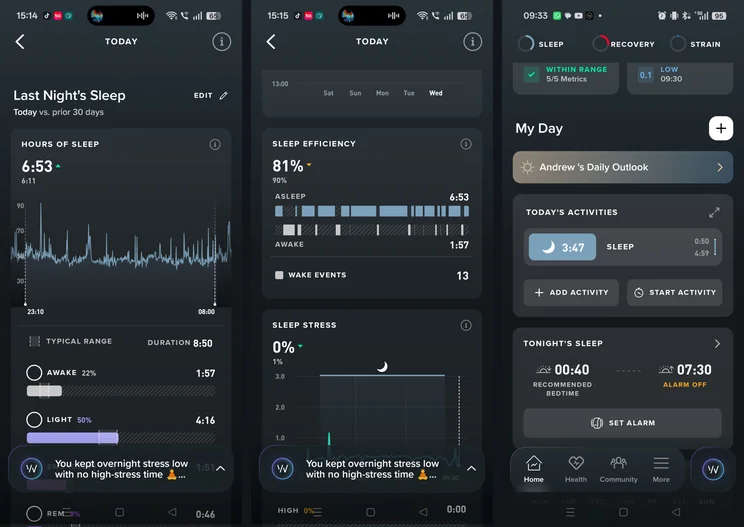
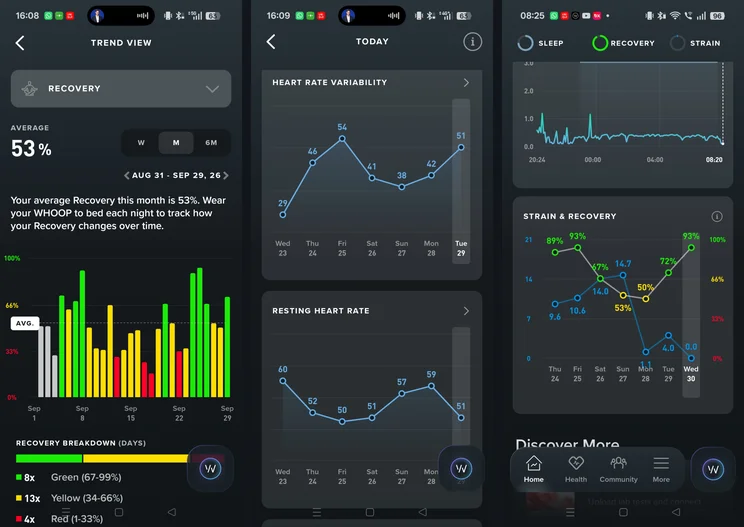
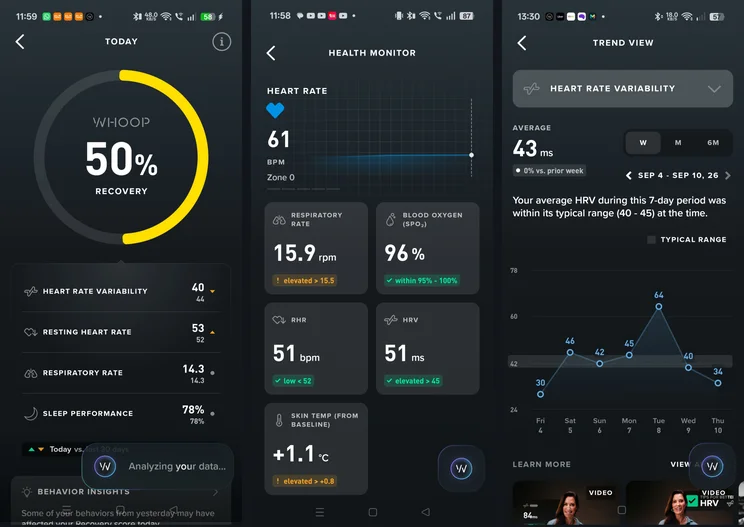
- Stylish and focused software
- Super comfortable
- Long battery life
- Unusable without subscription
- Poor HR accuracy during exercise
- Many better value alternatives
The Whoop 5.0 is the entry-level health tracker from the company that kickstarted the low-distraction wearable trend we’re going through at present. But where other brands are just making their first, Whoop has been at this game for a decade.
It sits below the Whoop Mg — which can take ECG readings — and is what you get when you sign up to either Whoop’s One or Peak plans. There’s no separate cost for the hardware. Instead, you pay for the hardware and software service as a package.
A Whoop 5.0 is blissfully easy to ignore, incredibly easy to get on with, and treads the line between being a constant companion and overbearing nuisance beautifully. But given its relatively high cost, the question of whether it is good value or not is up for debate. There are also issues with its accuracy during cardio-based workouts.

What do you get for the money?
Whoop One costs £169 for the year, Whoop Peak is £229, both substantially cheaper than the top £349-a-year Whoop Life plan, which nets you the upgraded Whoop Mg band. So that’s £14, £19 or £29 a month across the range, the first two of which use the Whoop 5.0 tested for this review.
The difference between those two lower plans? The mid-table Peak reviewed here includes stress monitoring and WHOOP age metrics, a catchy concept that places an “age” on your health, the idea being you really want to get it lower than your actual age.
After the initial 12 months, you will have to sign up for another plan, although ongoing monthly subscriptions are available in some cases. “Month-to-month subscriptions are no longer available as a standard signup option but remain accessible in select renewal scenarios,” says Whoop.
It’s best not to think of the expense here within the traditional frame of a gadget you buy and use, as you can’t continue using Whoop without a subscription. But these days it’s impossible to ignore the many similar alternatives where ongoing payments are entirely optional, from the Fitbit Air and Garmin Cirqa to slightly lesser-known options like the Amazfit Helio Strap.
Still, the Whoop 5.0 experience is engaging, low-upkeep, insightful and — compared with most rivals — unusually tasteful.
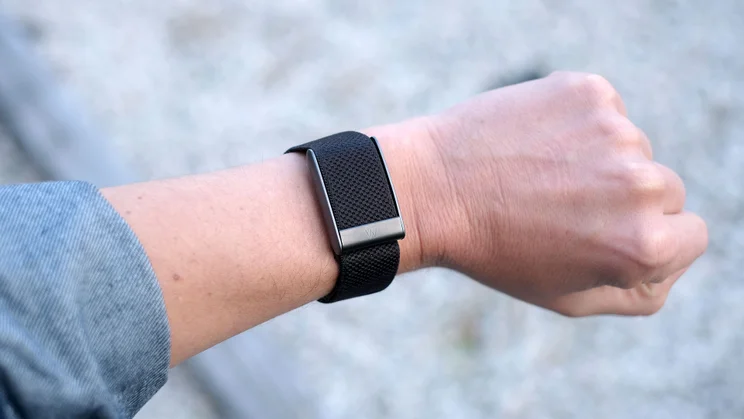
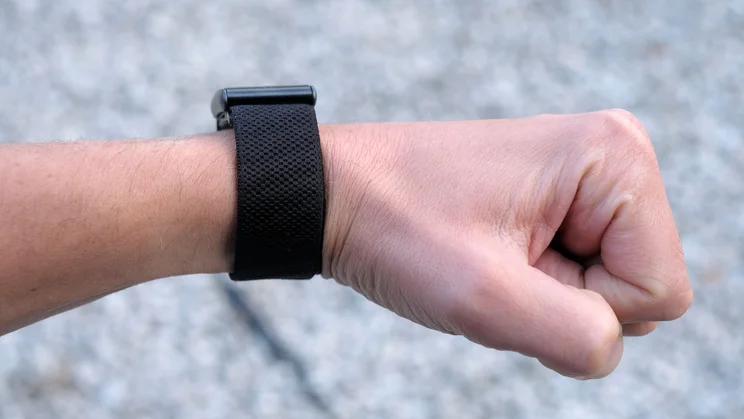
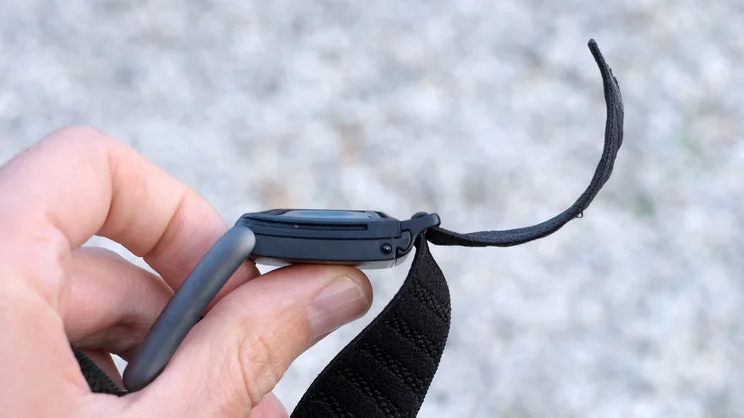
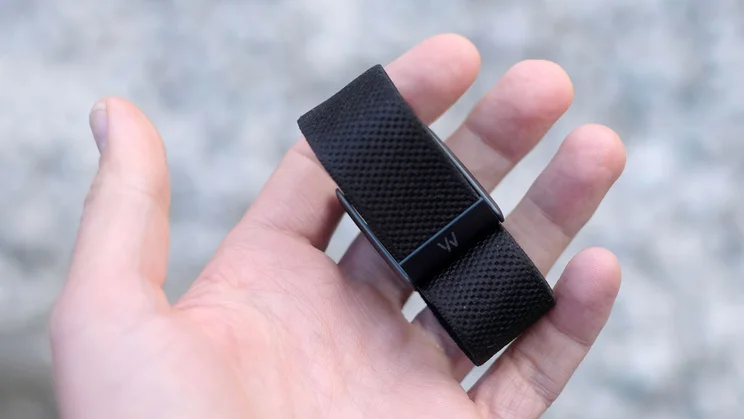
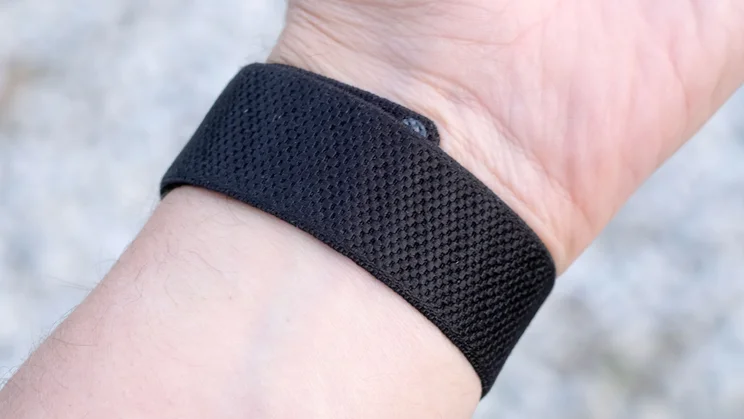
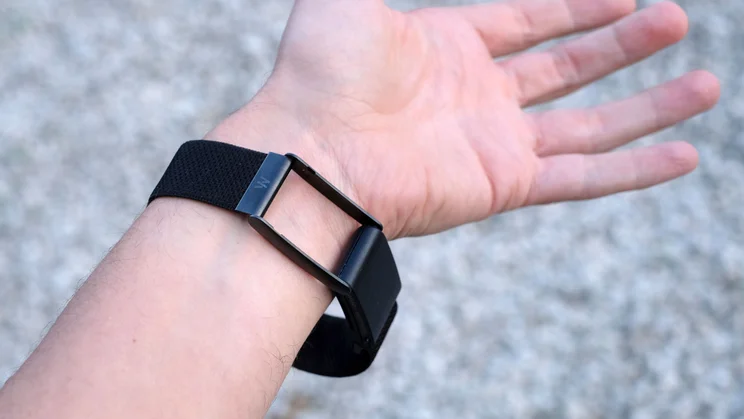
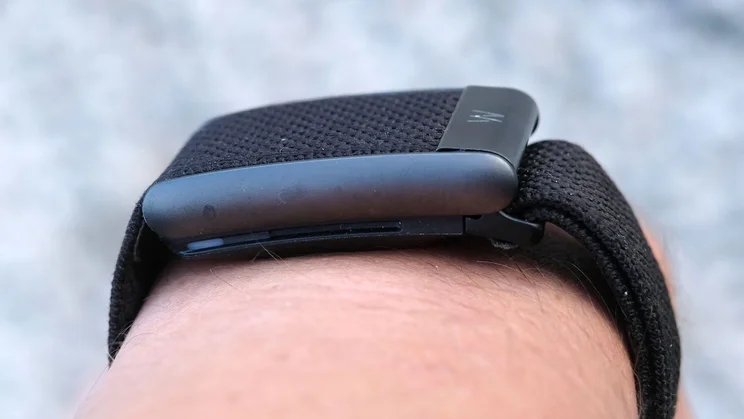
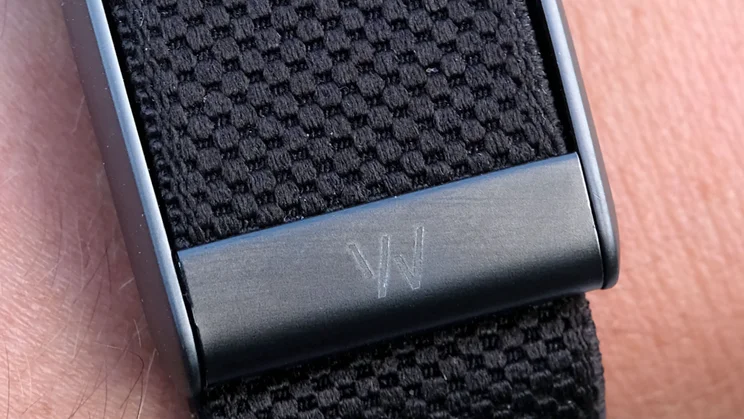
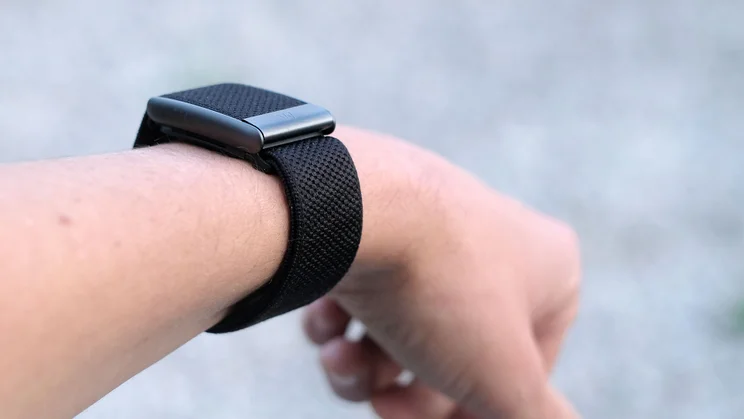
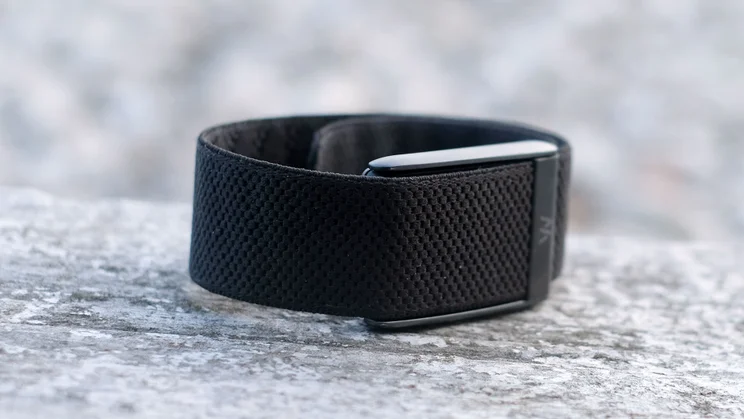
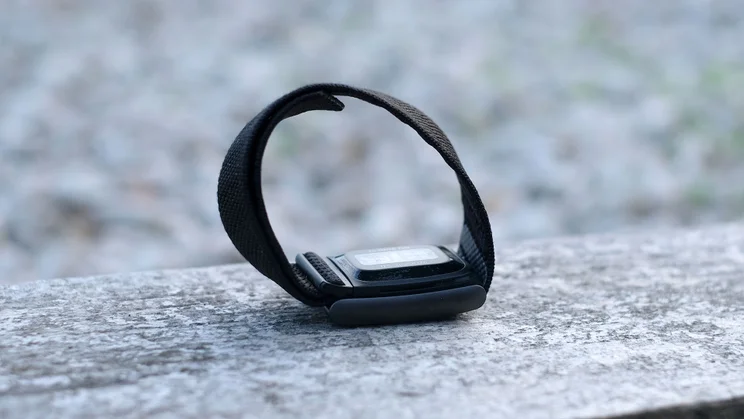
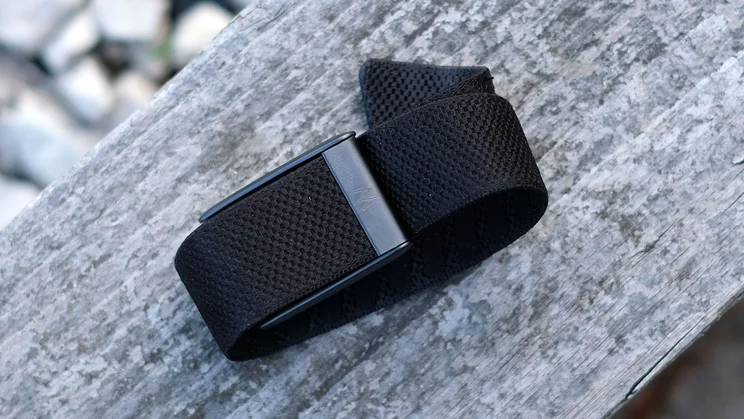
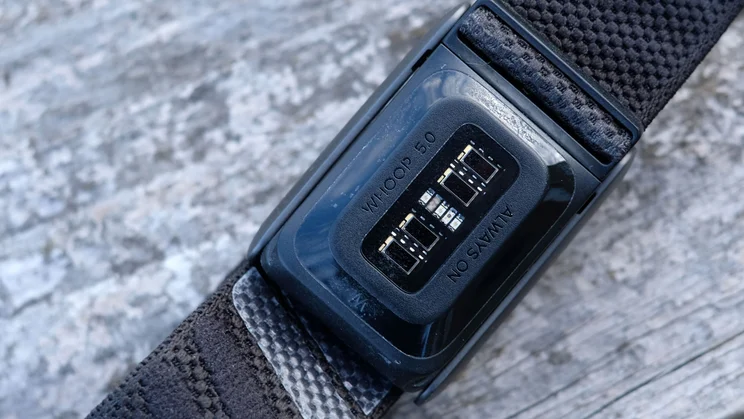
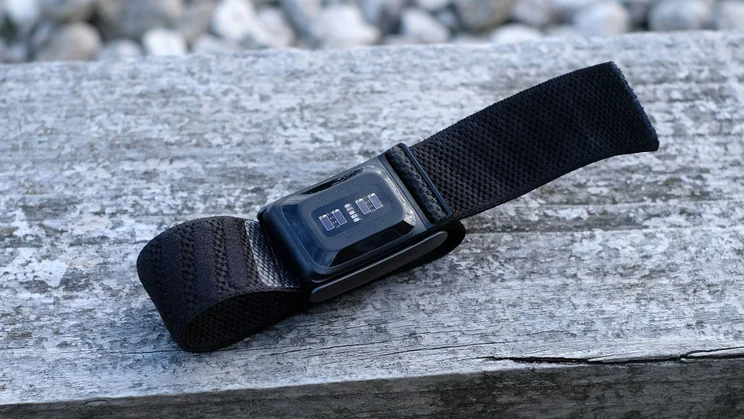
Its hardware is less barebones than most too. The Whoop 5.0 is, like other models, basically a sensor puck brain with a strap attached, but the two are connected using a clasp-style buckle; a metal one rather than plastic. And it gives the Whoop its low-key iconic (within certain circles anyway) design. Plenty of people also wear it on an arm rather than the wrist, which of course requires a longer strap, the £39 Bicep Band.
It’s not included, but Whoop does include a handy little battery accessory that slides onto the main unit — when not worn — to wirelessly replenish the battery. It means you can go for many weeks using a Whoop 5.0 without needing to actually plug anything into a socket. Great stuff.
The smoothly-contoured design of the band’s underside means it leaves relatively few marks on the wrist, even after weeks of constant use. There’s just one issue here: the clasp fixture means you can’t quickly tighten it up, which I will often do before exercise during review periods to ensure the most accurate heart rate stats. And Whoop needs all the help it can get on that front. More on this below.
What is it like to use?
At a time of verbose chatbots who feign a sort of chummy closeness, Whoop’s style is refreshingly and admirably restrained. It will send you regular, notification-based updates on your phone after events like runs or a night’s sleep, but these are relayed in almost as few words as possible.
Whoop is absolutely not here to waste your time, while also providing a more personalised feel than a more feature-rich device like a Garmin watch. It’s likely why so many feel it’s fine to use a Whoop with a runner’s watch; it was originally pitched as an athlete’s device, not the general wellness wearable Whoop is today.
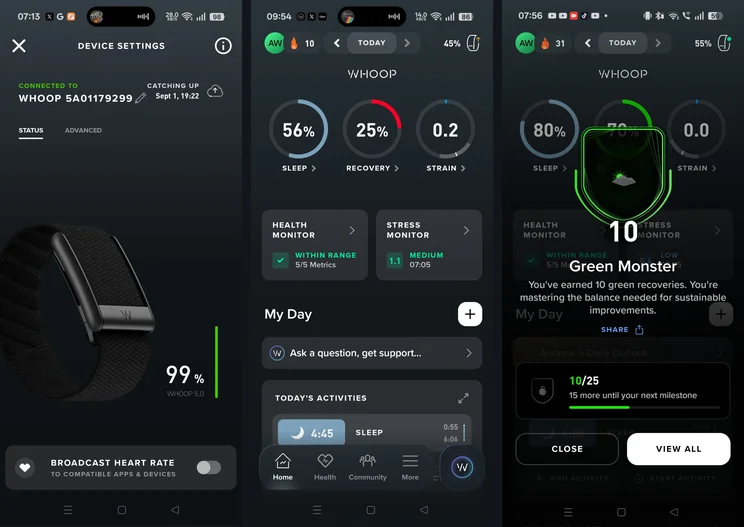
That sense of not needing to cater to every demographic going, at least initially, has also led to Whoop developing quite smart-looking software. The equivalent of an upmarket, adults-only gym, the Whoop app is short on fluff and requires a degree of buy-in on your part as to how it works.
You have to sink into the rhythm of Whoop’s strain versus recovery readiness tracking, with classic stats like step counts relatively devalued in the interface. Whoop only actually added step counts relatively recently, in October 2024.
Battery life and comfort
Wearing a Whoop 24/7 is crucial to its usefulness, and thankfully, the Whoop 5.0 is up to the task. A Whoop 5.0 lasts around two weeks off a charge, versus around 8-10 days from rivals like the Garmin Cirqa and Fitbit Air.
For me, after 12 days and eight hours, the charge level had dropped from 99 per cent to nine per cent, at which point I put it on charge to keep stats rolling in. Phone notifications will let you know the level is low long before this point.
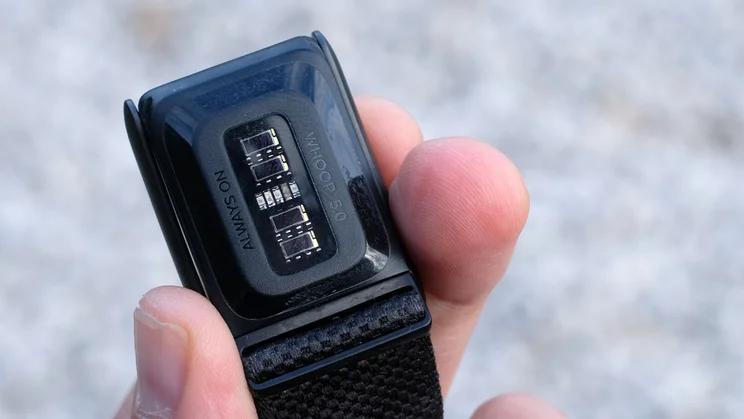
Comfort levels are great, too, and not just because the Whoop 5.0 is pretty light at 26g. I find the Whoop 5.0 leaves fewer indentations on the skin than most equivalent devices, which makes sense when you run a finger along the underside and realise it’s almost entirely smooth.
I’ve felt no real compulsion to remove the Whoop 5.0 at any point while wearing it. And while you may want to take it off while showering, it is IP68 dust- and water-resistant and the strap dries quickly, so it’s not a disaster you forget to take it off.
Activity detection
It’s the whole “zero interaction” thing that really makes the difference here, though. The Whoop 5.0 has a small LED that can flash yellow or blue to show it’s operational or in pairing mode, but otherwise, there’s no encouragement to check it or fiddle with it while you’re wearing it. You simply put it on and forget it’s there; it detects everything, including workouts, completely automatically.
It is, thankfully, pretty good at this. In fact, Whoop says it can interpret an impressive 45 types of activity, including walking, running and different kinds of gym session and cycling styles.
Your mileage may vary on this one, but it has recognised all my runs, more walks than I’d usually bother manually tracking, and it successfully detected the five or so swim sessions I wore it for as well. You just don’t get automatic stroke recognition.
The Whoop system didn’t mess up when I had to fly to the US for work, and subsequently got a few days of terrible sleep. It also recognised symptoms when I picked up an illness towards the end of testing, although this involved simply noting my overnight skin temperature rather than explicitly saying I seemed ill.
How did I test the Whoop 5.0?
One of the key elements of these passive recording wearables is you need to use them for a while to really have any idea what they are capable of. Baseline figures have to be calculated, particularly for HRV (heart rate variability) measurements.
I wore the Whoop 5.0 24/7 during testing, including overnight, to check out its sleep tracking. That time included more than a dozen runs and gym sessions, allowing for a decent assessment of its activity recognition and how its heart rate hardware and algorithms fare while on the move.
For these, I compared its results with those of a Garmin Forerunner 970, which I woreat the same time. Ahead of the review, I wore the Whoop 5.0 for just under six weeks.
Is there anything negative to be aware of?
I found heart-rate tracking during exercise wasn’t great. In fact, at times, it wasn’t even close. In one session, there was a brief spike where the Whoop 5.0 recorded my heart rate way above what it should have been. In another, the readings were flat-out wrong for the first few minutes until the Whoop 5.0 fully clicked in.
Sometimes the issues are more pervasive. For example, I tested the Whoop 5.0 during a few sessions at my local parkrun, whose sequence of hills creates a heart rate pattern I could recognise in an instant. The Garmin Forerunner 970 recreated just that, while the Whoop’s version was more of a fairly high-exertion mush.
This is usually a symptom of something called cadence lock, where wearable hardware/algorithms mistake footfalls for heartbeats, and it used to be extremely common in wearables. Top players like Garmin and Apple have largely scrubbed them out these days, but I still encounter them regularly in tracker testing.
And minor heart rate inaccuracies likely aren’t helped by the design of the Whoop 5.0’s strap, which requires you to loosen the strap to open the main clasp and adjust. You can’t simply tighten it up before a run near-instantly as you can with a Fitbit Air, to get a more accurate reading.
Ultimately, the lack of outright accuracy isn’t a huge issue for the Whoop 5.0, as this isn’t a wearable for athletes to use to obsess over per-session performance. But it’s not a good look for a premium health-based service.
Whoop’s more pressing issue is whether it can still draw in a big enough audience when rivals are on its case. Not only do stats like Garmin’s long-standing Body Battery offer similar feedback to what you get here (and higher-end Garmins also provide explicit Training Readiness data), there are loads of rivals available now, from Garmin, Polar, Google, Amazfit and others.
Apple is directly encroaching on Whoop territory, too, with the Apple Watch Series 12’s new all-day heart rate recording, providing readiness stats and heart rate variability. It’s not so much a question of these rivals doing things better — most are less slick, less tasteful, than Whoop. The issue is almost no-one else attaches a mandatory subscription, just an optional one.
Should you buy the Whoop 5.0?
The original pioneer of the modern screen-free wearable is still going strong amid ever-increasing competition and for good reason. Whoop offers a classy, focused and easy to understand readiness-based body feedback system that is easy to get hooked into.
You do have to buy into it for Whoop 5.0 to make sense, though. While the outlay over the course of a year is actually similar to a Fitbit Air with Google Health Premium, you can continue using one of those subscription-free after your subscription finishes. A Whoop doesn’t play that way. And its set of abilities is narrower than that of a Garmin Cirqa, which also provides better heart rate accuracy during exercise.


