To help us provide you with free impartial advice, we may earn a commission if you buy through links on our site. Learn more
Only a few years ago, setting up a home security camera system involved forking out a lot of money for a professional CCTV system and having it professionally installed.
The mass adoption of Wi-Fi and smartphones has changed all that. Now it’s easy to buy a camera system without breaking the bank and set it up yourself with only the most basic of DIY skills.
The question is: which cameras should you buy? There are a few major considerations here:
Three steps to choosing a home security camera
1. The storage subscription
First and foremost, do you need to take out a rolling subscription to access the recordings your camera makes? If it does, you will be tied to an ongoing monthly or yearly subscription. Here at Expert Reviews, we regard this as a Very Bad Thing.
2. The power/data supply
Next up there’s the little matter of power and data. Some cameras need a proper 240V mains power supply but others come bundled with a solar panel to keep an internal battery charged, so you don’t need to worry about getting mains power from the inside to the outside.
While Wi-Fi works for many people, there may be situations in which you want a wired data connection, which means a camera with Ethernet or Power over Ethernet (PoE) is the best option.
3. The purpose of the camera
It’s also worth considering what you actually need your camera to do. Most domestic security cameras have floodlights designed to light up the average suburban garden or driveway in mind, rather than illuminate larger expanses, be they domestic or commercial.
A good security camera will come with powerful floodlights, high-quality infrared receivers for very low light situations, but also good low-light colour vision, which can give the impression of daylight even if the only ambient light comes from the moon and the occasional streetlight.
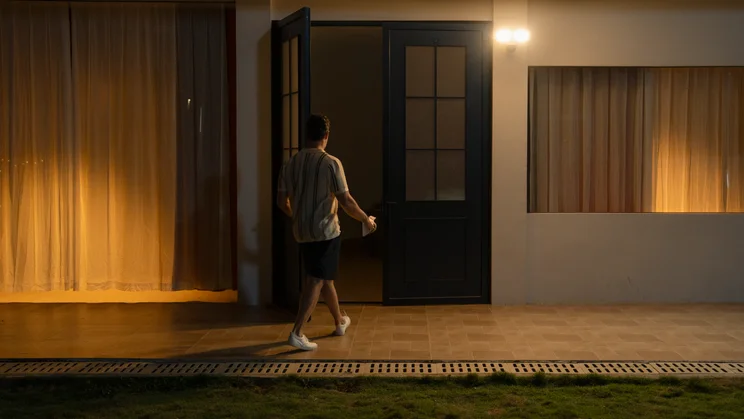
Here at Expert Reviews, we reckon Reolink is the security camera maker that ticks most of the boxes for anyone serious about their home security camera system.
Today, we’ll be taking a look at four Reolink cameras worth your time and money: The TrackFlex Floodlight WiFi, the TrackMix PoE, the Go PT Ultra with Solar Panel, and the battery-powered Reolink Video Doorbell.
Why Reolink?
Most domestic security cameras are made by companies that specialise in just that, domestic security. Reolink, on the other hand, also caters to the professional market, so there’s a degree of quality, capability and thoughtfulness to its products that you don’t always see in some of the competition.
Firstly, all the Reolink cameras listed here, and indeed all the Reolink cameras we’ve tested, like the Elite Floodlight WiFi and Altas, let you store your video recordings for free on a MicroSD card that sits inside the camera.
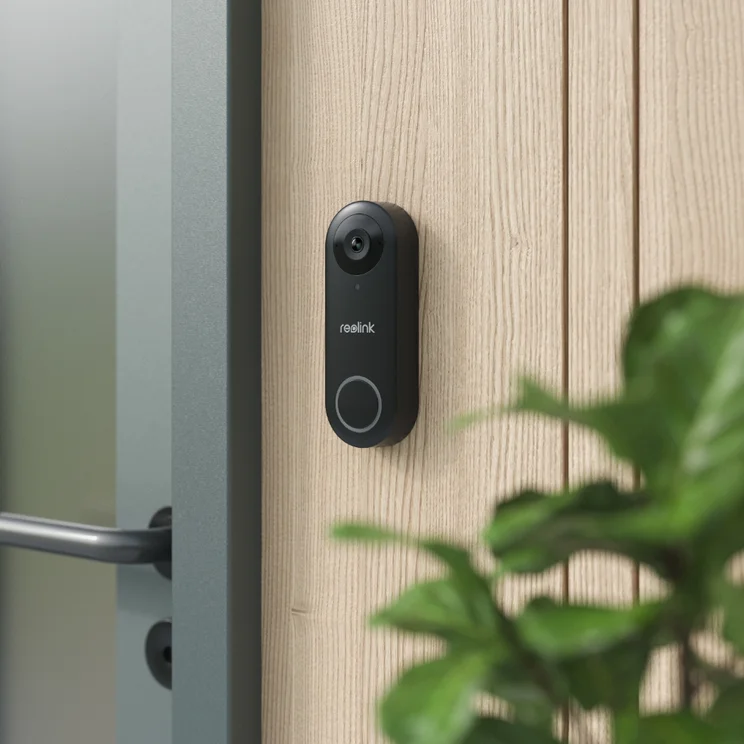
This means you can view, share and download your footage without the need for a cloud storage account. Over the lifetime of a camera, this can result in a significant saving.
If you do want the added security of off-site cloud storage, Reolink has you covered and Reolink’s plans are good value, starting at £2.71/mth for one camera or £13.52 for up to five, with 30 days of storage.
If you want a halfway house, free remote off-camera storage on your own device, Reolink’s Home Hub Mini is an excellent option. At just £50, it lets you store footage from up to 8 cameras on a MicroSD card with a capacity of up to 1 TB and provides weekly AI-powered insights into whatever your system has picked up.
While on the subject of AI, Reolink doesn’t gate-keep its AI tools behind a paywall, so you can use features like the plain-English footage search for free. Just type in a search query like “brown dog” or “blue van”, and any videos that feature said will pop up.
Next up, the vast majority of Reolink’s cameras support both the 2.4Ghz and 5GHz Wi-Fi frequencies. This may seem like small potatoes given that 2.4GHz has a longer range than 5GHz, but with the latest security cameras supporting bandwidth-hungry 4K resolutions, the extra speed that comes with 5Ghz is well worth having.
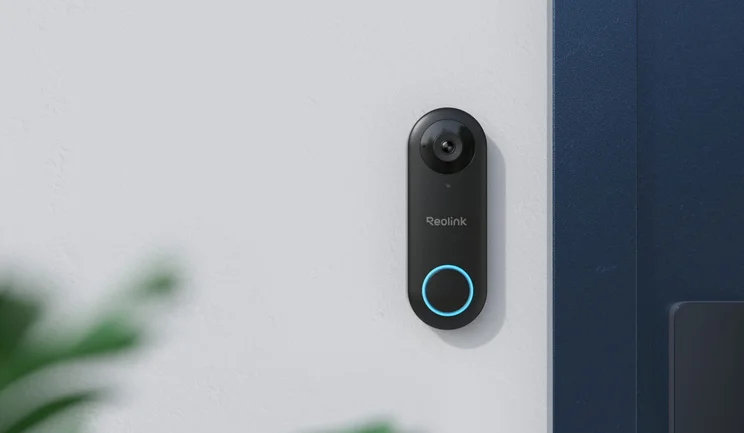
With its professional background, Reolink understands that we don’t always want to be glued to our phones, so it supplies a desktop client for Windows and MacOS computers.
Lastly, the majority of Reolink’s Wi-Fi security cameras comply with the ONVIF protocol for integration with third-party hardware and software from the likes of Blue Iris and Synology, so you’re not handcuffed to Reolink’s own kit going forward.
On a more domestic level, you can also integrate Reolink’s cameras with Google Assistant, Home Assistant, Homey and Alexa, allowing voice control and access to video feeds on suitable connected devices.
Reolink TrackFlex Floodlight WiFi
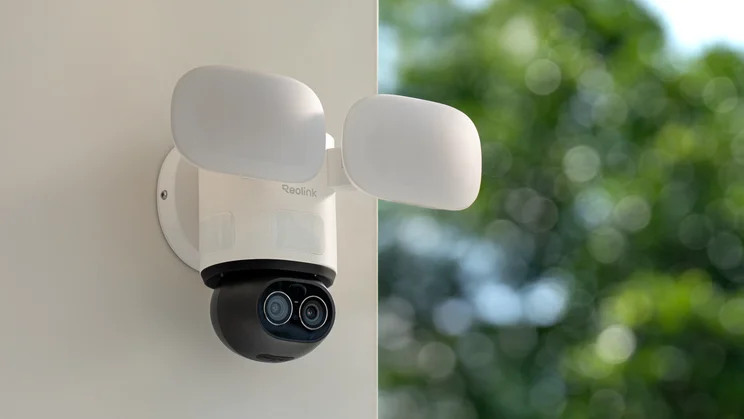
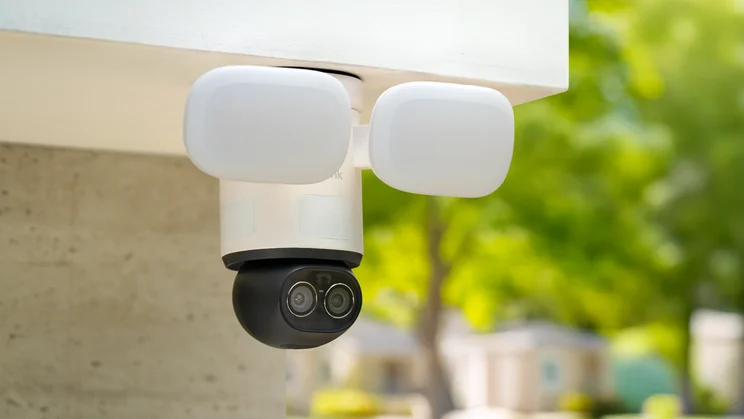
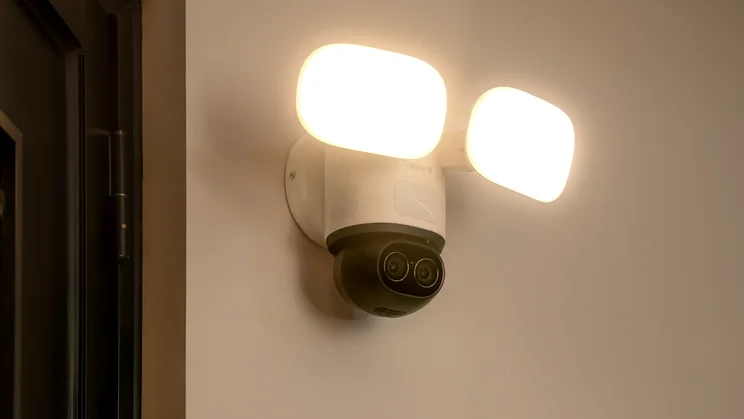
The TrackFlex Floodlight and the Elite Floodlight WiFi camera share the same party piece: 3,000 Lumen twin floodlights that can put out so much light they can give God a run for his money. If you have a big garden or a Lancelot “Capability” Brown-length driveway, or want a camera for a loading yard or warehouse, this is the camera for you.
For domestic use, the lights also feature an adjustable warmth between autumnal 3000K and cheerless 6500K. Combine that with a timer facility, and the TrackFlex isn’t just a good camera, it’s also a top-notch porchlight for sitting in the garden after sundown.
The TrackFlex features a motorised pan-tilt camera mounting with two cameras, one 3,840 x 2,160 telephoto lens and one 1,920 x 1,080 wide-angle lens. Combine them with 360-degree coverage (355° pan and 50° tilt), multi-directional three-sensor motion detection and active tracking, and you have a camera that even Squadron Leader Roger Bushell would have struggled to dodge.
As you’d expect from a security camera pro credentials the TrackFlex has a warning siren that can wake the dead and potentially annoy the neighbours if you leave the volume turned up to 11. Stand next to it, and it is painfully loud.
The IP66 weatherproof rating means the TrackFlex will survive even a direct blast from a jetwasher. Thanks to those power-hungry floods, this is a mains-power-only camera, but Reolink bundles all the bits and pieces to make installation pretty straightforward.
Reolink TrackMix PoE
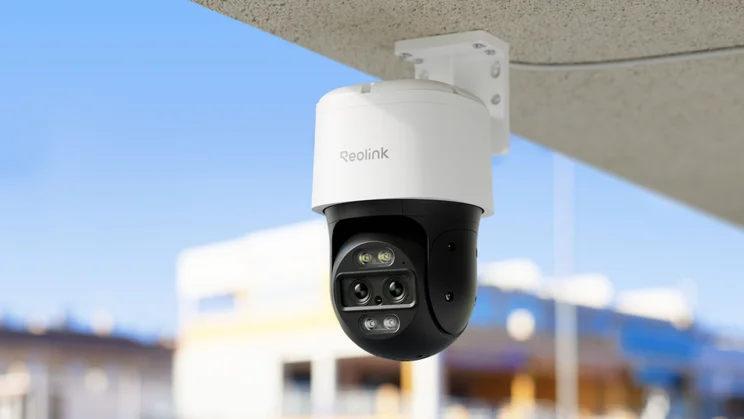
The surest way of preventing anyone with felonious intent from interfering with your camera’s connections is to dispense with any sort of wireless connectivity. The TrackMix PoE does this by utilising a system known as PoE, or Power over Ethernet or PoE.
This is a networking technology that transmits electrical power along with data on Ethernet cabling. To get this up and running, you’ll probably need what’s known as a PoE injector to add power to a conventional router.
Luckily, installing one of these is a simple plug-and-play operation, and they are cheap. Reolink will sell you one for £26. If that all sounds like hard work, you can also power the camera with the bundled 12V mains power supply.
The TrackMix PoE has not one but two 3,840 x 2,160 cameras, one f=2.8mm for wide angles and the other f=8mm for close-ups. The clarity from both cameras is excellent, even at the maximum x6 zoom.
Thanks to some fairly sizable CMOS image sensors- 1/3″ for the wide-angle lens and 1/2.8″ for the telephoto, plenty of light gets in, which makes for very good low-light images. In fact, unless the camera is looking at an area wholly devoid of ambient light, the infra-red night vision feature is seldom needed.
The powered PTZ housing can rotate through 355 degrees, elevate through 80 degrees, and packs twin LED spotlights. Secure surveillance doesn’t come much more secure or comprehensive than this.
Reolink Video Doorbell (Battery)
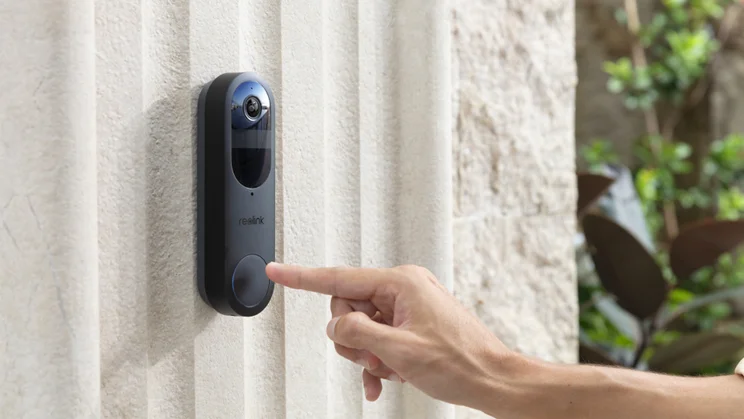
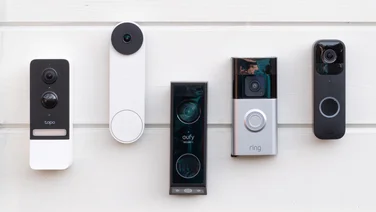
When buying a video doorbell, there are several features you should look for. Firstly, a big battery, so you’re not forever recharging it, secondly, a wide-angle lens so you can see what’s going on and thirdly, support for MicroSD card storage so you can keep and access your footage for free.
Reolink’s doorbell ticks all those boxes and more. The battery is a beefy 7,000mAh affair, which, depending on usage, can last up to 5 months, and you can connect it to a traditional doorbell power supply if you have one.
The camera lens is a 2,048 x 2,048 (4MP) affair with viewing angles of 150 degrees horizontal and vertical, or 180 degrees horizontal. The 1:1 aspect ratio does away with the weird distortion you sometimes see at the edges of some wide-angle doorbell camera feeds, and it supports HDR for high-contrast colour images.
The camera’s AI system can distinguish between people, vehicles and packages and as with video storage, this feature is a no-extra-cost feature. You can also set up pre-recorded quick-reply messages when someone rings the bell, which is handy if you’re not home.
To cap it off, the Reolink Doorbell also supports dual-band Wi-Fi, which is quite a rare feature; most doorbells only work over the 2.4Ghz frequency.
If you’re worried about missing deliveries or visitors when you’ve left your smartphone in another part of the house, fear not, because Reolink bundles a wireless chime that you just need to plug into a vacant mains socket.
Go PT Ultra with Solar Panel
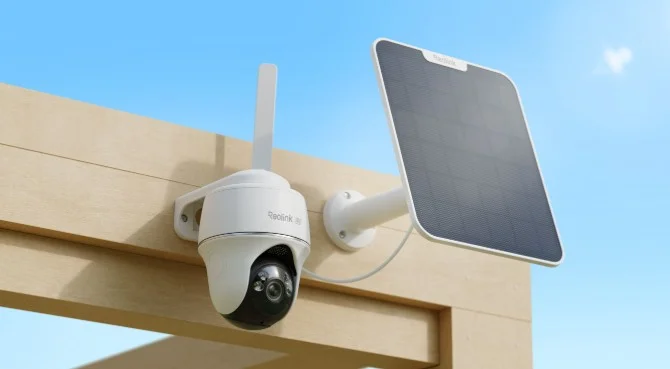
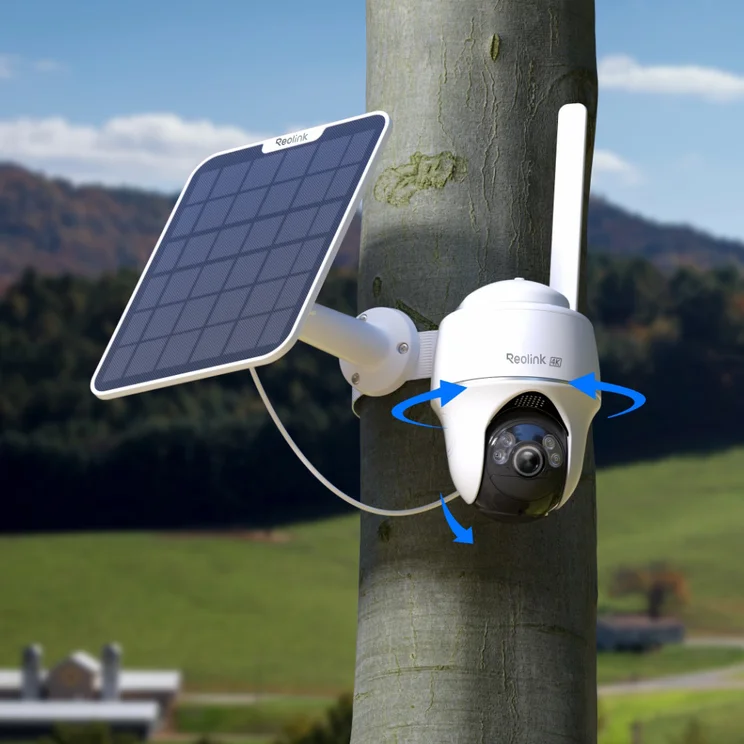
Reolink’s Go PT Ultra is the perfect camera for you if you want surveillance in a situation that can best be described as off-grid. Think the top of a mountain, or the setting of an H.E. Bates novel, or Wales. In short, anywhere, were there’s no way of getting power or WiFi to where a camera needs it.
The Go PT Ultra communicates via a 4G cellular connection. Reolink bundles one of its own SIM cards that lets you buy a data plan via Reolink. Once you’re connected, the camera will happily function in the 96% of the UK with 4G coverage, according to Ofcom.
The benefit of using Reolink’s own SIM card is that it automatically connects to the strongest available local network (e.g., O2, EE, or Vodafone here in the UK) rather than locking you to one specific provider. In remote areas, where reception may be limited to one provider, that is a useful feature.
Having to depend on cellular data access doesn’t interfere with Reolink’s support of free-to-access video storage on a MicroSD card. That all works just as it does with Reolink’s WiFi and Ethernet cameras.
Power comes from the camera’s 6,000mAh battery, but you can keep that topped up with the 6W Reolink solar panel that comes bundled with the camera. Even allowing for heavy use of the camera’s motorised pan-tilt mechanism, LED spotlights and the UK’s gloomy weather, the Go PT Ultra shouldn’t require a battery top-up.
Video quality from the 3,840 x 2,160 camera is crystal clear, while the motorised gimbal mount offers 355 degrees of pan and 140 degrees of tilt, which equates to a panopticon-level coverage.