To help us provide you with free impartial advice, we may earn a commission if you buy through links on our site. Learn more
- Crisp 2K video with HDR
- 6x digital zoom
- Good low-light colour images (sometimes)
- Subscription required
- Chime not included
- The basic Ring doorbell is better value
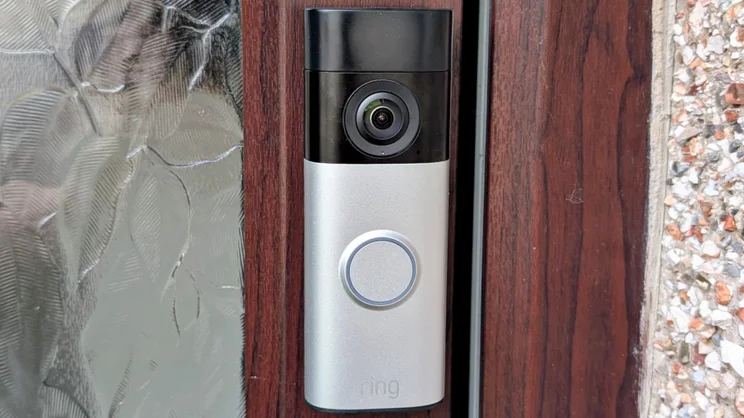
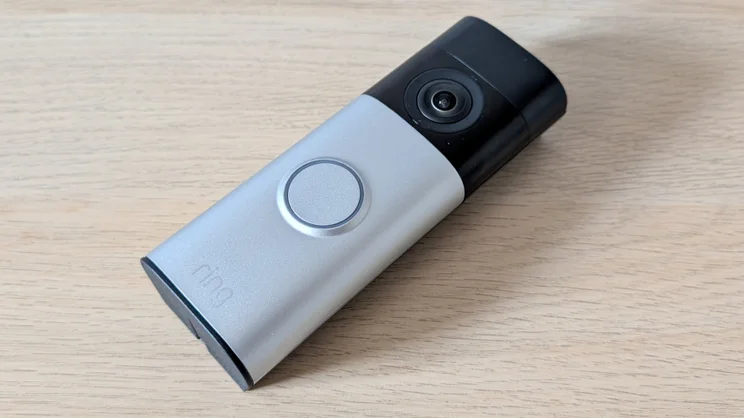
The Ring Doorbell Plus (2nd Generation) is, unsurprisingly, an update of the Ring Doorbell Plus, and it sits in the middle of Ring’s doorbell offerings, between the basic Ring Battery Video Doorbell and the all-singing, all-dancing 4K Battery Video Doorbell Pro.
The main differences are improved video resolution, better colour night vision and an at-launch asking price that’s £10 less than its predecessor. Although as always, you’re best advised to buy one during Amazon’s periodic Prime sales (or Black Friday).
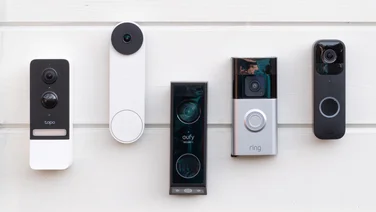
Ring and its budget Amazon stablemate Blink are still some of the biggest players in the doorbell market, but there’s an ever-increasing amount of competition from the likes of Tapo, Eufy and Reolink.
Unlike the devices from those three challengers, you need a paid subscription to get all but the most basic functionality from a Ring doorbell. That begs the question: Is Ring still the brand to go for?

What do you get for the money?
The new Doorbell Plus adheres to the current Ring doorbell philosophy and looks much like the old model, apart from the fact that it’s taller (at 147.3mm vs 128mm) and thicker (34mm to 28mm). It’s not as wide, though (53.5mm vs 62mm), which should make it easier to place on a door surround and the gloss black camera surround now has a matte finish, which makes it a little less prone to showing dust and water stains from rainfall.
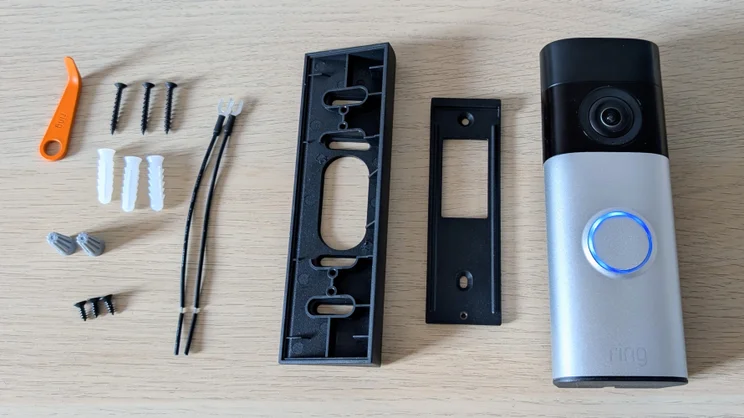
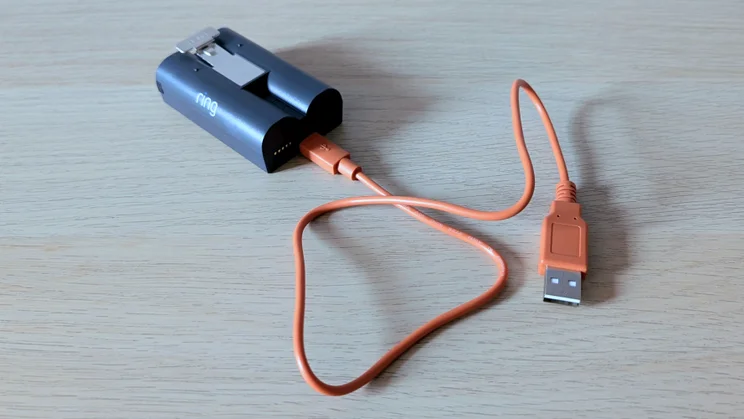
Apart from the doorbell unit itself, Ring also supplies two brackets, the wires and cable screws to connect it to a legacy doorbell power supply, if you have one, and a MicroUSB cable to charge the removable battery.
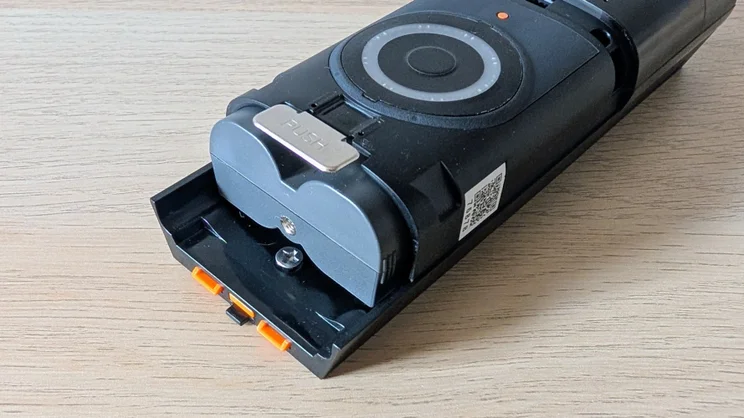
The battery is a bespoke design, but you can buy replacement units for £25. Usefully, the battery can be recharged while unmounted, so if you buy a spare, you just swap them over and charge the drained one at your leisure.
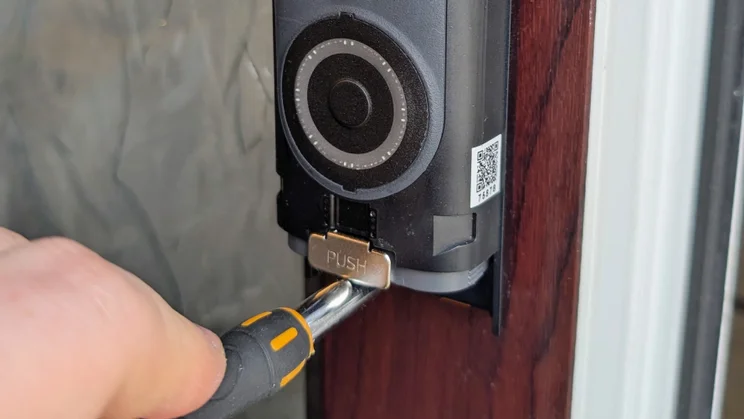
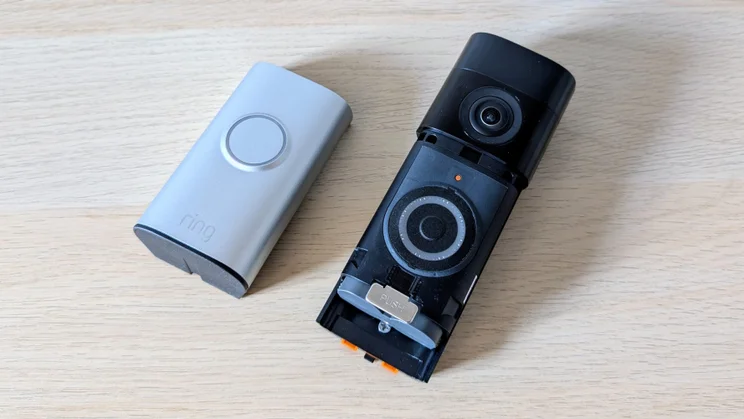
There’s a selection of screws and raw plugs in the box, too. Gone is the screwdriver with a Torx security bit for accessing the battery compartment; that’s a job now done by a plastic doohicky that slides in the bottom and pings the battery compartment cover plate loose.
There’s no chime included, either. You can buy the new Doorbell Plus with a Ring Chime Plus for £199, or you can buy a chime separately, later. The basic Ring Chime costs £30, while the Chime Plus costs £50.
As mentioned, the new Doorbell Plus has a sticker price of £150 compared to the outgoing model’s £160 at launch. For comparison, the Tapo D235 doorbell costs just £90, has a 2.5K camera and comes with a bundled chime.
But that’s a false price, really. During Amazon’s sale events it’ll drop well below the £100 mark. During the Prime Day 2026 event, for instance, it fell to only £80.
Do you need a subscription?
Unlike their Blink brethren, you can’t access footage from a Ring camera without a cloud subscription. That’s because within the Ring hardware ecosystem there is no equivalent to the Blink Sync Module 2.
Without a cloud subscription, all your doorbell can do is let you know when someone is at the door or has pressed the bell, serve up an on-demand live video feed and push simple motion notifications.
A basic single-camera cloud account costs £4.99 per month, but if you want a cloud account to serve more than one camera, the multi-camera option costs £7.99 per month.
To complicate matters, Ring now also offers a raft of AI features for its cameras. To access these, you need either an enhanced Ring Pro subscription at £16 per month, or you can add the Pro Intelligence features to the basic packages for an extra £3 per month per camera.
No matter what subscription you have, if you want 24/7 video recording, you’ll have to pay another £3 per month per camera.
How easy is it to set up?
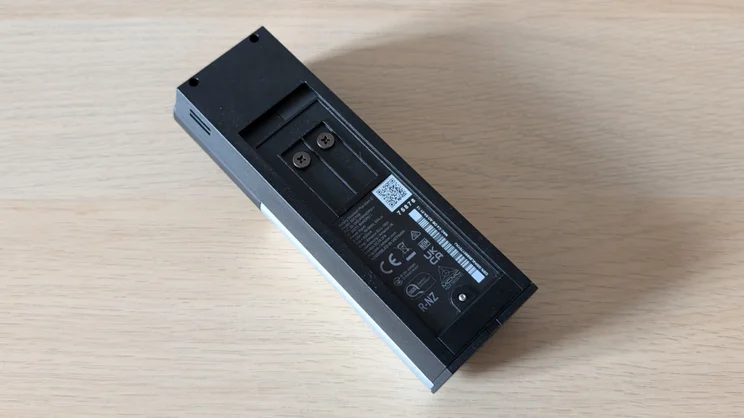
Initial setup is typical for any number of doorbells. First, you download the Ring app, then you set up an account (and connect it to an existing Amazon account), then scan the QR code on the base of the camera.
Then it’s just a question of adding your Wi-Fi password, and you’re good to go. Ring says the new camera supports 2.4GHz and 5GHz Wi-Fi, but as with the Ring Spotlight Cam Pro, there’s an issue with channels.
Ring bundles a simple flat metal mounting bracket and a plastic angle mount if you want to fix the unit to the side of your door, pointing across the entrance. The metal mount has a soft exterior face to ensure a weather-tight seal with whatever you screw it onto.
Once you’ve secured the mounting bracket, you simply slip the top of the doorbell in place, tighten the scew below the battery that fixes the lower part of the doorbell to the bracket and then clip the battery cover back on. No extraordinary DIY skills are required.
As part of the setup process, you’re given the option to set up motion detection zones so that the camera doesn’t activate when you don’t want it to. For instance, if the postman walks down your neighbour’s garden path.
You can also set privacy zones, which black out areas of the frame, which is useful if your camera is, for example, positioned in a way that captures part of your neighbour’s gaff.
Is the companion app any good?
Ring’s app is generally easy to navigate and does a good job of putting the important controls up front and easy to access.
Beyond that, I’m not a fan of the way the settings are split between a side menu accessible from the main landing screen and another menu accessible from the timeline review page.
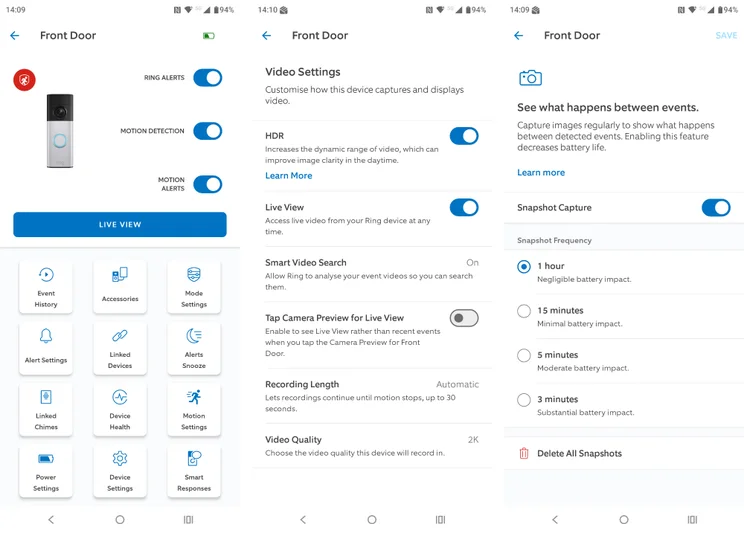
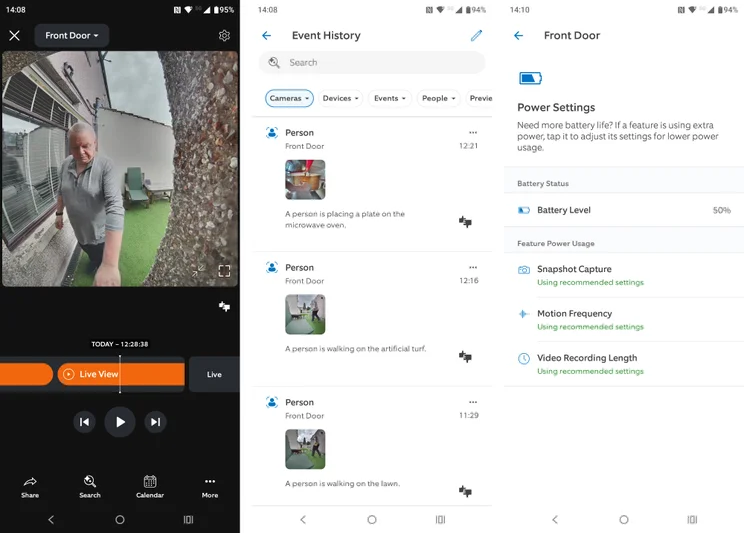
The app doesn’t have a manual record button, but rather automatically records the video feed when you launch a live view. That’s a clever idea and means that anything you see live on-screen is stored for later review.
The option to have a small live-view screen floating on your phone’s display is a useful touch, too. It lets you access other apps while still keeping an eye on the camera feed.
How we test doorbell cameras
In any security-related situation, how quickly you can react to events is key, which is why we test the responsiveness of each camera we review. To do this, we run a raft of timed tests with the aim of measuring the speed of the camera system’s response to various triggers.
For example, we test how long it takes for an alert to be generated on the screen of the camera’s mobile app after motion is detected, or in the case of a doorbell, how soon after the bell button is pushed. And we time how long it takes to bring up the live feed from a request sent via the app.
We assess image quality in daylight and at night, check audio quality, spotlight or floodlight brightness (where applicable), plus we test out the AI detection features to see if they actually work.
How does the Ring Battery Doorbell Plus perform?
Image quality and night vision
The new Ring doorbell is a big step forward from the previous model. The camera now supports a video feed at 1,920 x 1,920 resolution (called Retinal by Ring), up from 1,536 x 1,536. Combine the increase in clarity with HDR-enhanced contrast, and you get a video feed that’s crisper, brighter and more colourful than before.
On paper, the field of view is actually a slight step back, from 150 x 150 to 140 x 140 degrees. The difference isn’t particularly noticeable, though, since both cameras have a blind spot towards the bottom of the door and any packages placed less than 38cm from the bottom of the door (assuming the camera is placed at a height of around 1.7m) are outside the camera’s field of vision.
If you want a doorbell that can see directly down onto your doorstep, I’d suggest the Eufy E340, which has a second, downward-facing camera. Or perhaps wait until the new Eufy S4 arrives, which boasts full 180-degree field of vision.
The 6x digital zoom is another big step forward over the outgoing model. There’s a fair bit of image degradation at maximum zoom, but it’s still on a par with the best of the competition in this area.
But while Ring is to be applauded for adding night colour vision, it has rather snatched defeat from the jaws of victory. Every time I opened a live view at night, the camera presented a nicely lit colour image, only to decide after a few seconds that there wasn’t enough light and swapped to a black and white IR-lit image. The app doesn’t offer the option to force the camera into night colour mode, so even though it’s capable of producing a good-quality colour low light image, it seldom does.
Lights, audio and siren
There was nothing much wrong with the audio system on the first-generation Ring Doorbell Plus, and the new model performs very much the same. Incoming and outgoing audio is loud and clear and wind noise doesn’t get in the way of proceedings.
The app also features a wide selection of pre-recorded messages that you can manually send to the doorbell if you don’t want to speak directly through the camera yourself. Some of the accents are questionable to say the least, and there’s no option to add your own prerecorded messages, which seems a missed opportunity.
Like most doorbells, the Ring doesn’t have a light beyond the multi-coloured LED that circles the bell button, or an alarm siren.
AI features
Since all of Ring’s AI features are cloud-based rather than device-based, what’s on offer here is much the same as it is on the Ring Spotlight Pro I tested recently.
At the most basic level, the system can distinguish between people (including individuals via facial recognition), vehicles, and packages. Be aware, though, that Ring warns the latter won’t work well with packages smaller than 25 x 25 x 25cm and that it can’t detect irregular items like envelopes, poster tubes or shopping bags. That’s disappointing, especially as you’re paying for the privilege.
Beyond that is a feature called “clip description”, which provides a written explanation of what’s happened in any video the doorbell captures. So if the camera records a person walking past your door with a dog, you get a notification saying just that.
That feature ties in with the smart video search. Type in a search term in plain English, like “person with dog”, and all the videos that feature someone out and about with their hound will pop up.
Another AI feature allows you to group alerts for repeated actions, or ask it to learn what it deems usual and only alert you when something unusual occurs. I’ve yet to manage to recreate the specific circumstances in which either of these features comes into play, so I can’t justify the cost needed to access them.
Thankfully, Ring does give you a free 30-day trial of the full-fat Ring Pro subscription so you can try all these features out and then make an informed decision as to whether or not you want to keep paying for them.
| Plan | Features | Price per month | Price annually |
|---|---|---|---|
| Ring Solo | One camera; 180-day video storage; person, package and vehicle alerts; doorbell calls | £4.99 | £50 |
| Ring Multi | Same as above except unlimited cameras | £7.99 | £80 |
| Ring Pro | Same as above except includes AI description, video search, single event alerts, and familiar face detection | £15.99 | £160 |
Speed and responsiveness
I was impressed with the speed of the new Doorbell Plus. It typically took less than 1.5 seconds from pressing the button to receiving an alert on my phone, and it was this quick regardless of whether I was connected to my home Wi-Fi network or a cellular network.
That’s on a par with the fastest doorbells we’ve tested here at Expert Reviews, like the Imou Doorbell 2S, the Tapo D235 and D210.
Summoning a live video feed from the app was also a pretty quick business, seldom taking more than 2.5 seconds, regardless of network.
| Aggregate response (Wi-Fi) | Aggregate response (cellular) | Aggregate response (all) | |
|---|---|---|---|
| Eufy E340 | 12.9s | 16.4s | 29.4s |
| Ring Video Doorbell Plus (Ring Battery Video Doorbell Plus) | 6.8s | 7.1s | 11s |
| Ring Video Doorbell Plus (2nd Gen) | 6.3s | 6.8s | 13s |
| TP-Link Tapo D235 | 7.5s | 8s | 15.5s |
Are there any problems worth mentioning?
The new Ring Doorbell supports both 2.4GHz and 5GHz Wi-Fi, but it won’t connect to a 5GHz Wi-Fi signal on channels 36-64, which means you may need to manually select new channels (Ring suggests 100-165) in your router’s menu if that’s what yours is using.
I’d hardly call this a deal breaker, but I’m not everyone. Plenty of folk won’t be comfortable rummaging around in their router’s settings and for those people, the 5GHz support will never be used.
Also, being a Ring product and Ring being owned by Amazon, the Doorbell Plus will only integrate with Alexa. Users of any other type of IoT or smart home setup should look elsewhere.
Should you buy the Ring Battery Doorbell Plus (2nd Gen)?
One elephant in the room here is the basic Ring Battery Doorbell, which now also has a 1,920 x 1,920 camera, 6x digital zoom and colour night vision. Granted, you don’t get HDR, support for 5GHz Wi-Fi, and the battery isn’t removable, but it costs £80 and can often be found for half that amount during Prime offers. That’s £110 cheaper than the new Plus model.
Another option is the Tapo D235. It’s cheaper, doesn’t require a subscription, has a higher-resolution camera and comes with a chime in the box. It’s my favourite mid-price doorbell at the moment.
I’m forced to end this review on the same note as I’ve ended recent reviews of other devices from Ring and Blink. If the price is right in a Prime Day sale, and you’re happy paying a monthly subscription to even access your recordings, the new Doorbell Plus is a solid bit of kit. But you can get more for less.