
To help us provide you with free impartial advice, we may earn a commission if you buy through links on our site. Learn more

- Big, bright display
- Excellent battery life
- Expandable storage
- Not much of a performer
- Grainy cameras
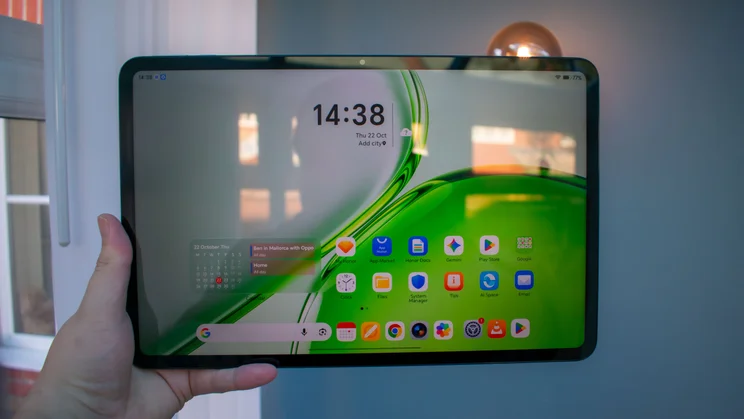
As the name suggests, the Honor Pad X9 Max is big. At 13 inches across the diagonal, its display isn’t quite the largest of any tablet – Samsung’s massive Galaxy Tab S12 Ultra has an even more expansive 14in screen – but it’s certainly up there. Equally, its battery doesn’t have the highest capacity around, but it isn’t far off, and all of that requires a good deal of space, so it’s quite a hefty tablet, too.
The one thing about the Pad X9 Max that isn’t enormous is the price. In fact, it’s one of the most affordable 13in tablets that you can buy right now. Its budget nature naturally comes with certain concessions – don’t expect blistering performance or fluid 3D gaming, for instance – but if you want a big screen and a great battery for an affordable price, the Pad X9 Max is near-enough without rival.
What do you get for the money?
The Honor Pad X9 Max starts at just £299, which gets you the entry-level configuration with 4GB of RAM and 128GB of storage. There’s another, slightly better equipped model with 6GB of RAM and 256GB of storage available directly from Honor for £450.
That’s quite the price jump but you do (at the time of writing) also get a Bluetooth keyboard case and the Magic Pencil 4s stylus thrown in as free gifts, so think of that more as a bundle price. If you’re happy with the lower-capacity model, you can still buy the keyboard and stylus separately, for £50 and £45, respectively.
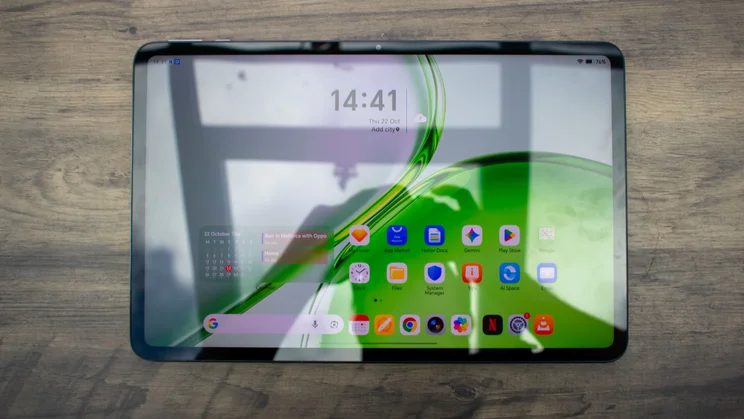
The tablet is fronted by a 13in LCD display with a resolution of 2,500 x 1,560 and a peak refresh rate of 120Hz. The processor is the 2.9GHz Snapdragon 6s 4G Gen 2 and the battery has a capacity of 10,100mAh, with charging supporting up to 45W wired.
Connectivity is quite rudimentary, supporting up to Wi-Fi 5 and Bluetooth 5.1, and there’s no LTE variant that allows for a SIM card. There is, at least, a microSD card slot that lets you expand the internal storage by up to 2TB – a great reason to not spend more on the 256GB model.
The MagicOS 10.0 software is slick, accessible and, in a rare move for Honor, pleasingly free of excessive bloatware, with only a couple of stragglers hanging around upon boot. Even better, Honor is giving this budget tablet the same excellent software support as the MagicPad 4, with six years of both OS updates and security patches pledged.
How well-built is the Honor Pad X9 Max?
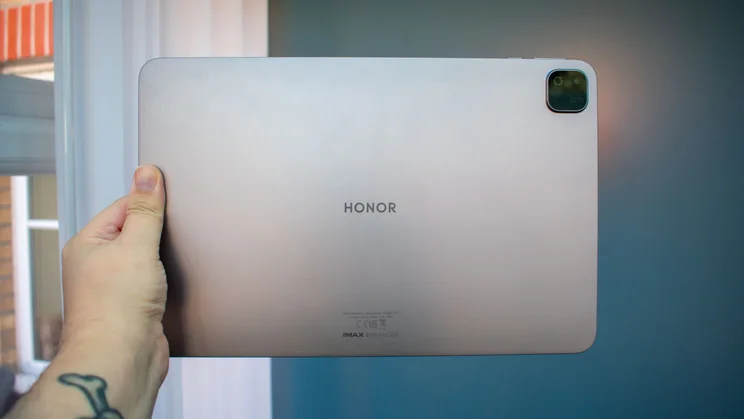
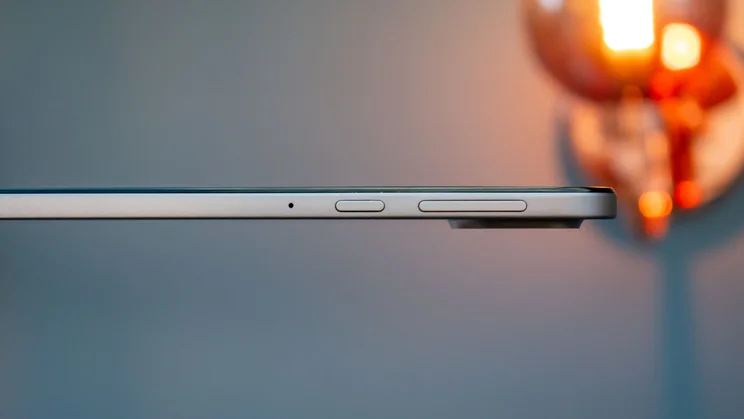
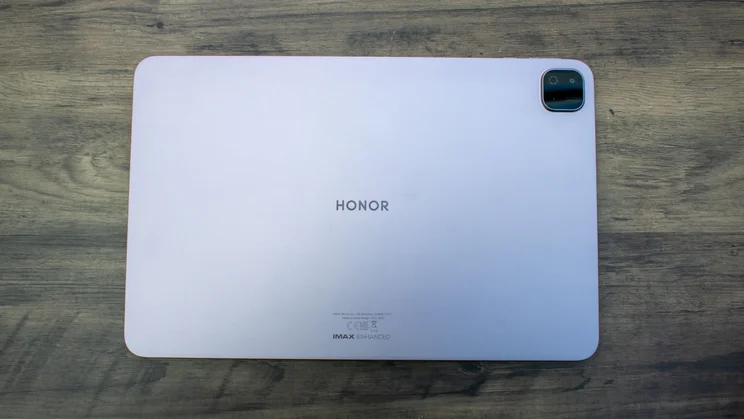
The Pad X9 Max has a unibody aluminium design, with the rear and edges comprising a seamless piece of metal. This is a wonderfully sturdy chassis and the premium feel is far from guaranteed at this kind of price. The sole gunmetal grey colourway is fine enough but it would have been nice to have even one other colour option.
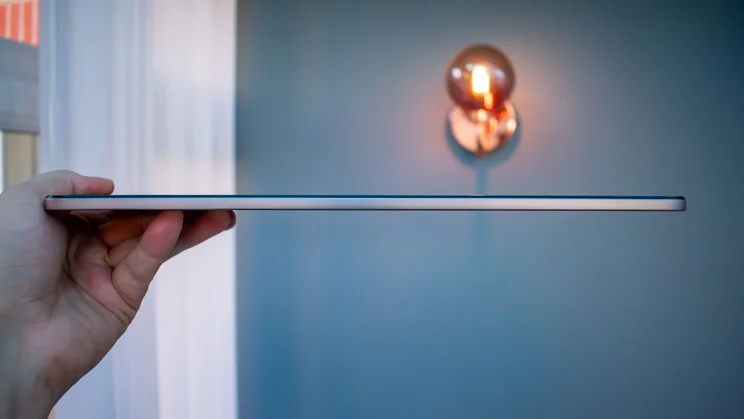
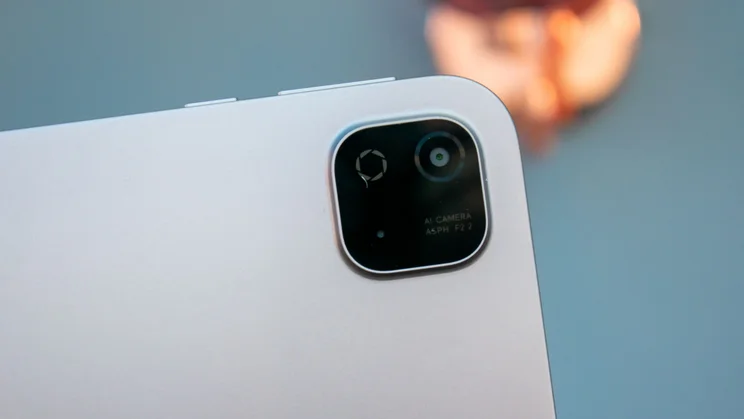
The tablet measures 298 x 6.7 x 193mm (WDH) and weighs a fairly hefty 618g – unsurprising, given its massive 13in display. There’s a 5-megapixel (f/2.2) camera set into the long bezel at the top of the display and an identical lens sits in a circular housing in the top-right corner of the rear. Both produce rather grainy images and footage, however, so they’re not much use beyond the occasional video call.
Is it good for watching TV and movies?
This is very much the main event for the Pad X9 Max – whatever else it has to offer, this is a machine designed for media.
Honor rates the display’s peak brightness at 700 nits and my testing broadly lined up with that; on manual brightness, I recorded the ceiling at 596cd/m2, while switching to adaptive brightness and shining a torch on the light sensor pushed it up to 627cd/m2.
There’s only one colour profile – another indicator that this is a budget device – but it does a decent enough job at reproducing the sRGB colour space. Using a colourimeter, I measured a gamut coverage of 96.5% against a volume of 102.5%, and the average Delta E colour variance score came back at 1.7. That’s a little higher than my target value of 1 or under but for this kind of money, it still counts as very good colour accuracy.
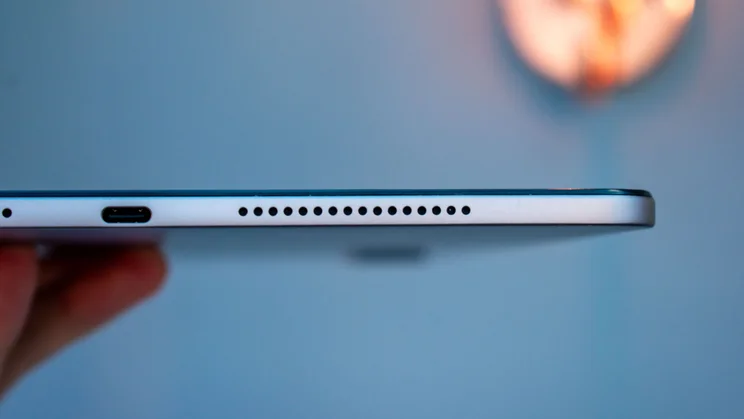
On the audio front, there are four speakers on the tablet, two on the left edge, two on the right, and they put out some decently powerful sound. The stereo separation is effective and there’s enough clarity maintained at higher volumes that you won’t need to hook the tablet up to a Bluetooth speaker in order to enjoy a quick movie at home.
Can it handle games and multitasking?
The Snapdragon 6s Gen 2 chipset is moderately powerful, clocked up to 2.9GHz, but the meagre 4GB of base RAM that backs it up is certainly on the weaker side of things. I never found operations to be particularly sluggish – opening apps is pleasingly efficient and running multiple at once never proved to be a problem – but as you can see below, there are faster machines available for this kind of money.
In particular, the Xiaomi Pad 8 absolutely blows everything else in this price range out of the water, with single and multi-core scores that are more than four times those of the Pad X9 Max. The 2025 iPad is right in this pocket, too, with a single-core score 18% higher than the Xiaomi, though its multi-core fell behind by 28%.
Both of those have smaller 11in displays, of course, so that exceptional power comes with a concession, but it’s still a shame to see the Pad X9 Max falling so far behind the competition.
My first step to discerning the gaming potential of a device is to run the Vulkan GPU test in Geekbench 6. The Honor Pad X9 Max flatly refused to complete the test, crashing out around a quarter of the way through multiple times, without fail. That’s not the most optimistic start.
Actual gaming isn’t quite as dire as the repeated failed tests suggest, however. I was able to run through several tracks on Asphalt Legends without experiencing major framerate dips or frustrating lagging – though the textures were scaled down to PlayStation 1 levels in order to keep things stable. As long as your gaming aspirations lean in the more casual direction, the Pad X9 Max will be able to accommodate just fine.
Is the battery life good?
Where the Pad X9 Max really showed its quality, however, was in my battery life test. Running a looping video with the display set to 170cd/m2 and airplane mode engaged, the Pad X9 Max lasted for a fantastic 17hrs 58mins. That’s one of the best results I’ve ever recorded from a tablet of this size and will easily see you through a plane or train ride or just a lazy evening in watching movies.
Once depleted, the 45W charging proved fairly efficient, too. It took roughly 40 minutes to bring the battery from empty to 50%, with a full charge taking 1hr 36mins.
Should you buy the Honor Pad X9 Max?
There’s a certain simplicity to the Honor Pad X9 Max that makes recommending it very easy. It doesn’t try to do too much, and therefore has fewer areas in which to fail. It simply offers a massive display with good colours and decent brightness, a long-lasting battery and impressive software support, all wrapped up inside a sturdy aluminium frame.
It doesn’t have the hardware to serve as a laptop replacement – so the optional keyboard case feels wholly unnecessary – but those who are simply seeking a big display to watch movies on (or play simple, low-intensity mobile games) will find few options that can beat the twin appeals of the Pad X9 Max’s big display and brilliant battery life.


