To help us provide you with free impartial advice, we may earn a commission if you buy through links on our site. Learn more
- Great price for a 75in TV
- Movie preset shows potential
- Content-rich smart system
- Uninspiring black levels
- Inner frame of extraneous light
- Thin audio
Unintimidated by the swollen ranks of competitively priced TVs jostling for position in the UK TV landscape, Chinese brand Haier has decided now is the time to join the party. It’s doing more than just tipping a toe in the water, too; its launch range includes multiple different series and a strikingly wide range of screen sizes.
The S80G I’m looking at here is Haier’s entry-level model, and the 75in model I had on my test bench is available for as little as £699. That looks like great value for a Fire TV sporting a quantum dot colour system; has Haier instantly made its mark with one of the year’s biggest TV bargains?
Haier S80G review: Key specifications
| Screen sizes available | 43in (H43S80GUF), 50in (H50S80GUF) 55in (H55S80GUF), 65in (H65S80GUF), 75in (H75S80GUF) |
| Panel type | QLED |
| Resolution | 4K/UHD (3,840 x 2,160) |
| Refresh rates | Native 60Hz, up to 120Hz DLG |
| HDR formats | HDR10, HLG, HDR10+ |
| Audio enhancement | 2 x 9.5W speakers |
| HDMI inputs | 3 (all with some v2.1 features) |
| Freeview Play compatibility | No (but Freely) |
| Tuners | Terrestrial Freeview HD |
| Gaming features | VRR, claimed 1080@120Hz (via DLG technology), ALLM |
| Wireless connectivity | Bluetooth, Wi-Fi |
| Smart assistants | Alexa |
| Smart platform | Fire TV |
What you need to know
While you might be familiar with the Haier brand name from kitchen and laundry appliances, 2026 is the first time it’s attempted to launch a range of TVs in the UK. On paper, though, despite the S80G sitting near the bottom of Haier’s debut TV range, nothing about it screams ‘noob’.
In fact, by combining a direct-lit LCD panel with quantum dot colours and both Fire TV and Freely smart services at very aggressive prices, the S80G feels like it’s been made by a brand that’s been doing TVs for years. But can the S80G’s performance live up to its promise?
Price and competition
The S80G range offers five very aggressively priced screen sizes. At the time of writing (which, I should say, is in the lead-up to the 2026 Black Friday sales), the 43in model costs £259, the 50in model costs £329, the 55in costs £379, the 65in costs £479, and the 75in that forms the basis of this review costs £649.
These low prices limit the direct competition the S80G faces. The closest rivals worth mentioning are the Sharp HJ6725KB Roku TV and the Sky Glass Air. The former is only available in a 50in screen size, while the latter combines a distinctive design in an array of colour options with solid performance and the option to buy it as part of a Sky subscription.
Design, connections and control
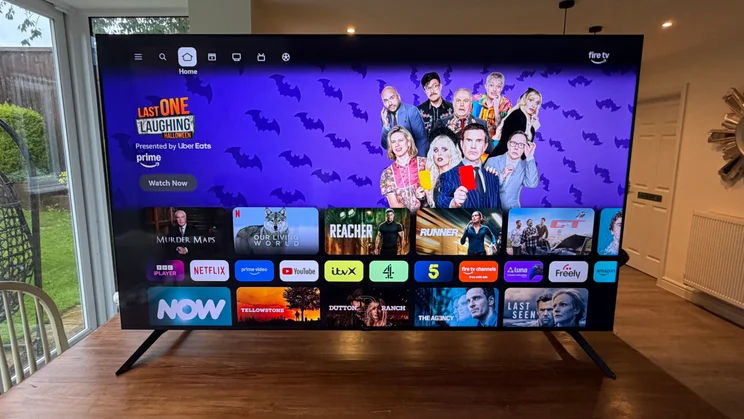
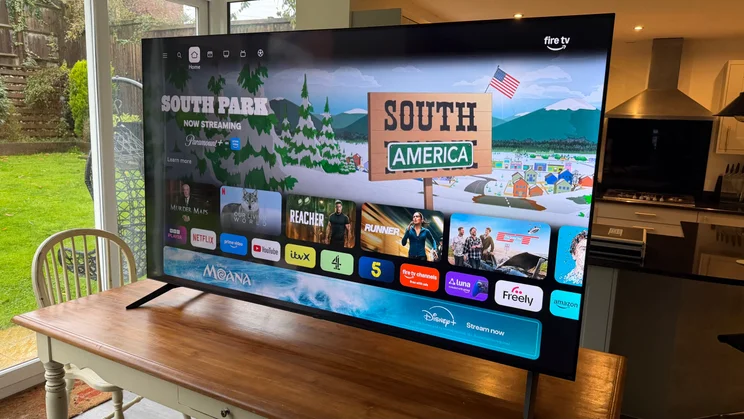
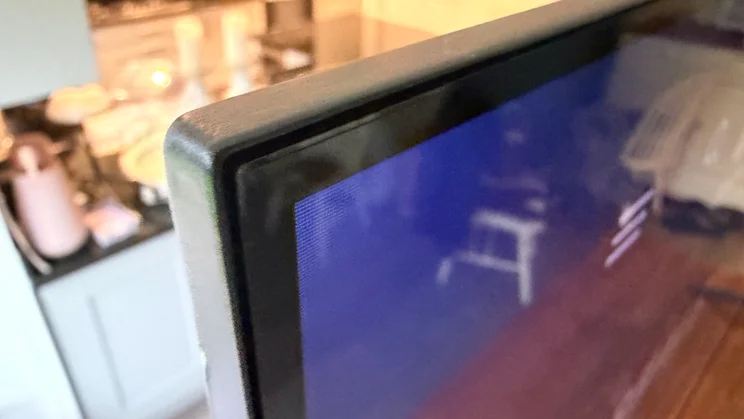
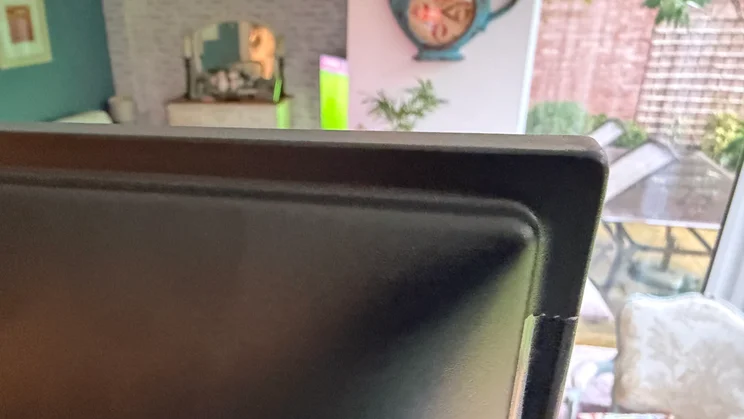
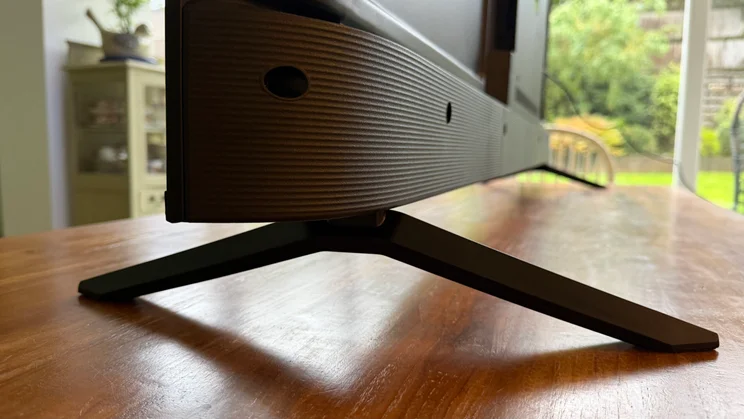
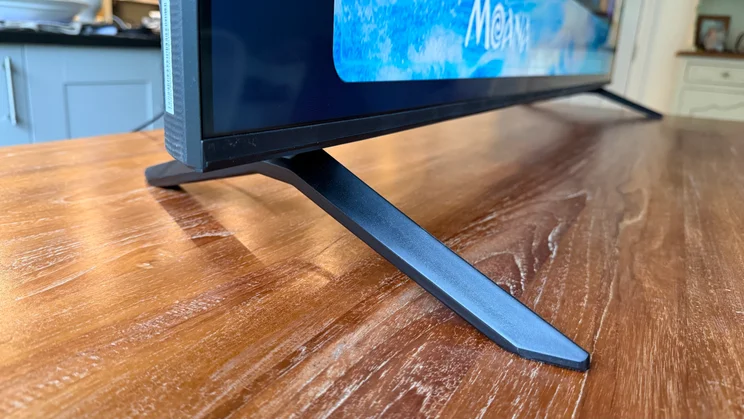
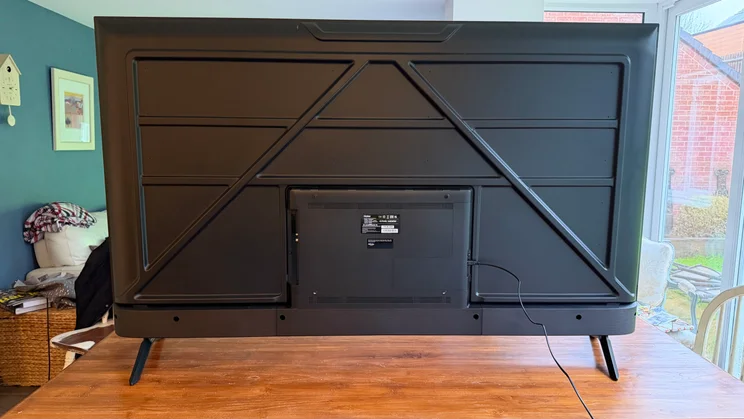
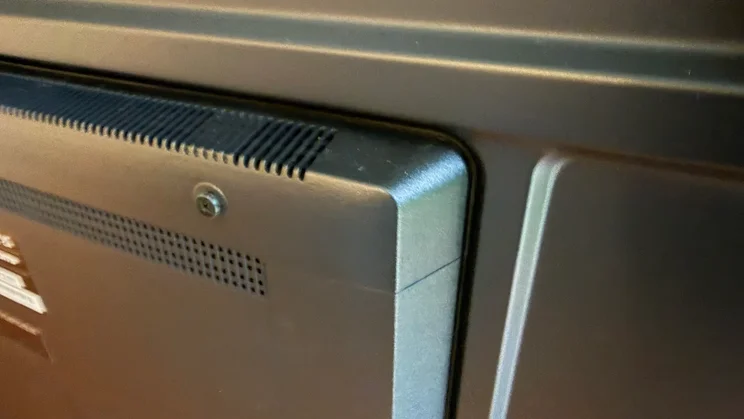
Viewed head-on, the Haier S80G doesn’t look as cheap as it is. The frame around the screen is slender, and its lightly textured finish is pleasant and premium compared to the drab matte or overly glossy finishes on most similarly budget TVs. However, the S80G’s budget nature shows in its unusually chunky rear and its lightness. I moved the 75in model around easily.
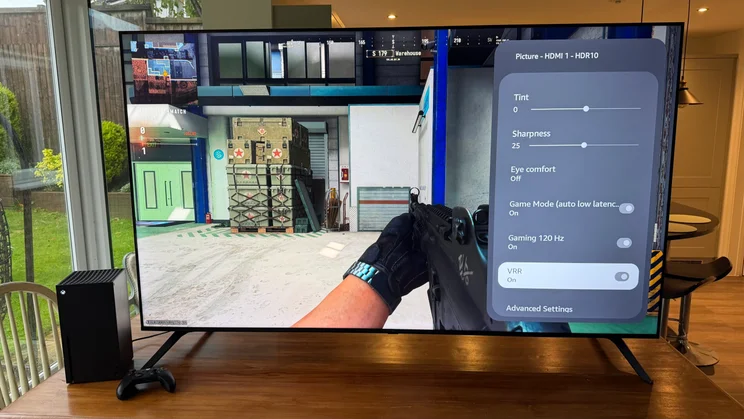
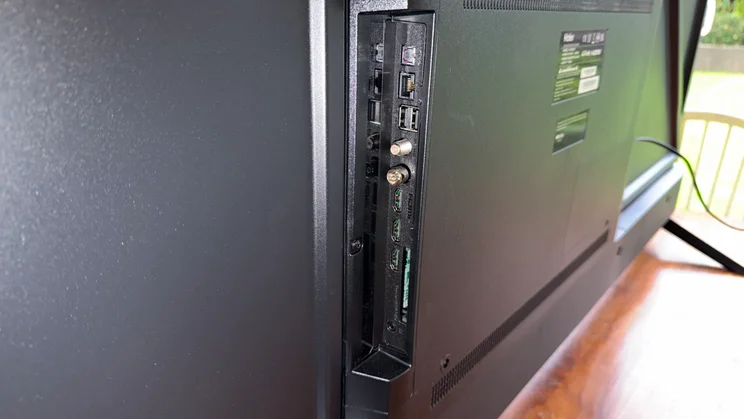
The S80G’s connections are decent for such an affordable TV. Three HDMI ports lead the way. They’re not full HDMI 2.1 spec, so they can’t deliver 4K at 120Hz, but they can deliver 1080p@120Hz via Direct Line Gate technology, despite the TV using a native 60Hz panel. I did find a catch, though, as I’ll discuss later in the Gaming section.
Other physical connections comprise a pair of USB ports, a headphone jack, an optical digital audio output, RF inputs for satellite and terrestrial aerial tuners, and an Ethernet port. The set also supports Wi-Fi and Bluetooth.
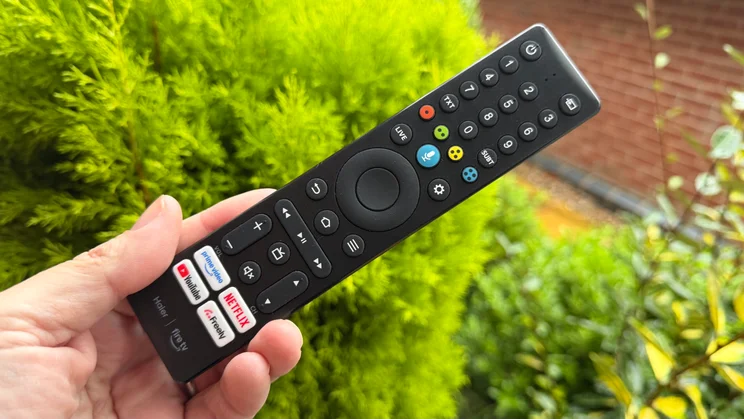
The S80G ships with a single, rather plasticky and lightweight remote control. It’s not glamorous, but its logical, spacious layout makes it straightforward to use. As you would expect with a Fire TV television, built-in Amazon Alexa unlocks voice commands.
Smart TV platform
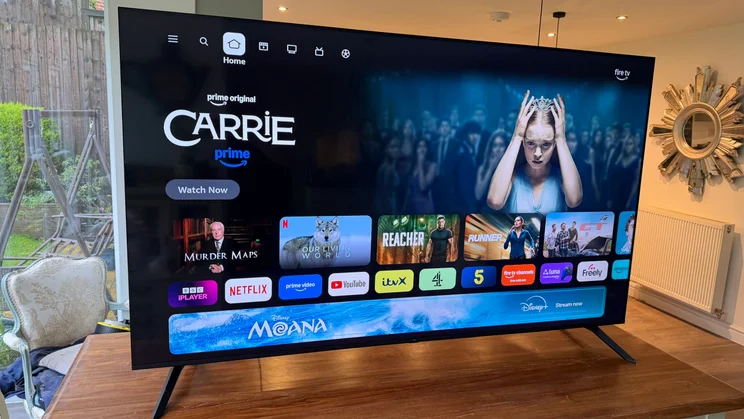
The Haier S80G’s smart TV system is based on Fire TV and Freely. The former is Amazon’s homegrown interface, and very likeable for its presentation, the vast amount of content it provides access to, and how slickly it runs even on a TV as affordable and low on computational horsepower as this Haier.
Freely is a relatively new UK service that lets you live stream (and access a library of catalogue content from) most UK terrestrial digital broadcast channels, removing the need for an antenna in your home.
Image quality
The S80G is a bit of a mixed bag with standard dynamic range content; its performance depends on which picture setting you use. The best option by far is Movie mode (there’s no Filmmaker Mode), which, while not perfect, shows that someone at Haier understands what makes TV picture quality tick.
Colours in Movie mode look pleasingly balanced and subtly toned, but are surprisingly vibrant for such an affordable TV. The quantum dot configuration is illuminated with a fair bit more brightness than most TVs at this price point; I measured peak SDR brightness between 500 cd/m² and 600cd/m2 (depending on the picture mode), and colours retain punch rather than fading under the pressure of so much light.
The S80G retains decent tonal subtlety in most SDR picture areas and looks reasonably sharp with 4K footage. Haier’s upscaling of HD and SD images isn’t the sharpest, but it prioritises suppressing noise before adding pixels, which helps prevent source noise from looking obviously exaggerated.
24p HD content can look a bit too jerky without the S80G’s motion processing system. However, the MEMC motion processing option smooths things out quite effectively without looking too artificial or generating ugly processing side effects.
Unusually, the S80GUF’s Standard SDR picture mode isn’t much brighter than the Movie mode. It does try to boost the colour and sharpness, though, with mostly unsuccessful results. Colours tend to look peaky and forced, and the sharpness looks unconvincing and ‘gritty’.
Rough and ready
Standard mode clearly tries to expand SDR content to take advantage of the S80G’s surprisingly far-reaching panel capabilities. However, the results are too rough and ready to be immersive or even enjoyable.
The best thing about Standard mode is that it creates a superior sense of contrast than Movie mode. This isn’t due to a big improvement in black-level performance, though; it’s chiefly because its brighter highlights (over 600cd/m2 versus around 528cd/m2 in Movie mode) create a bigger luminance gap between the screen’s peaks and its rather grey-looking dark scenes and dark picture areas.
This brings us to the Movie preset’s chief weakness; it tends to look pretty flat and grey during dark scenes. Perhaps Haier would have done well to limit Movie mode brightness to the 100-200 nits level SDR is typically mastered at.
I can finish this section on a positive note, though, thanks to the S80G delivering some accurate colour and greyscale measurements according to my resident Portrait Displays’ Calman Ultimate software, G1 signal generator and C6 HDR5000 colour meter.
Calman’s two-point and multi-point greyscale tests deliver Delta E 2000 average errors of 4.1 and 2.6, respectively, against a target of 3 or less, while Saturation Sweep, Luminance Sweep and ColorChecker tests delivered results of just 1.9, 2.6 and 1.5, respectively. This confirms my impression that the S80G’s SDR Movie mode knows its way around TV colour, at least during brightish scenes, in a way most budget TVs do not.
HDR Image performance
If the S80G’s Standard picture setting looked a bit off with SDR images, the same preset looks downright crazy with HDR.
Its colours are pushed to the point where everyday objects and skin tones look almost extraterrestrial, and where relatively pure primary colour tones stand out like a sore thumb. Balance is nowhere to be seen; this default picture mode instead shows off how extreme it can get by budget TV standards, with next to no thought for naturalism or consistency.
Extreme and unbalanced
Bright HDR picture areas tend to clip in Standard mode too, meaning the boldest colours and brightest peaks lose subtle shading details, leaving them looking either cartoonish or flared out.
This extreme approach extends to contrast, with the luminance gap between its darkest and brightest areas even wider in HDR than in its SDR Standard mode. At first glance, this seems like a strength compared with most budget TVs. However, it doesn’t take long to realise that the seemingly good black levels in high-contrast scenes come at the expense of subtle shading details and any real sense of depth. This, plus the clipped bright highlights, makes the admittedly punchy picture look artificial.
While the S80G can make black tones look quite deep in shots with a mix of bright and dark content, full-on dark scenes again become rather grey and murky. I also became more aware of an inner frame of extraneous light running about an inch wide around the outer edges of dark scenes. Once I’d spotted it, this became very distracting.
The Standard HDR picture preset shows the screen can reach brightness and colour most budget TVs cannot, but in every other way it’s a bust.
Fortunately, the Movie mode is there again to (somewhat) save the day. This massively calms the colour presentation, delivering a much more balanced, natural image where even the richest colours still feel like part of the movie world they’re supposed to be in, rather than escapees from a low-budget animation.
Movie mode to the rescue?
There’s also more finesse in colour tones, which helps the picture look more three-dimensional and realistic, and skin tones actually look human and healthy in Movie mode rather than plasticky and flushed.
Continuing the more controlled image theme, there’s noticeably less clipping of shading detail in the brightest parts of HDR pictures, and there’s more visible shadow detail in dark scenes. This extra balance and subtlety make the picture look sharper and more detailed.
Calman Ultimate measurements of HDR Movie mode don’t show quite the same level of surprising accuracy I recorded in SDR mode, but the results are still pretty good for such an affordable screen. Working with a peak luminance of 526cd/m2, the S80GUF Movie mode achieves Delta E 2000 average errors of 3.7 and 2.8 with two-point and multi-point grayscale tests, while Saturation Sweep, Luminance Sweep, ColorChecker and HDR Content ColorChecker tests turn in average error results of 8.9, 4.9, 2.5 and 3.4 – all, except the average Saturation Sweep test – great results for a budget TV.
While the S80G’s Movie mode succeeds in enough areas to make us keen to see what a second generation of Haier TVs might look like, it doesn’t solve the grey look in dark scenes. Also, the inner frame of extraneous light running around the border of dark images is more noticeable in Movie mode than in Standard mode.
Haier does provide a Dynamic Contrast option that makes dark scenes look less grey. However, this setting also significantly decreases brightness and causes subtle details in dark scenes to become lost in the darkness. In other words, Dynamic Contrast arguably creates more problems than it solves, leaving you with no real solution to the S80G’s dark scene woes.
To test the Haier S80G, I used Portrait Displays’ Calman Ultimate software.
Gaming
The S80GUF is not a great TV for gaming. For one thing, I couldn’t get my Xbox Series X to recognise the TV’s 1080p/120Hz capabilities after activating them in the TV’s on-screen menus. It only ever saw Haier’s set as a 60Hz display.
However, the main problem is that in Game mode, which has middling input lag of 26.2ms, judder and motion blur are worse than I’ve seen on a TV in a long time. So much so that gaming for any length of time can feel quite fatiguing. The lack of motion clarity and responsiveness also puts you at a disadvantage in competitive online shooter environments.
Sound quality
If you want powerful, well-rounded sound without a soundbar, the S80GUF is not the TV for you. Bass is severely lacking, leaving action movies sounding thin and weedy, and the TV lacks the raw power or dynamic range to create a soundstage of any scale. In particular, the sound doesn’t project forward into your room, leaving it sounding distant and detached.
The only exception is speech, which is surprisingly clear at all times and sounds like it’s coming from the screen rather than speakers behind or below it. The S80G at least seems to understand its limitations and work within them, so it doesn’t distort or break down during dense soundtrack moments as so many TVs do. The sheer lack of audio potency, though, is just as distracting.
Haier S80G review: Verdict
There are things to like about the S80G. Its extremely aggressive pricing is very appealing, especially on the 65in and 75in screen sizes. Its design is sleek, at least when viewed head-on, and its smart features are excellent, offering a huge amount of content across two smart platforms that both run slickly and stably.
Movie mode presets show signs of potential, too. Unfortunately, several niggles prevent this potential from being realised, niggles that are especially problematic if you’re a gamer. That said, the S80G’s best qualities have me hoping Haier sticks around in the UK for a few more TV generations.