
To help us provide you with free impartial advice, we may earn a commission if you buy through links on our site. Learn more
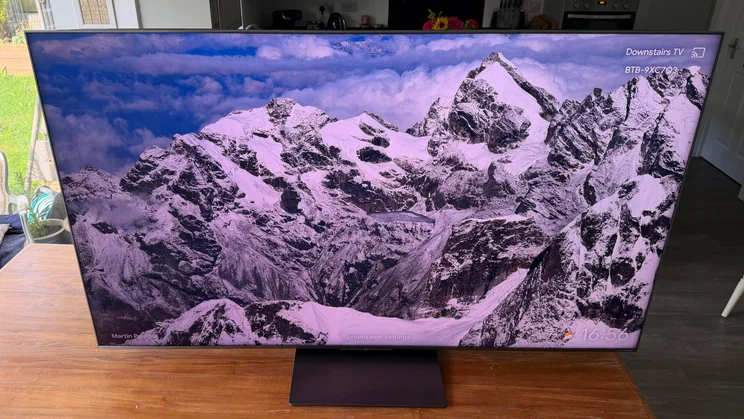
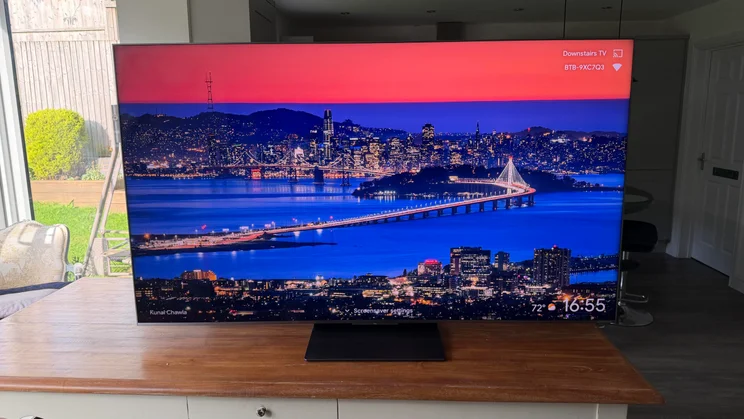
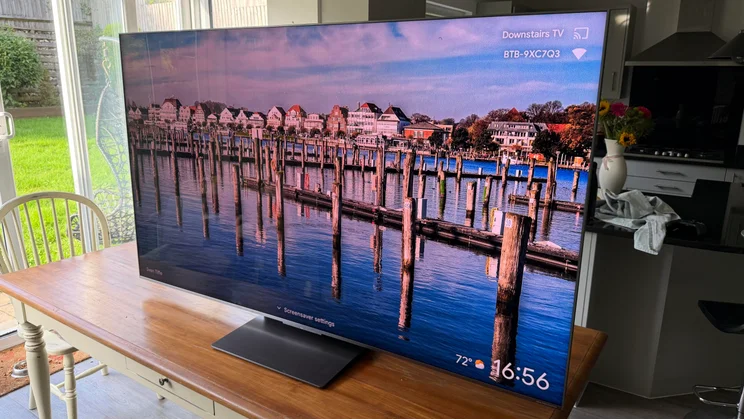
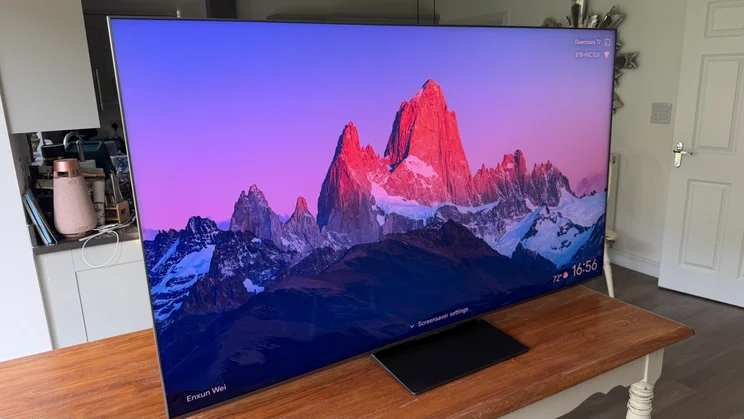
- Outstanding picture quality
- Excellent gaming support
- Comprehensive HDR support
- 65in isn’t as great value as other sizes
- Sound can be inconsistent
- Slightly cumbersome design
We’ve already seen what TCL’s new Super Quantum Dot technology can do at the money’s-no-object end of the TV market courtesy of the flagship X11L series. The C8L brings the technology down to a much more affordable level.
This immediately raises the question of whether SQDs scale down effectively to a position in TCL’s range that was arguably one of the weaker points in its 2025 offering.
TCL C8L: Key specifications
| Screen sizes available | 55in (55C8L), 65in (65C8L), 75in (75C8L), 85in (85C8L)and 98in (98C8L) |
| Panel type | Super Quantum Dot LCD |
| Resolution | 4K/UHD (3,840 x 2,160) |
| Refresh rates | 144Hz native (288Hz with Game Accelerator) |
| HDR formats | HDR10, HLG, Dolby Vision, HDR10+ |
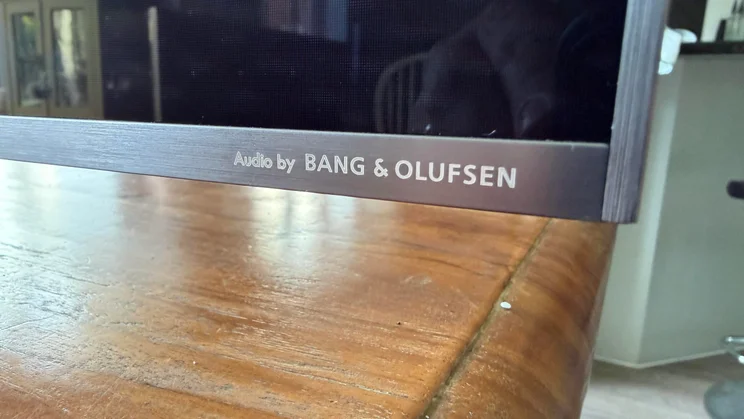
| Audio enhancement | 2.1.2-channel Bang & Olufsen speaker system, Dolby Atmos |
| HDMI inputs | 4 x HDMI 2.1 |
| Freeview Play compatibility | No (UK catch-up apps are provided) |
| Tuners | Terrestrial Freeview HD |
| Gaming features | VRR, 4K/120Hz, 4K/144hz, 1080p/288Hz support via DLG, Game mode, Game menu, ALLM, AMD FreeSync Premium Pro |
| Wireless connectivity | Bluetooth 5.4, Wi-Fi 6, Apple AirPlay 2, Miracast, Chromecast |
| Smart assistants | Google Assistant |
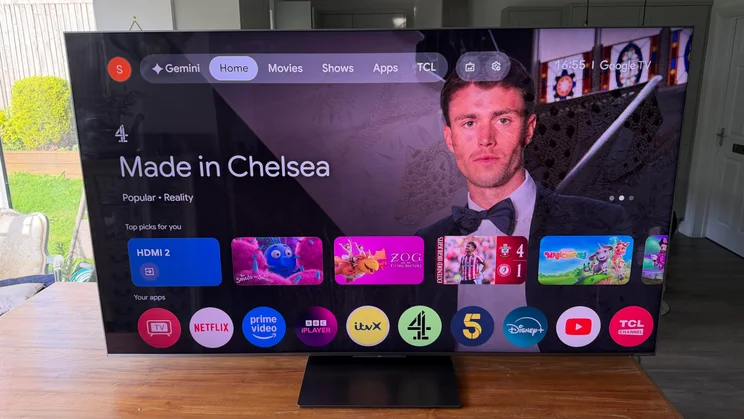
| Smart platform | Google TV |
What you need to know
TCL’s C8L is best described as the most premium model from the brand’s ‘mainstream’ TV range. The X11L and RM9 sit well above the C8L in price, showing off uncompromising takes on TCL’s latest Super Quantum Dot and Mini RGB TV technologies. Regarding models folk with relatively normal bank balances can afford, the C8L is as premium as it gets.
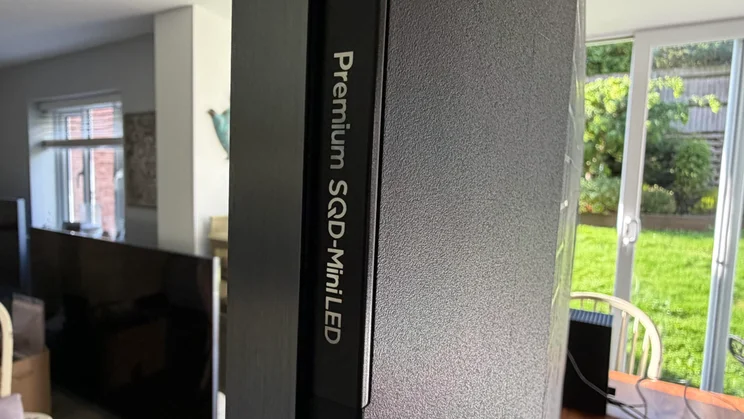
Unlike the original quantum dot structure, which holds just two performance-enhancing elements, super quantum dots squeeze five into their tiny forms. Manufacturers claim this structure delivers purer colour, higher brightness, greater stability, and better efficiency than its predecessor.
Price and competition
At the time of writing, the 55in TCL C8L costs £1,199, while the 65in, 75in, 85in and 98in cost £1,899, £2,299, £2,999, and £3,999, respectively. Those look like quite aggressive prices, except for the 65in. £1,899 isn’t that expensive for a premium 65in TV, but the jump in price from the 55in is bigger than I’d expect. It’s also £600 more expensive than the step-down TCL C7L in 65in, which is quite a hike.
Key rivals include the Mini RGB Hisense UR9S, which costs £1,999 for the 65in model, and the Sony Bravia 7 II True RGB TV, which is £1,899 in the same size.
Design, connections and control
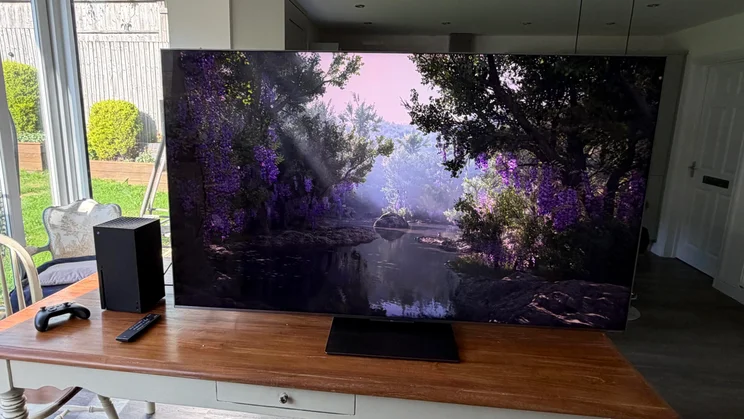
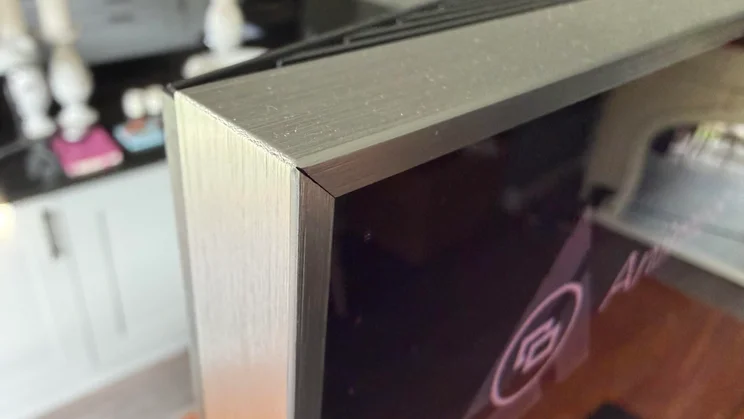
Viewed straight on, the C8L delivers its pictures from a frame so narrow that you can barely see it. The internal black border that usually runs around the inside of super-slim TV frames is also pretty much non-existent.
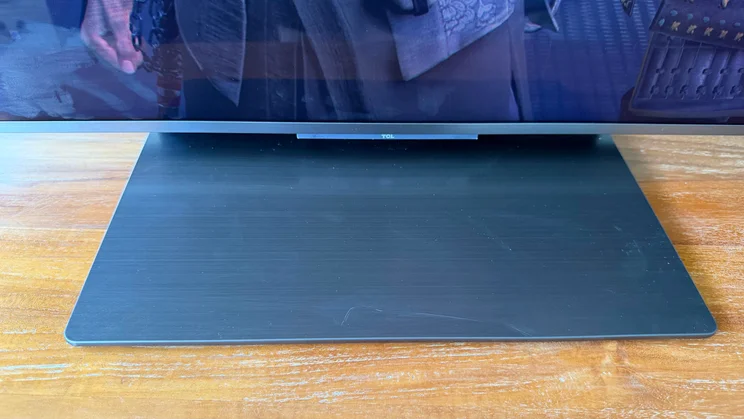
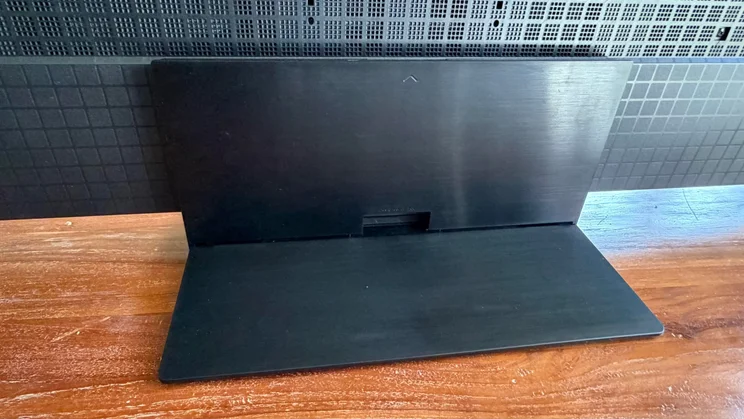
The metallic finish of the C8L’s frame gives it an opulent glint in its eye, and the centrally mounted stand is meaty enough to leave the TV feeling solid, narrow enough to ensure the TV can sit on even small pieces of furniture, and well built enough to retain the premium feel the TV’s bodywork sets up. You can remove the rear of the stand to reveal handy cable-tidy channelling.
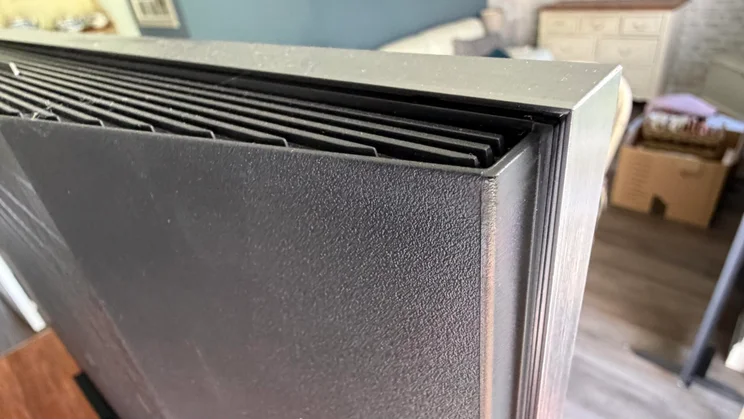
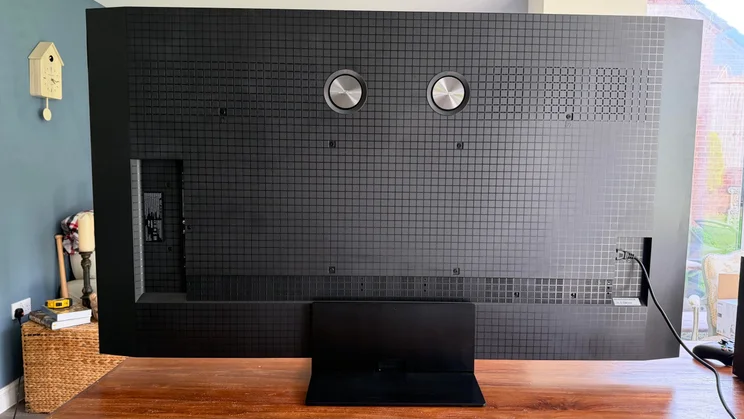
The C8L is a bit chunkier round the back than some might like. Most people don’t spend time looking at the back of their TV, though, and the rear panel’s sides angle back steeply enough to disguise the depth quite effectively from all but the steepest of viewing angles.
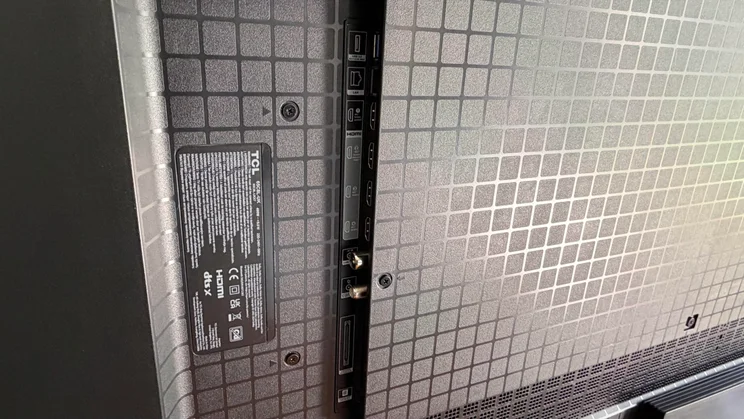
Connectivity is excellent, mainly because all four HDMI ports support the full range of key HDMI 2.1 gaming features. There’s also a USB 3.0 port, a LAN port, and both satellite and RF tuner inputs. Wireless connectivity includes Wi-Fi, Bluetooth 5.4, Chromecast and Apple AirPlay 2.
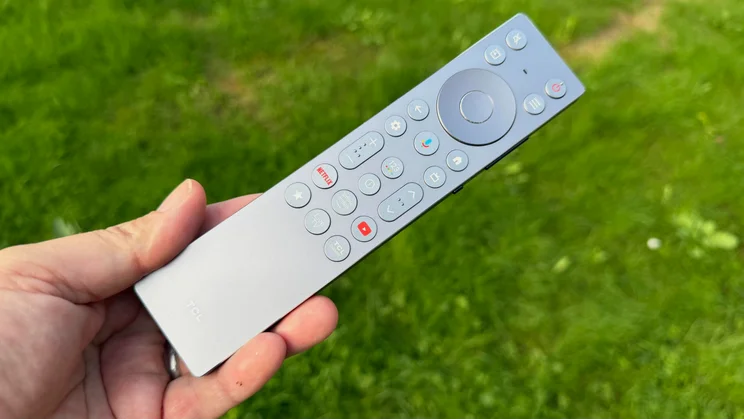
The TV ships with two remote controls: one long, slim, plasticky numeric one, and one sleek, metallic silver one with a stripped-back button count. The smart remote has a mic button to activate Google Assistant voice recognition.
Smart TV platform
The C8L uses Google TV as its smart platform. This system is big on content and offers wide-ranging gaming, information and streaming app support. It’s also much better presented than its old Android TV predecessor. I still feel it’s not the smartest system when learning viewing habits and recommending content different household members might enjoy, but most users will get on just fine with it.
The Google connection means both the Google Assistant voice control system and Google’s Copilot AI system are available to help find content, plan a holiday, cook a meal or just find stuff out. The Copilot system on the C8L has been tailored for TV use; it’s not the same system you get on a PC.
Google TV still doesn’t natively carry all the catch-up services of the UK’s main terrestrial broadcasters, but TCL has ensured that BBC iPlayer, ITVX and so on are all there independently.
Image quality
The C8L’s substantial improvement over its 2025 predecessor is obvious in SDR images, whether you’re in a relatively punchy picture mode or the Filmmaker Mode preset designed to reproduce images as creators intended.
Standard SDR mode is particularly good. It’s much brighter than both its Filmmaker Mode and the Standard mode of cheaper TCL 2026 models. Just as importantly, these full-on SDR images still avoid looking even slightly artificial or strained.
Standard mode pairs peak brightness with an equally striking expansion in colour volume and intensity. The key to modes that make SDR sources look punchier is avoiding distractions like exaggerated noise, unbalanced and artificial-looking colours, bleached-out bright areas or plasticky skin tones.
Potential pitfalls are handled brilliantly
The C8L’s new Super Quantum Dot panel and AI-bolstered video processor handle these potential pitfalls brilliantly, even though the TV outputs brighter, bolder images than most serious rival TVs, including last year’s C8K, would dare to.
Even if the SDR source you’re watching is in HD rather than 4K, the C8L’s upscaling processing proves good enough to inject millions of extra pixels into the picture so that the results don’t look soft, don’t generate ghosting noise around hard object edges, and genuinely seem to enhance just the natural detail in a picture rather than putting too much emphasis on grain or colour noise.
TCL’s Vivid mode remaps SDR content to the TV’s most extreme colour and brightness capabilities. However, this mode ultimately goes too far for sustained comfortable viewing.
Measurements of Standard mode using Portrait Displays’ Calman Ultimate software, a G1 signal generator, plus a Klein K-10A colour meter show it settling on a high 517cd/m2 full-screen white level (more than any OLED TV can achieve in full-screen mode) and covering 171% of the Rec 709 colour spectrum.
With figures like these, I’d expect the Standard preset’s colour and grayscale Delta E 2000 average errors to exceed the industry-standard accuracy threshold of 3, and I recorded results between 10 and 13. The Standard mode’s expansion of SDR sources, though, ensures colours look subjectively believable and even-handed in the mode’s deliberately amped-up context.
Home cinema purists can breathe easy
If you’re a home cinema purist, though, fear not. The C8L has your back with a Filmmaker Mode preset that gets every key Calman Ultimate Delta E 2000 average error measurement down to well below or insignificantly above 3. Two-point and multi-point greyscale errors score 3.9 and 3.3, respectively, while my Gamut, ColorChecker, Saturation Sweep and Luminance Sweep tests returned scores of 2.8, 2.8, 2.2 and 2.2.
This measurable accuracy shows on screen with an outstanding combination of exceptionally deep, convincing black colours and beautifully judged subtle shadow details in dark scenes. Colours are reined in to SDR/Rec 709 saturations beautifully too, leaving them looking entirely natural to the naked eye. The screen renders colour blends with near-infinite subtlety, leaving images appearing three-dimensional and refined. This is all achieved without the pictures feeling drab or compromised by the measures so many screens, especially LCD ones, usually take to deliver that natural Filmmaker Mode appearance.
HDR performance
The C8L is an outstanding HDR performer, holding its own against the best its LCD rivals have to offer and leaving its predecessor in the dust.
The HDR improvement is especially noticeable with colour. The 2025 C8K had a strange foible where HDR colours looked slightly paler than those of its step-down C7K sibling. That peculiar situation has been remedied, however, as the C8L pumps out some of the boldest, richest and most nuanced colours the TV world has seen. Super quantum dots take a bow.
Calman Ultimate measurements show the C8L covers basically 100% of the P3 spectrum used in most HDR video mastering, and a remarkable 91.7% of the much wider BT.2020 colour gamut. Couple this with a brightness output that sensationally clears 4,500cd/m2 on a 5% HDR window (3,600cd/m2 on a 10% window) in the Standard preset and 3,100cd/m2 on a 10% window in Filmmaker Mode. The TCL C8L’s pictures make almost every other TV, including many rival premium models, look dull by comparison.
Nothing jarring about Standard mode
Despite reaching picture extremes most TVs can only dream of, the C8L’s dazzling impact in Standard mode never looks brash or gaudy. Every primary and secondary shade feels correctly contextualised against every other shade, and colour blending is mesmerically subtle. Nothing jars about Standard mode’s palette.
The same holds in dark HDR scenes on the C8L. Despite the huge amounts of brightness the screen can deliver, even the darkest corners still look inkily black, with scarcely a hint of greyness. There’s no significant backlight bloom around the brightest objects, a clear sign of how effectively the screen’s 2,040 local dimming zones work under the instruction of TCL’s new TSR AiPQ processor.
Native 4K content looks beautifully sharp and detailed, provided you turn off the entirely unnecessary noise-reduction features. The clarity and immersive feel of HDR images also hold up when watching 24p films thanks to a more than solid ‘native’ 24p performance (with no motion processing active), but also a well-conceived ‘Low’ motion processing mode that delivers an enjoyable balance between smoothing the hardest edges off 24p judder without leaving the image looking unnaturally smoothed out.
TCL hasn’t given the C8L a reflection-absorbing filter on the level of those found on the latest Samsung, LG and Sony TVs, but the sheer punch of its pictures often hides most reflections anyway. Plus, some, even many, home cinema fans will prefer the C8L’s glossy finish to the matte look associated with the strongest anti-reflection screens. The C8L also delivers a wider effective viewing angle before contrast and colour drop off than most LCD models. However, the backlight blooming that’s so miraculously well controlled head-on becomes significantly more noticeable from angles beyond 30 degrees.
Searingly bright and supremely accurate
As with its SDR performance, the C8L is at its all-round searing best in Standard picture mode. However, it caters to video standard die-hards superbly with its HDR Filmmaker Mode. Objectively, using Calman Ultimate, Filmmaker Mode achieves Delta E 2000 average error results of 2.9 for the Multipoint Greyscale test, 2.9 for the Colormatch HDR test, 1.8 for the ColorChecker Analysis test, 1.7 for the BT2020 Saturation Sweeps test, and 1.6 for a P3 saturation sweep test. All are below the key 3 measurement.
Again, though, it’s not necessarily the C8L’s measurable ability to hit film industry standards that stands out so much, but its ability to hit those numbers without leaving an image that feels rough, flat or compromised. The C8L’s Filmmaker Mode images still have real radiance alongside superb subtlety, integrity and no-stone-unturned refinement.
The C8L’s pictures are so good that, aside from being a bit disappointed by the slightly underpowered Natural Cinema motion setting, the only other negative is that TCL’s new energy-efficient picture features are rather poorly integrated. I worry many users might never turn off the brightness-limiting elements and won’t see their TV’s full unleashed glory.
Gaming
The C8L carries four HDMI inputs with full HDMI 2.1 capabilities. It handles 4K video at 120Hz and 144Hz refresh rates and HD video at frame rates up to a phenomenal 288Hz thanks to HDMI’s so-called Direct Line Gate technology.
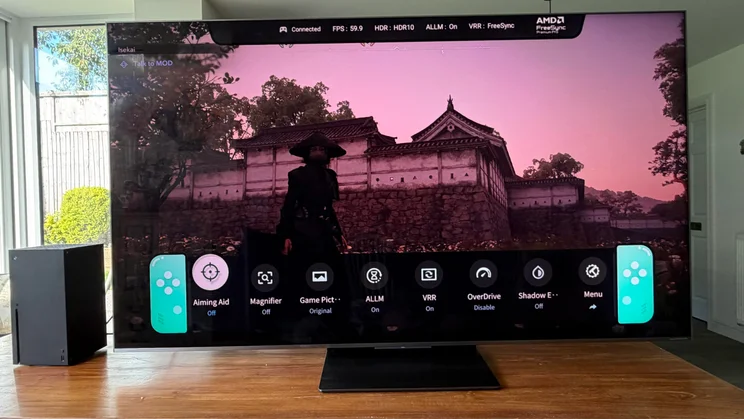
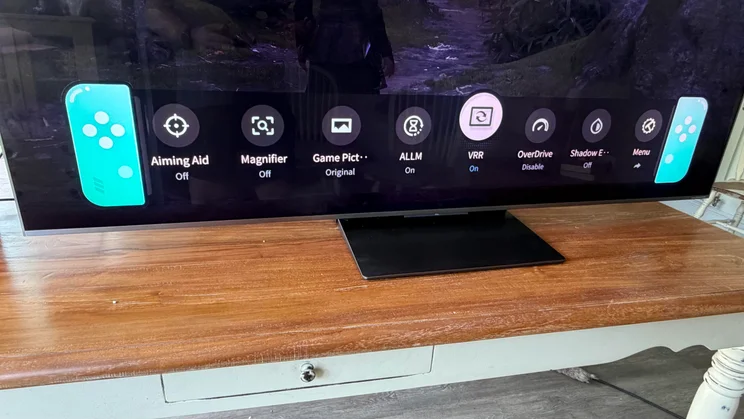
VRR is supported, including AMD FreeSync Premium Pro, and ALLM automatically switches the TV into its fast-responding Game preset when it detects a game source. Once in that preset, the TV renders HD/60Hz feeds in just 10.1ms.
TCL also includes a dedicated overlaid game menu that combines graphics feed information with a few handy gaming modes. However, what makes the C8L such a phenomenal gaming display is how its SQD images make all games feel spectacularly crisp, bright, colourful, fluid and responsive.
Sound quality
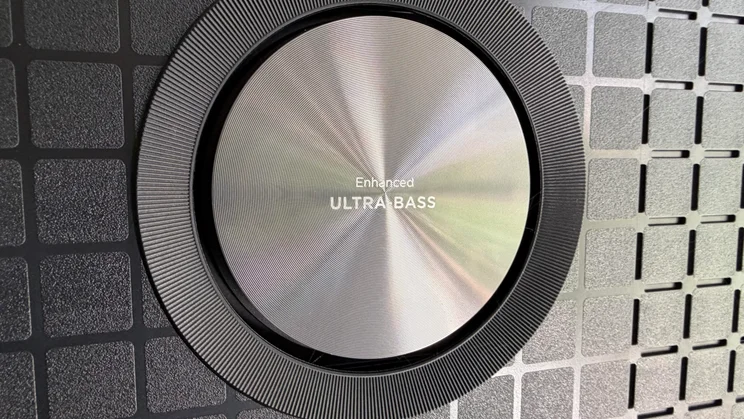
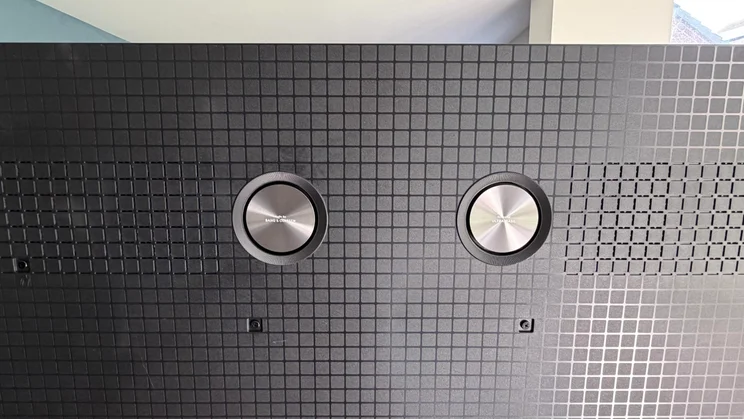
Despite TCL’s eye-catching Bang & Olufsen collaboration, the C8L’s audio performance is a little complicated. First impressions are strong. I was struck by the sheer power and clarity of the 2.1.2-channel system, as the speakers effortlessly propelled movie and TV soundtracks, especially Dolby Atmos ones, far beyond the screen’s outer boundaries.
The C8L doesn’t have a forward-facing soundbar like the premium TCL X11L series. However, its sound still pushes aggressively forward into the room rather than sounding like everything is happening behind the screen. This gives the sound more impact and immediacy.
Shrill trebles sound clear and present, without the harshness or thinness so many TV sound systems suffer. At the other end of the spectrum, bass is also handled crisply and cleanly; even the monster bass drops at the opening of Blade Runner 2049 failed to cause major breakdowns, dropouts or crackles.
Bass doesn’t quite reach as deep as I would have liked, though, and can feel a little underpowered during particularly dynamic scenes. Peak trebles are a little overexposed at times, too.
The sound seems to fade in and out during sustained dense mix moments, and sometimes the speakers’ staging doesn’t quite feel right, with background elements getting too much priority in the mix. The C8L does deliver a marked improvement in this latter respect over last year’s C8K TVs, to be fair, but I still feel there’s room for further improvement.
Verdict
The C8L is an outstanding TV for its money, even at the 65in level where the price jump from TCL’s cheaper C7L range feels oddly high.
Its picture quality looks gorgeously dazzling and intense in Standard mode without ever slipping into gratuitous or unbalanced territory. Meanwhile, Filmmaker Mode hits supreme levels of accuracy without compromising subjective sharpness, contrast, colour intensity or motion clarity nearly as much as usual.
Having two such opposing picture modes that both look beautiful in different ways is about as much as you can hope for from a TV as aggressively priced (at most screen sizes) as the C8L is.


