
To help us provide you with free impartial advice, we may earn a commission if you buy through links on our site. Learn more
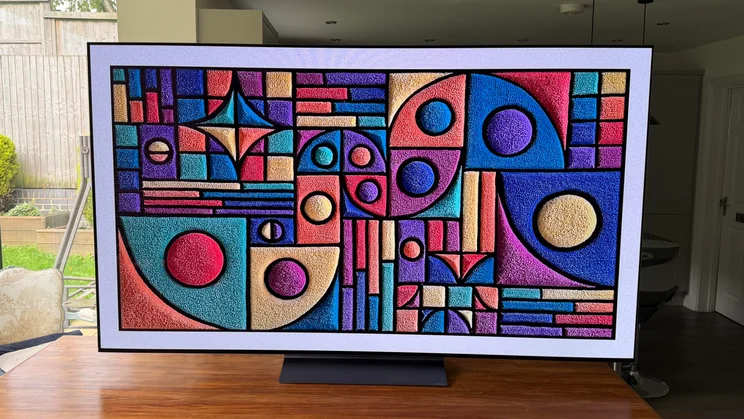
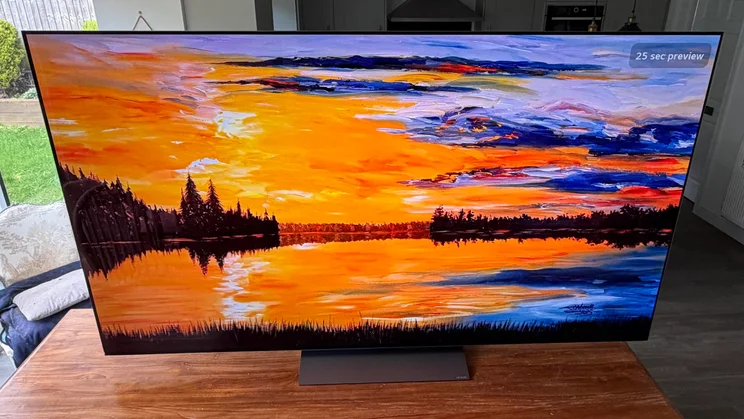
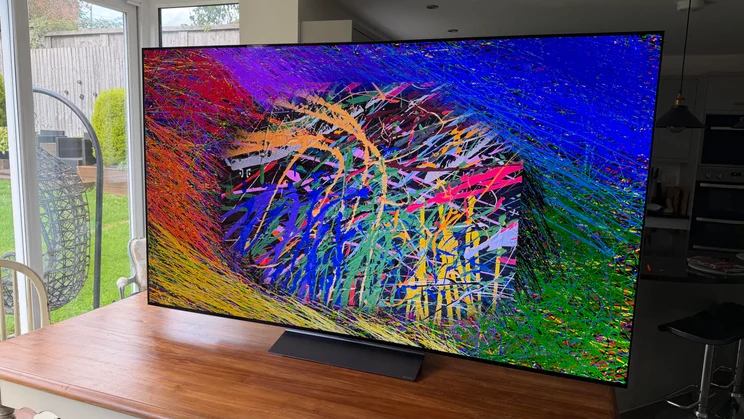
- Excellent picture quality for a mid-range OLED TV
- Outstanding value for money
- Superb gaming performance and support
- Slight colour shift with off-axis viewing
- No HDR10+
The 2026 models in LG’s ever-popular C series of mid-range OLED TVs confusingly use different OLED panel technologies at different screen sizes. We’ve already looked at the 65in C6 OLED and were very impressed by its EX-grade OLED panel.
Now it’s the 77in C6 OLED’s turn, with its premium Primary RGB Tandem panel. Can it make its apparent hardware advantage count, or is all our excitement about its extra potential much ado about nothing?
LG C6 OLED (Primary RGB Tandem OLED) review: Key specifications
| Screen sizes available: | 48in (OLED48C6), 77in (OLED77C6) and 83in (OLED83C6) |
| Panel type: | Primary RGB Tandem OLED |
| Resolution: | 4K/UHD (3,840 x 2,160) |
| Refresh rate: | 120Hz (up to 165Hz VRR) |
| HDR formats: | HDR10, HLG, Dolby Vision |
| Audio enhancement: | 40W 2.2-channel speaker system |
| HDMI inputs: | 4 x HDMI 2.1 |
| Freeview Play compatibility: | Yes |
| Tuners: | Terrestrial Freeview HD |
| Gaming Features: | VRR, AMD FreeSync Premium and Nvidia G-Sync, 4K/165Hz, Game mode, Game menu, ALLM |
| Wireless connectivity: | Bluetooth 5.3, Wi-Fi, Dolby Atmos FlexConnect, Chromecast built-in, Apple AirPlay |
| Smart assistants: | LG ThinQ |
| Smart platform: | webOS 26 |
What you need to know
LG’s C series has long been the mid-range point of the brand’s annual OLED TV range, a position that made it hugely popular with home cinema fans. This was especially true when the primary difference between it and LG’s step-up G series was design rather than picture or sound quality.
Last year, though, the G series introduced new Primary RGB Tandem OLED panel designs capable of delivering significantly more brightness and colour range than the EX grade panels 2025’s C series models used, introducing an obvious picture-performance gap between the two ranges.
The G6 range for 2026 continues to use the latest Primary RGB Tandem OLED panel technology, together with a much more powerful Alpha 11 AI Gen 3 processor. This year, though, Primary RGB Tandem technology has crept down to the C6 series, but only at certain screen sizes.
So let’s clarify right away: the 48in, 77in and 83in C6 use Primary RGB Tandem OLED panels, while the 42in, 55in and 65in screens use EX panels. I’ve focused on the 77in screen for this review, but will reference key differences with the EX models in the range where appropriate.
Price and competition
The 42in C6 OLED costs £999, while the 48in, 55in, 65in and 83in cost £1,099, £1,399, £1,899 and £3,799, respectively. The 77in model I tested costs £2,599.
These are aggressive prices (some the result of substantial post-launch price cuts) for TVs that still appeal more strongly to many AV fans than premium LED TVs available at a similar price. The 65in and 77in models look like great value, though only the latter uses Primary RGB Tandem tech.
The most direct rival in the OLED world is Samsung’s S90H range, which also uses a mix of panel types, including a 77in RGB Tandem option. Premium LCD rivals include Sony’s Bravia 7 II (the 75in costs £2,599) and TCL’s C8L, which costs £2,299 for the 75in screen size.
Design, connections and control
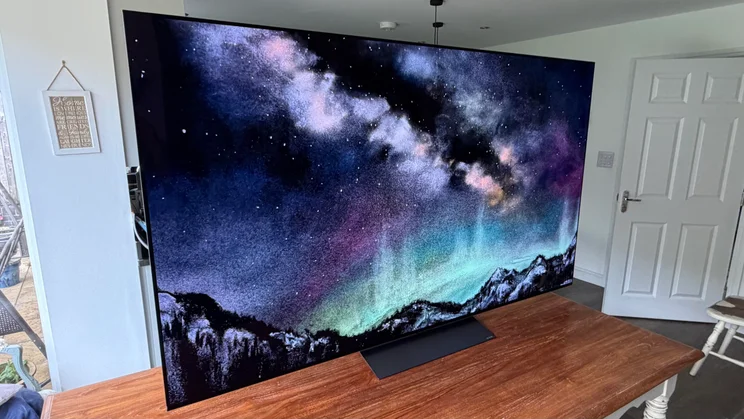
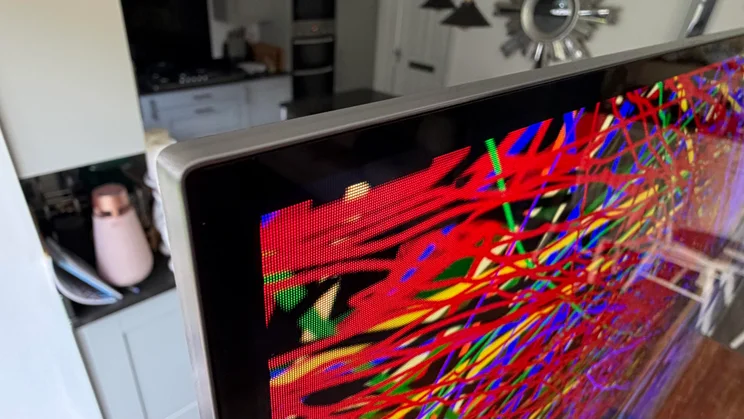
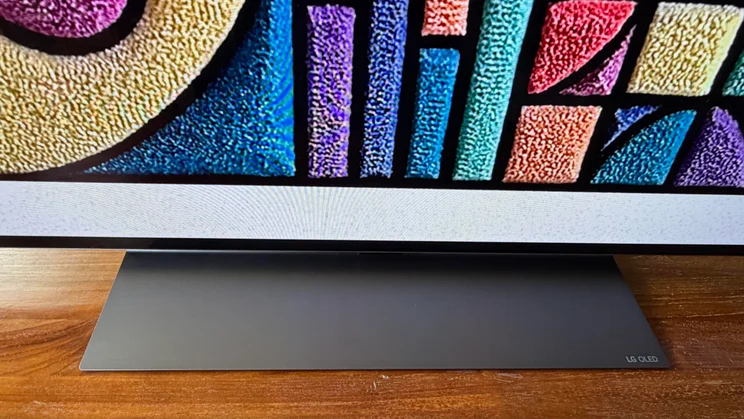
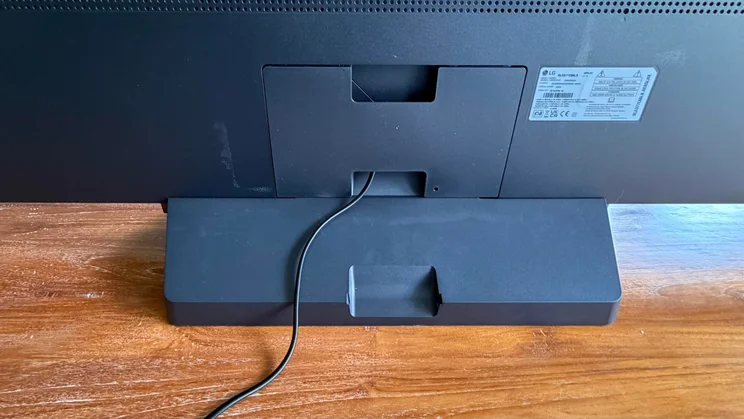
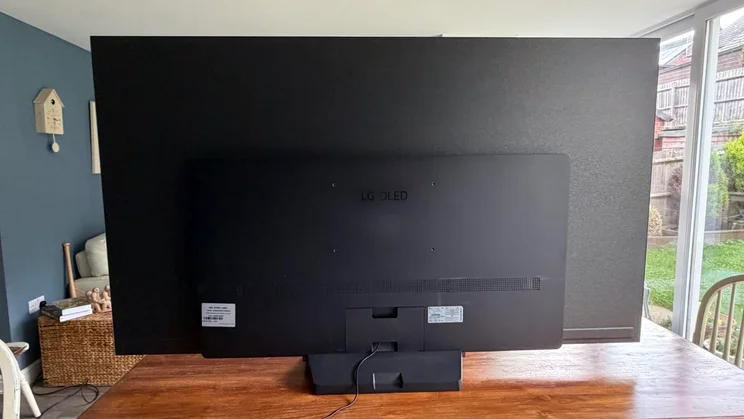
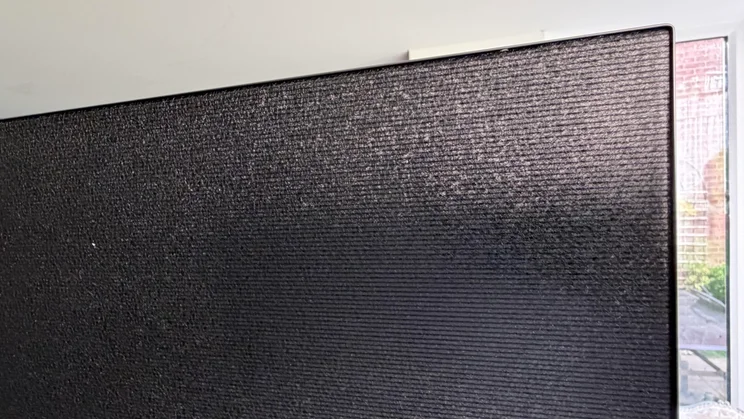
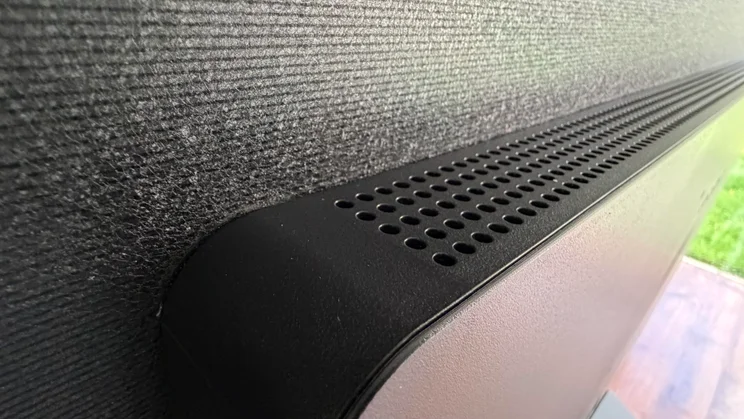
The OLED77C6 is a striking-looking TV, especially from the side. Over much of its rear panel, it’s incredibly thin at less than one centimetre. The frame around the screen is extremely narrow, yet still carries a premium silvery metal finish that makes the TV look both opulent and minimalistic. The screen sits on a robust central desktop mount that fits on narrow furniture, and the front of the stand has a brushed-metal effect that adds premium sheen.
If you’re thinking of wall-mounting your 77in C6, know that part of the rear panel bulges out about an inch further than the rest. The set remains thin enough overall, though, to still make for an attractive wall-mount option.
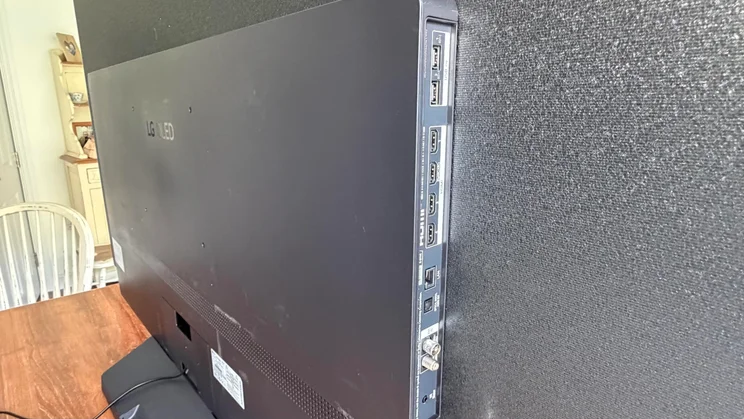
Connectivity is as excellent as ever with LG’s mid-range and premium OLED televisions. Four full-bandwidth 2.1 HDMI ports handle everything a video game console and pretty much anything a premium gaming PC can throw at them, including 4K resolution at frame rates as high as 165Hz. It also supports the HDR10, HLG and Dolby Vision HDR formats.
Alongside the HDMI ports are a pair of USB 2.0 ports, an Ethernet port, RF antenna and cable ports, an optical digital audio output, and a CI digital broadcast slot. The set also supports Wi-Fi and Bluetooth, including AirPlay and Chromecast.
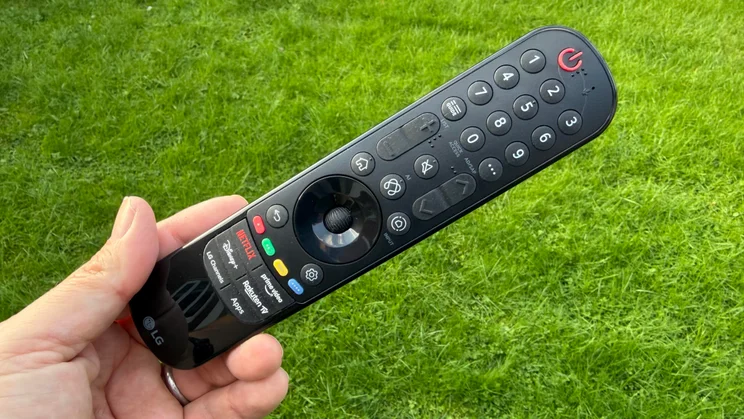
The TV ships with a single standard LG Magic remote. The magic bit is that you can point the remote at the screen and press enter to select an onscreen menu item. If you find point-and-click finicky, which it can be, normal menu buttons and a spinning ball let you quickly navigate the TV’s lengthier onscreen menus.
You can also issue reasonably complex search or setting instructions by talking to the remote via the LG ThinQ system associated with LG’s proprietary WebOS smart platform.
Smart TV platform
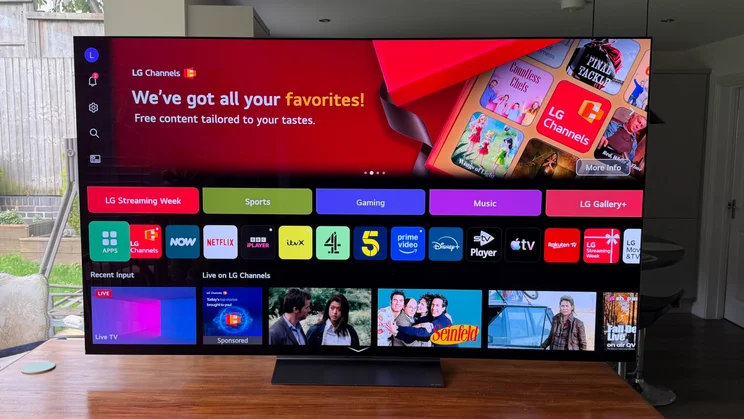
LG’s webOS system has lost some of the fundamental simplicity that revolutionised the nascent smart TV world. You certainly can’t accuse it of skimping on features and ‘intelligence’, though. It supports different user profiles for household members, suggests content based on each user’s viewing habits, and features a particularly useful voice command system. An AI troubleshooting system helps you fix performance issues, while an AI Concierge accessed via a dedicated button on the magic remote offers usage tips.
The 77in LG C6’s webOS supports all the streaming services most people want, plus the Freeview Play app, which pulls the catch-up series of most of the UK’s terrestrial broadcasters under one tidily presented umbrella app.
There’s no Freely service, though, and while the TV lists Copilot AI as an available app, it just takes you to the Copilot website rather than being a TV-optimised Copilot app, like those available on the latest Samsung and TCL TVs.
Image quality
Most of us still spend much of our TV time watching SDR. So it’s great to know the 77in LG C6 performs as outstandingly with SDR as the EX-panelled 65in C6.
If seeing the panel unleash its talents matters more to you than seeing the screen at its most accurate, the OLED77C6’s preset selection stretches SDR pictures into higher brightness and wider colour gamut territory exceptionally well. Only the Vivid setting consistently feels like a step too far; the Standard and Cinema presets provide especially engaging SDR expansions that don’t look unnatural, unbalanced or full of obvious processing errors or glaring inconsistencies.
Possibly because of the challenges of taming the expansive talents of its Primary RGB Tandem screen, Filmmaker Mode doesn’t measure quite as accurately with my Portrait Displays’ Calman Ultimate software, G1 signal generator and Klein K-10A colorimeter as some of LG’s previous C-series generations have. Peak brightness sits at 271cd/m2, slightly higher than the 200cd/m2 or so generally recommended for accurate SDR.
Measurable accuracy and beautiful pictures
This may explain why two-point and multipoint greyscale tests delivered Delta E 2000 errors of 4.6 and 3.5, both slightly above the ideal 3.0 target. This marginal greyscale error isn’t joined by any colour issues, though, as the OLED77C6 sails comfortably under 3 in Calman’s Saturation Sweep, Luminance Sweep and key Colorchecker tests.
What’s more, as we’ve come to expect from LG’s mid-range and higher OLED TVs, the OLED77C6’s impressive measurable accuracy in Filmmaker Mode translates into beautifully engaging, consistent, nuanced, balanced and contrast- and colour-rich pictures.
OLED’s self-emissive pixels let the OLED77C6 meet the exacting standards of SDR playback without the backlight and contrast compromises that can make Filmmaker Modes feel drab on some televisions.
Improved handling of near-black content keeps subtle details in dark areas from being crushed, despite Filmmaker Mode’s lower baseline brightness point, and LG’s latest processor delivers the natural, processing-free look AV fans want without the results looking soft or plasticky.
The OLED77C6 is a lovely chip off the old LG OLED block with its SDR Filmmaker Mode, while also doing a better job than any previous C series TV (even its 65C6 sibling) of amping up SDR content for brighter rooms with its Standard preset.
HDR performance
As hoped, the OLED77C6’s Primary RGB Tandem potential really bursts into life with HDR footage; as expected, it has a clear, measurable brightness advantage over the EX panel screen sizes. Measuring this difference showed the Primary RGB Tandem screen produced 400 to 700cd/m2 (depending on test window size) more brightness than the C6 EX panels produce. That big step up is clearly visible to the naked eye.
The OLED77C6’s colour gamut coverage is almost identical to the 65C6, despite their different panels, delivering 99.3% of the DCI-P3 gamut used in most HDR mastering, and just under 87% of the wider BT2020 spectrum. However, the Primary RGB Tandem panel retains colour saturation better at high brightness, so the OLED77C6 feels more vibrant during the brightest HDR moments.
Delightful colour performance
This isn’t to say the EX OLED screens aren’t also lovely colour performers. They are. It’s also important to stress that even the EX screens in the range are significantly brighter than 2025’s C5 TVs were. If you can make one of the Primary RGB Tandem screen sizes work for you, though, they are even more spectacular. Especially now that the new ultra-powerful, AI-boosted processing system uses a 12-bit colour processing element that removes most of the colour banding that affected the Primary RGB Tandem panels used by last year’s G5.
All C6 models retain LG OLED’s trademark inky black levels, and all do a great job of delivering dark scenes free of noise in faint dark details, and ensuring that dark corners don’t look empty or hollow. The C6’s colour and contrast control is class-leading for the mid-range TV market. Even the ultra-tricky black levels and colour tones of the night-time Gin Joint scenes of Sinners were handled immaculately.
This exceptional light control stands out whether you’re watching this Dolby Vision-encoded 4K Blu-ray in Dolby Vision Filmmaker Mode or the relatively punchy Dolby Vision Cinema setting.
The spectacular local light and colour help the OLED77C6 deliver outstanding detail and sharpness, without it looking forced or over-sharpened. Meanwhile, LG’s Cinematic Movement motion processing option reduces judder effectively without leaving the picture looking excessively fluid or processed.
Both the EX and Primary RGB Tandem panels are exceptionally consistent with both HDR10 and Dolby Vision sources. As is the dynamic tone mapping system LG can apply to HDR10 content through the Alpha 11 AI Gen 3 processor.
A handful of small niggles
Putting the OLED77C6’s Filmmaker Mode through its paces on Calman Ultimate reveals slightly high Delta E 2000 Average errors of 9 and 6.5 with Saturation and Luminance Sweep tests. But it nails the sub-3 scores we’re looking for with Calman’s key multipoint greyscale, ColorChecker and HDR ContentColor tests.
I have a handful of small niggles with the OLED77C6 (and all the other C6 sizes). The screen is quite reflective compared with some rivals and LG’s own G6 series, and images lose a little brightness and take on a slightly green tone when viewed from a wide angle. Very dark scenes can take on a slight reddish tone, especially in one of the TV’s more aggressive picture settings. Occasionally, a very dark scene can momentarily shift brightness when using the TV’s brighter presets (though this once-common LG issue is now vanishingly rare). Plus, as ever with LG TVs, there’s no support for the HDR10+ HDR format.
Finally, I think it’s important to reiterate that not every screen size in the C6 range delivers the same performance. It’s hardly the first OLED or LCD TV range to be caught in such a confusing state of affairs, though, and, in this case, none of the models is anything less than brilliant. Three of the screen sizes can be even better than brilliant, though.
To test the LG C6 OLED, I used Portrait Displays’ Calman Ultimate software
Gaming
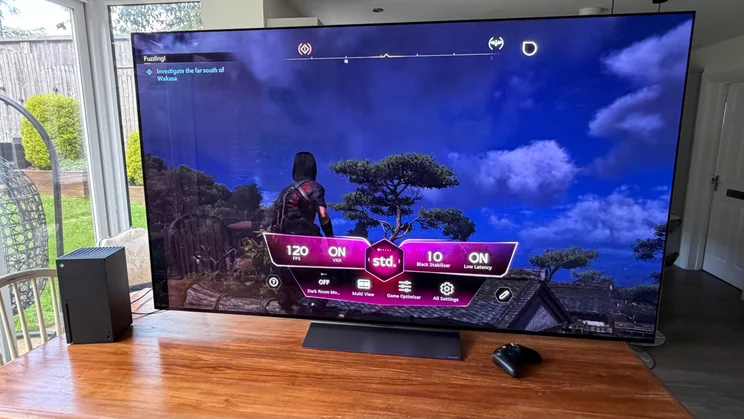
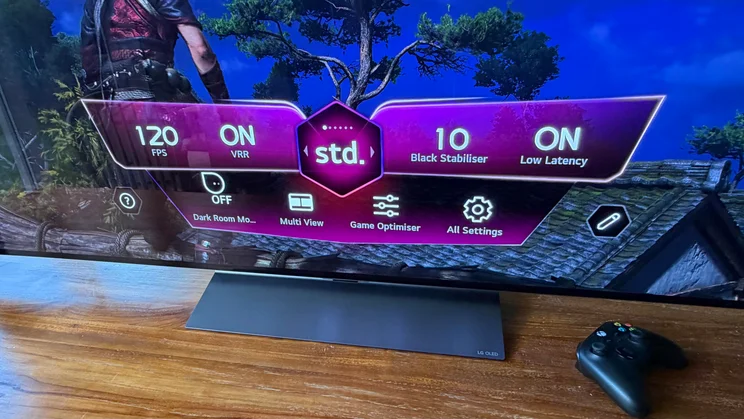
The LG C6 OLED is arguably the best mid-range gaming TV on the market. From a feature perspective, its native 4K/120Hz panel and variable refresh rate (VRR) support up to 4K/165Hz are as good as anything else around, and these high frame rates are available on all four of the TV’s four HDMI ports rather than just a couple of them. The low-latency Dolby Vision Game mode renders graphics with just 12.9ms of lag on 60Hz feeds.
The dedicated Game menu appears when the TV detects a game source, and provides useful signal information and gaming aids, including an overlaid crosshair and the ability to raise the brightness of dark areas without impacting the rest of the picture.
Auto low-latency mode (ALLM) switching, meanwhile, ensures the C6 always switches to its fastest response mode when a game is connected, so you don’t have to remember to change the setting manually.
The OLED77C6’s gaming performance is a joy to behold, combining some of the most fluid, responsive, crisp, sharp, colourful and dynamic HDR gaming images I’ve had the pleasure of spending far too many hours with. All on a screen big enough to make those beautifully rendered game worlds look almost life-sized.
Sound quality
The OLED77C6’s sound is a pleasant surprise, delivering a bigger, cleaner soundstage than I’ve become accustomed to hearing from LG’s C series over recent years.
This improvement applies to the Dolby Atmos sound setting, which I typically find too quiet, muted and compressed-sounding on LG OLED TVs to deliver the immersive, detailed, three-dimensional soundstage Dolby Atmos is all about.
The default Dolby Atmos setting still isn’t perfect; dialogue seems to come from below the screen, and there isn’t much forward projection or projection beyond the sides of the screen. But effects are placed with impressive precision across the screen, the sound has a nicely rounded quality, and the speakers tend to operate within their capabilities without distorting or dropping out.
If you want more power, scale and impact to complement the 77in C6’s gorgeous visuals, turn on its AI Sound Pro setting. This makes everything louder, expands the dynamic range (including much more bass weight), makes details more pronounced, and best of all for me, upscales the sound to a virtual 11.1.2 mix that creates a much larger soundstage that can escape well beyond the TV’s frame, upwards and sideways.
Note that the AI Sound Pro mode needs to be run loud to become effective. It can also occasionally sound a bit brash, with high-pitched sounds turning slightly shrill, dialogue becoming a touch sibilant, and the movie world’s deepest bass rumbles occasionally sounding compressed and distorted.
Overall, though, I prefer the OLED77C6’s sound to that of the step-up G6 series, in both basic Atmos and AI Sound Pro mode. LG’s TV audio engineers have done good work here, especially as I don’t believe they’ve been given any new hardware tools.
LG C6 OLED (Primary Tandem RGB) review: Verdict
Bolstered by some early price cutting, the OLEDC6 makes LG’s mid-range OLED proposition a real force to be reckoned with again after a slightly lacklustre 2025 showing.
This is especially true if you can accommodate the 77in model, as its Primary RGB Tandem panel delivers even more brightness and colour vibrancy without damaging the already potent charms of its EX siblings.


