
To help us provide you with free impartial advice, we may earn a commission if you buy through links on our site. Learn more
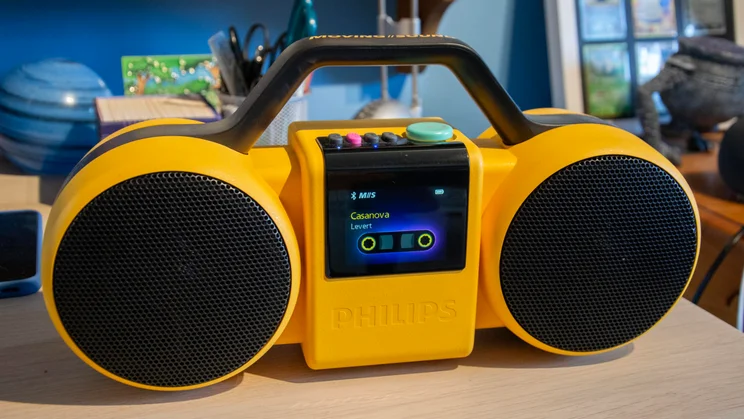
- Fun, eye-catching design
- Loud, punchy sound
- Portable and weatherproof
- Very limited EQ options
- Bluetooth only
- No built-in microphone
I love yellow and black as a colour combination; the bold contrast is dramatic and attention-grabbing. I’m also nostalgic about the 1980s, the decade I was born. So the revived Philips Moving Sound range, which dates back to 1987, is right up my street.
The Roller is the second product from the range I’ve tested. The first, The Ringo Duo on-ear headphones, greatly impressed me with what they offer for under £30. As a Bluetooth speaker, The Roller is a different proposition. However, it shares the same objective: to modernise a product from almost 40 years ago and make it appeal to a new generation of listeners, not just sentimental millennials and Generation Xers.
It may not have made a group of 20-somethings giddy with glee when I demoed it, but its sonic and aesthetic vibes were certainly appreciated. Earning an Expert Reviews endorsement takes much more than that, though, so this semi-retired raver, Pokémon card collector, full-time tech tester and middle-aged man put it through its paces for a month.
What do you get for the money?
The Roller costs £169 and is a portable Bluetooth speaker that supports SBC, LC3, multipoint pairing and Auracast (no AAC – sorry, Apple folks). It also supports USB-A-to-USB-C audio playback via its USB-C port. You’ll need your own cable, though, as Philips doesn’t supply one. It does include a USB-C-to-USB-C charging cable, but no adapter plug.
Sadly, unlike the original boombox it’s based on, there’s no cassette player… I could do with a decent way of playing all the tapes I recorded from pirate radio stations as a teenager. It can’t connect to your Wi-Fi network, either; this speaker is designed for on-the-go use.
The 5,200mAh battery has a claimed operating time of 24 hours, is easily replaceable and can charge devices via the speaker’s USB-C port. Meanwhile, the design, which I’ll discuss in more depth shortly, has a carrying handle and is IP67-certified, meaning it’s both dustproof and waterproof. This level of weatherproofing is very solid, but not quite class-leading, with The Roller’s most popular price-comparable rival, the JBL Charge 6, boasting an IP68 rating.
Is the design practical and aesthetically pleasing?
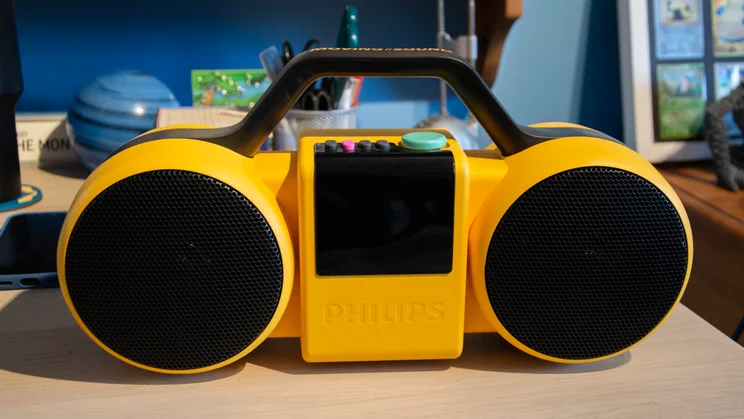
You might guess from my opening remarks that I love The Roller’s design. I have always adored the boombox aesthetic; it captures urban music culture and brings to mind people enjoying mixtapes on street corners.
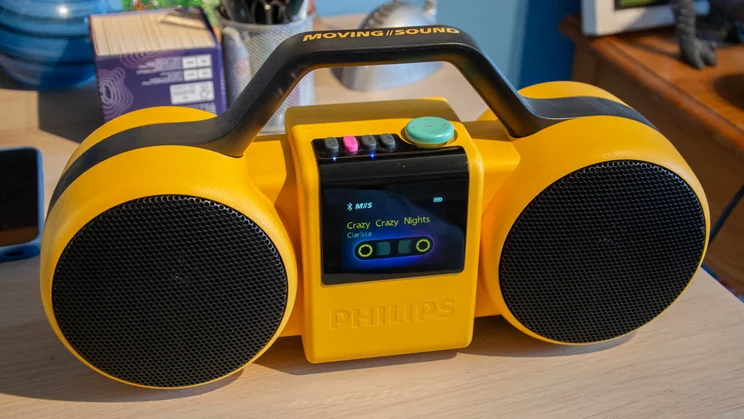
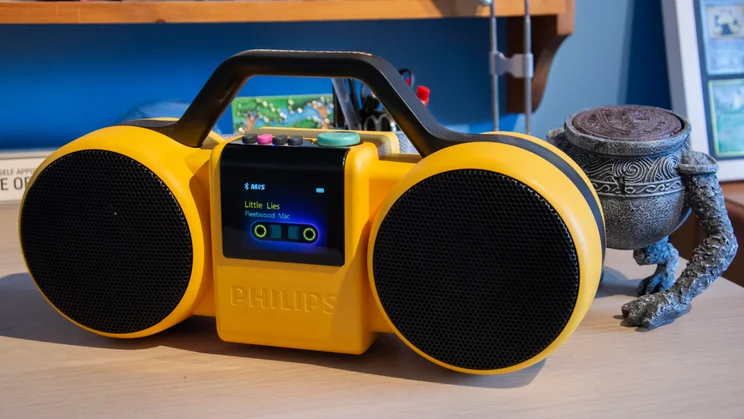
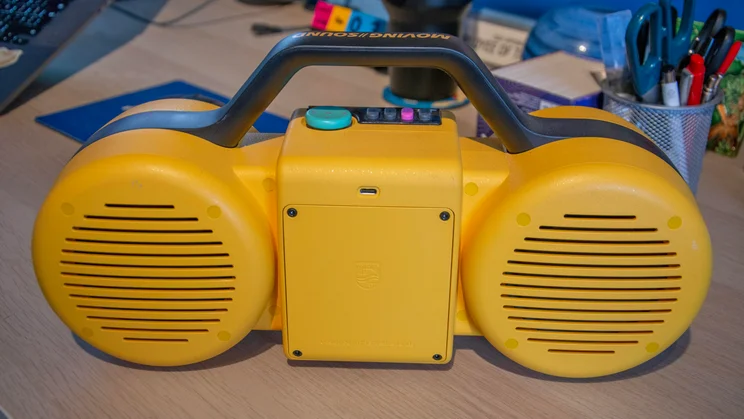
Philips has created a striking update to the original Roller, perhaps unsurprisingly, given that it pioneered boombox technology alongside the audio cassette. The Dutch manufacturer has stuck very closely to the OG design, but streamlined the controls, added a digital display and light rings around the speaker drivers and improved the speaker’s sturdiness.
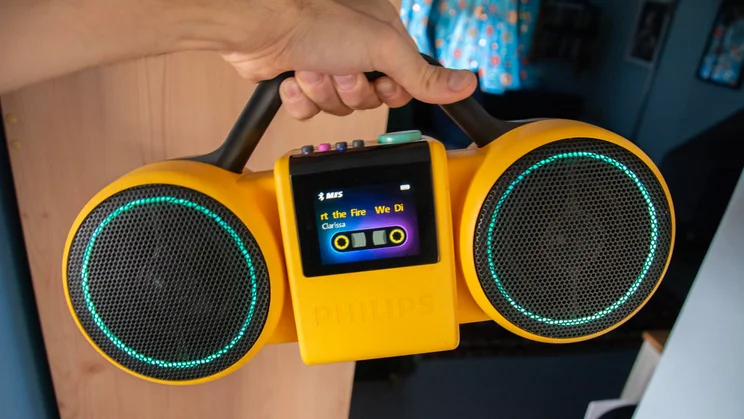
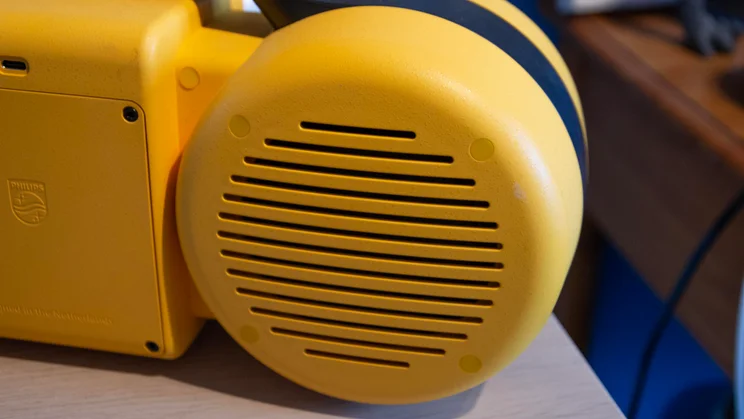
It looks and feels incredibly solid, and, at 2.3kg, is significantly heavier than the JBL Charge 6 (960g). Compared to JBL’s Boombox 4 (5.9kg), it’s lightweight and a lot more compact at 380 x 119 x 192mm (WDH). This, and the integrated carrying handle, make it very easy to move around.
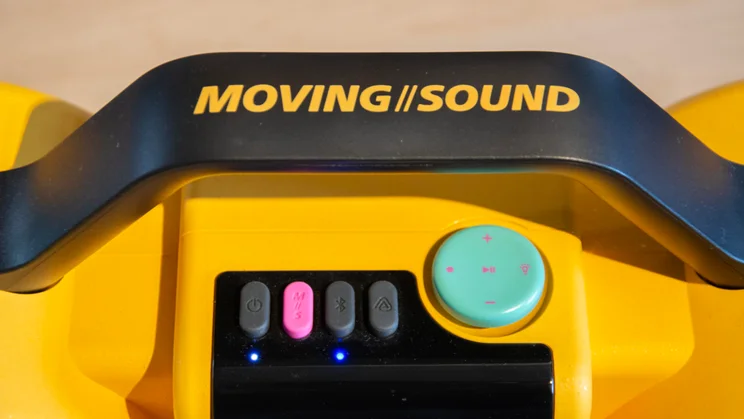
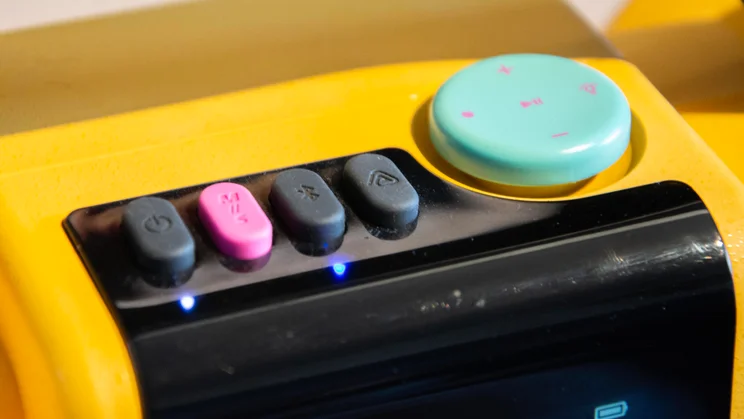
I love the juxtaposition of the bright yellow housing with the black speaker grilles, black carrying handle and digital display. If that’s a bit much for you, there’s a black version. Like the model I reviewed, this has a pink Moving Sound button and a green four-directional control pad, but is much more understated, with a pink “Moving Sound” logo on the handle as the only other splash of colour.
What are the light effects like?
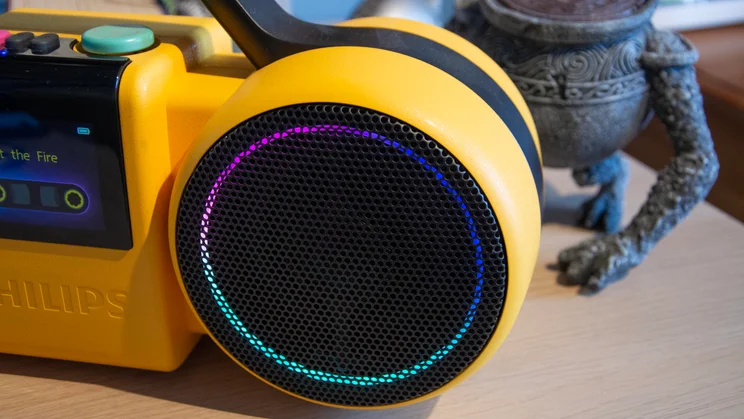
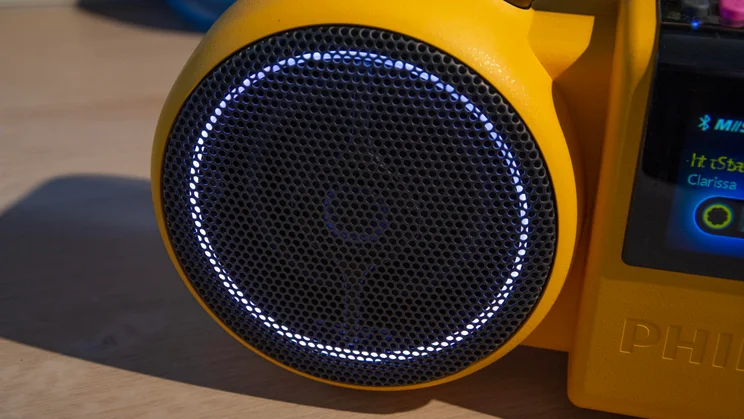
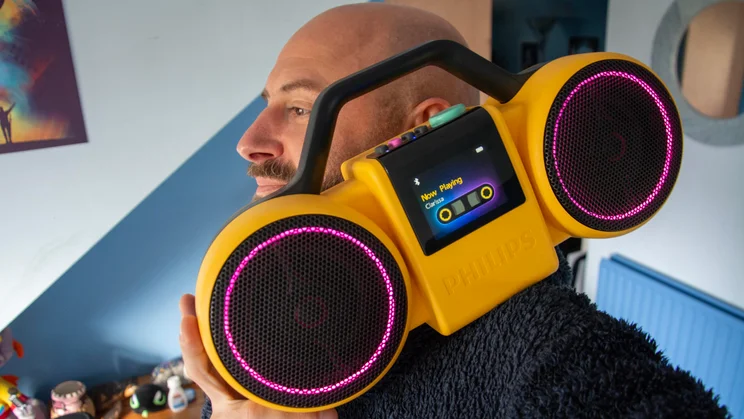
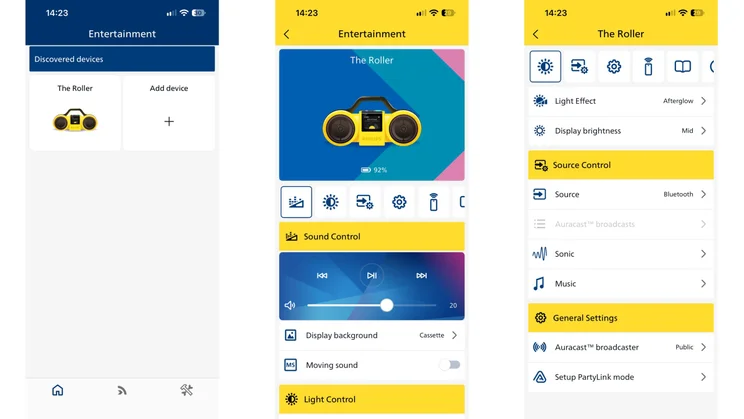
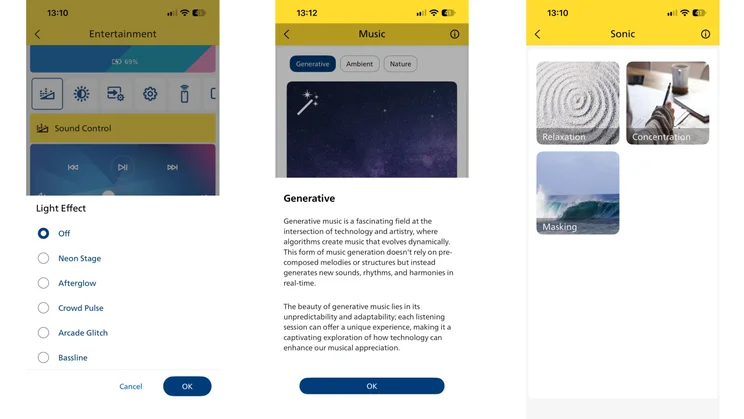
I’ve said the black version is more understated, but that very much depends on whether you engage The Roller’s “Light Effects”. If you are game for a bit of flashiness, you have five effects to choose from that illuminate a ring around the left and right drivers in different ways: Neon Stage, Afterglow, Crowd Pulse, Arcade Glitch and Bassline.
Compared with high-end party speakers like the LG xboom Blast or Sony’s ULT Tower series, these offer only basic features, and you cannot customise their patterns or limited palette (neon pink and green to match two control buttons, royal blue, and white). Ultimately, the light effects provide a bit of visual interest and are fun after dark, but I turned them off when using the speaker during the day to save battery.
How easy is it to use?
The pink button mentioned above is part of a supremely easy-to-use physical control setup. It’s joined by three other buttons for power, Bluetooth pairing and Auracast that are clearly marked, tactile and provide sound-effect feedback when pressed. Meanwhile, the green dial controls the display’s brightness, the lighting mode, volume and audio playback. I found nudging this around satisfying and responsive.
I also appreciated the IPS LCD display. This displays the artist and track you’re listening to, and you can customise the background in the Philips Entertainment app. Choices include “SpinDisc”, “Amplifier” and “Cassette”, the latter of which I chose for obvious reasons. The app also features a digital remote covering every control option at The Roller’s disposal, which I found useful for making adjustments from across the room.
The Roller doesn’t have a built-in mic, so voice controls are off the menu (as is using it as a speakerphone), but for a speaker such as this, I don’t think that’s a big deal.
How good is the sound quality?
The Roller’s portability and weatherproofing make it a versatile speaker that can be used indoors and outside, and it has a Moving Sound mode dedicated to boosting its output when outdoors.
This was my preferred mode for the majority of my time testing The Roller. Not only does the bass from the two 3.5in woofers feel more potent, but the mode projects sound out from the speaker’s housing more effectively, expanding the soundstage. This probably says something about the way I listen to music: I typically want maximum immersion and intensity, and that’s what Moving Sound delivers.
It did an excellent job articulating the varied basslines on a Logan D DJ set showcasing jungle and drum and bass tracks from 1996 to 2000 alongside the vocal talents of MCs Eksman and Fearless. The pulsating bassline on Roni Size’s It’s Jazzy had pleasing depth, while I felt the aggressive low-end punch on DJ Krust’s Warhead in my chest as I pushed volume up to around 50%.
As I continued to increase volume toward the strange maximum of 32, I noticed bass started to take a bit of a backseat to mids and treble produced by the pair of 1in tweeters. This meant the speaker sounded a touch sharp at times, but kept vocals, in this case the double-time bars of two of DnB’s leading lyricists, intelligible at all times.
Loud and proud
Max volume is loud, as it should be for this kind of speaker. Philips states 120W max output (60W RMS), and it was more than enough to fill my bedroom and be audible two floors below. When using The Roller in the changing room to celebrate a footballing success with my team, the speaker was only operating at a third of its maximum when it became difficult to hold a coherent conversation. Not that the youngsters in the squad minded; they were too busy enjoying the soundtrack of The Football Factory, a film released before some of them were born!
Although I didn’t often want to disengage Moving Sound mode, The Roller performed well without it, and those less raucous than me may lean on the default tuning more heavily. I worked my way through a playlist of every 1987 UK Top 40 song (the year the manufacturer released the original Roller) and thoroughly enjoyed the listen. UB40’s “Rat in Mi Kitchen” delivered a punchy, funky bassline, and Billy Ocean’s vocals held together seamlessly on “Love Is Forever,” even when he pushed into his higher belting register
The Roller communicates broad musical brushstrokes very effectively, but can sound rather forceful at times. If you’re looking for even-handed refinement and the ability to pinpoint and accurately depict nuanced elements of complex arrangements, this isn’t the speaker for you. But ask yourself this: is that what you’d expect of a bright yellow speaker called The Roller? I thought not.
It’s also worth noting that, outside of the Moving Sound mode, there aren’t any EQ adjustment options for The Roller. That’s pretty rare for Bluetooth speakers these days, and a little disappointing.
Somewhat surprising sonic inclusions
There are, however, three “Sonic tones” – Relaxation, Concentration and Masking – in the Philips Entertainment app “designed to improve mental states”. There are also a handful of “Generative” tracks created by algorithms that evolve dynamically, and “Ambient” and “Nature” sounds intended to help you feel calm and connected. These felt a bit gimmicky at first, but I rather enjoyed popping them on to unwind after more vigorous musical testing. The “Earth” Ambient track was a particular favourite when knuckling down to write.
Should you buy Philips’ The Roller?
Is The Roller the most feature-rich or refined Bluetooth speaker on the market? Certainly not. But that’s okay, as it’s not designed to be super-smart or deliver analytical audio for a hi-fi-loving audience. Loud in appearance and output, and with borderline garish light effects, it makes a statement. And I respect that.
But such a statement would fall flat if not reinforced by action, and The Roller makes itself heard with audio that’s impactful, energetic and infectious. It’s borderline impolite in its approach at times, but rather than put me off it, this warms me to it. Wrap that attitude in a highly portable design that can withstand just about anything you throw at it, and The Roller plays its retro-reviving role extremely well.


